If matter had a social life, it would be wildly unpredictable. Sometimes it stands rigid and organized like a drill sergeant. Sometimes it relaxes and flows around corners like it owns the place. Sometimes it spreads out, bounces off the walls, and acts like it just drank six espressos. And in the most extreme situations, it gets so energized that atoms start shedding electrons and the whole thing turns into glowing plasma. In other words, matter has range.
Understanding the phases of matter is one of the easiest ways to make science feel less like a dusty textbook and more like a running commentary on everyday life. Ice in your freezer, steam from your coffee, metal in a frying pan, fog on a bathroom mirror, neon signs, lightning, and even strange ultracold lab materials all fit into this story. Once you understand how particles move, how energy shifts, and why temperature and pressure matter so much, the world starts looking like one big chemistry demo that forgot to clean itself up.
This guide breaks down the main phases of matter, explains how phase changes happen, and shows why this topic matters far beyond the classroom. We will cover solids, liquids, gases, plasma, and a few exotic states that sound like science fiction but are very real. By the end, you will not only know what the phases of matter are, but also why they matter in cooking, weather, industry, and modern physics.
What Are the Phases of Matter?
A phase of matter is a physical form that a substance takes depending on conditions such as temperature and pressure. The same substance can appear in different phases without changing its chemical identity. Water is the classic example: as ice, it is still H2O; as liquid water, still H2O; as water vapor, still H2O. The molecules stay the same, but the way they move and arrange themselves changes.
That idea is important because it separates a physical change from a chemical change. When ice melts, the water is not becoming a brand-new substance. It is just changing phase. That means the chemistry is the same, but the particle behavior, shape, volume, and energy are different.
The four common phases of matter are solid, liquid, gas, and plasma. In addition, scientists study less common states such as Bose-Einstein condensates, supercritical fluids, liquid crystals, and quark-gluon plasma. These sound fancy because they are fancy, but they all come from the same basic principle: matter behaves differently when energy and environmental conditions change.
Solid: The Neat Freak of Matter
In a solid, particles are packed closely together and usually arranged in a fixed structure. They do not roam around freely. Instead, they vibrate in place, like people forced to dance in an elevator. Because of this tight arrangement, solids keep a definite shape and a definite volume.
Key properties of solids
- Definite shape
- Definite volume
- Particles are tightly packed
- Very little compressibility
- Often rigid, though not always brittle
Examples of solids include ice, wood, salt, brick, glass, and your phone screen, which has survived more drama than it deserved. Metals, minerals, and most objects on your desk are solids because their particles stay in place relative to one another.
Not all solids are identical, though. Some are crystalline, meaning their particles form repeating patterns, like table salt or quartz. Others are amorphous, meaning they lack long-range order, like glass. So even the “organized” phase of matter has a few rebels.
Liquid: The Flexible Middle Child
Liquids sit between solids and gases in both behavior and attitude. Their particles remain close together, but they are not locked into fixed positions. Instead, they slide past one another, which allows liquids to flow. A liquid keeps a definite volume but takes the shape of its container.
Key properties of liquids
- Definite volume
- No fixed shape
- Particles stay close but move around
- Flows easily
- Usually hard to compress
Water is the superstar example, but oils, milk, rubbing alcohol, gasoline, and molten lava also count as liquids. A liquid can pour, splash, ripple, and spread. That makes it ideal for everything from blood circulation to industrial cooling systems to the very serious business of pancake batter.
Liquid behavior is shaped by intermolecular forces, which are attractions between particles. Stronger attractions usually mean the liquid needs more energy to evaporate. That is one reason water has such unusual importance in nature and biology: it holds onto heat well and resists sudden temperature swings better than many substances.
Gas: The Wild One
In a gas, particles are far apart and move freely at high speeds. They zip in all directions and spread out to fill any available container. Unlike solids and liquids, gases have neither a fixed shape nor a fixed volume.
Key properties of gases
- No fixed shape
- No fixed volume
- Particles are far apart
- Highly compressible
- Expands to fill its container
Examples include oxygen, carbon dioxide, helium, nitrogen, and water vapor. If you have ever inflated a balloon, smelled cookies from another room, or watched steam disappear into the air, you have already seen gas behavior in action.
Gases are especially sensitive to changes in temperature and pressure. Heat them, and their particles move faster. Squeeze them, and the particles are forced closer together. That is why gas laws are such a big deal in chemistry and physics. They help explain scuba tanks, weather systems, engines, aerosol cans, and why you should not leave certain things in a hot car unless you enjoy bad decisions and loud noises.
Plasma: The Electrified Overachiever
Plasma is often called the fourth state of matter. It forms when a gas gains so much energy that electrons break away from atoms, creating a mixture of charged particles. At that point, the substance no longer behaves like an ordinary gas. It responds strongly to electric and magnetic fields and can glow, conduct electricity, and produce dramatic effects.
Lightning is plasma. So are neon signs, fluorescent lights, and much of the Sun. In fact, most visible matter in the universe exists in a plasma state, which means the “rare” classroom add-on is actually a cosmic celebrity.
Plasma matters in real life because it powers research in fusion energy, supports advanced manufacturing, appears in space science, and helps explain how stars work. It is not just flashy. It is scientifically essential.
How Phase Changes Happen
A phase change occurs when matter moves from one phase to another because energy is added or removed, or because pressure changes. The substance itself remains chemically the same, but its particles rearrange and behave differently.
Main phase changes
- Melting: solid to liquid
- Freezing: liquid to solid
- Vaporization: liquid to gas
- Condensation: gas to liquid
- Sublimation: solid to gas
- Deposition: gas to solid
Here is the important twist: during a phase change, added heat does not always raise temperature. Sometimes that energy is used to overcome attractive forces between particles instead. That is why ice can sit at its melting point while it melts, and boiling water can stay at its boiling point while it turns into steam. The energy is doing structural work, not temperature work.
This is where heating curves come in handy. They show how a substance warms up, pauses during a phase change, then continues warming once the new phase takes over. It is a nice reminder that in science, progress is not always a straight line. Sometimes the system looks still while big changes are happening under the surface. Very relatable.
Why Temperature and Pressure Matter
Temperature tells us about the average kinetic energy of particles. Higher temperature usually means particles move faster. Pressure tells us how much force is applied to a given area. Together, these two variables determine which phase is most stable under certain conditions.
At everyday pressure, water freezes at 32°F and boils at 212°F. Change the pressure, and those familiar numbers shift. That is why water boils at a lower temperature at high altitudes. The pressure is lower, so the liquid does not need as much thermal energy to become a gas.
Scientists map these relationships using phase diagrams. A phase diagram shows which phase is stable at different temperatures and pressures. It also marks special points such as:
- Triple point: where solid, liquid, and gas can coexist in equilibrium
- Critical point: where the distinction between liquid and gas disappears
Past the critical point, a substance becomes a supercritical fluid. This state behaves partly like a liquid and partly like a gas. It can diffuse like a gas but dissolve substances like a liquid, which makes it useful in extraction, materials science, and industrial processing. It is one of those scientific concepts that sounds like a comic-book power but ends up helping with practical technology.
Exotic Phases of Matter
Once you move beyond ordinary conditions, matter gets wonderfully weird. Scientists have discovered or created additional phases that reveal how rich physics can be.
Bose-Einstein condensate
A Bose-Einstein condensate, or BEC, forms when certain particles are cooled to incredibly low temperatures near absolute zero. At that point, many particles fall into the same quantum state and behave like a single coherent wave. This is not something you will accidentally make in your kitchen, unless your kitchen is secretly a world-class physics lab.
BECs matter because they help scientists study quantum behavior on a large scale. Research with ultracold matter has improved our understanding of atomic motion, precision measurement, and fundamental physics.
Liquid crystals
Liquid crystals flow like liquids but keep some structural order like solids. They are famous for their role in LCD screens, where controlled molecular alignment helps manage light.
Quark-gluon plasma
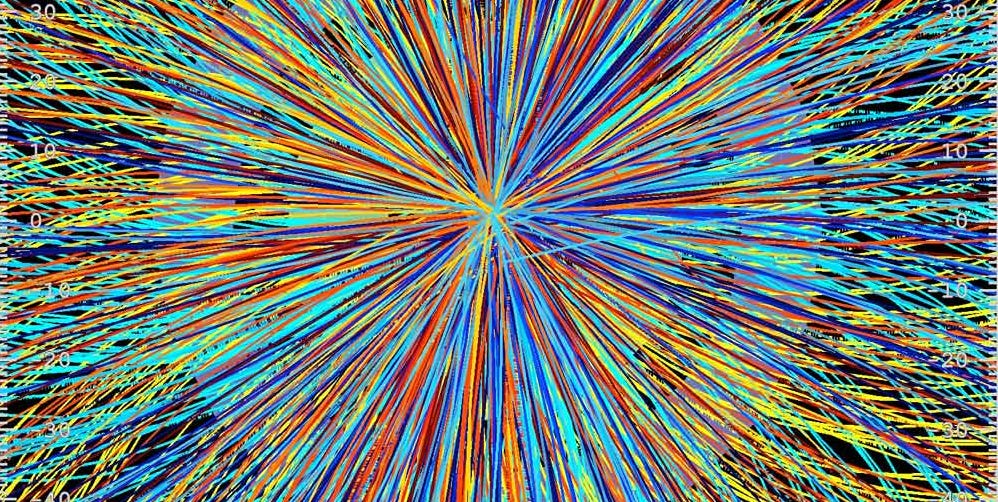
This extremely hot, dense state appears in high-energy physics. In quark-gluon plasma, quarks and gluons are not confined inside protons and neutrons the way they normally are. Scientists study it to understand the early universe and the behavior of matter under extreme conditions.
Real-World Examples of Phases of Matter
The phases of matter are not just a chapter in a science book. They are all over daily life.
In the kitchen
Ice melts in a drink, water boils in a pot, steam fogs the lid, butter softens, chocolate melts, and sugar can melt and harden again. Cooking is basically delicious thermodynamics.
In weather
Clouds form when water vapor condenses. Frost appears when water vapor deposits directly as ice. Snow can shrink without melting through sublimation. Weather is matter changing phase on a planetary budget.
In technology
Refrigerators rely on controlled phase changes of refrigerants. Plasma is used in lighting and manufacturing. Supercritical fluids are used in specialized extraction processes. Liquid crystals make screens readable. Modern life is full of matter quietly switching costumes behind the scenes.
In Earth and space science
Magma, ice caps, atmospheric gases, and the plasma of stars all show how widely these principles apply. Even the water cycle depends on continuous motion between solid, liquid, and gas forms.
Why Learning the Phases of Matter Still Matters
It is easy to treat the phases of matter as beginner science, but the concept scales upward beautifully. It helps children understand melting ice and boiling water. It helps engineers design cooling systems and manufacturing processes. It helps physicists investigate plasmas and quantum matter. And it helps everyone make sense of how energy changes the physical world.
More than that, the topic builds scientific thinking. It teaches classification, particle models, energy transfer, equilibrium, and the difference between physical and chemical change. Those are foundational ideas that appear again and again in chemistry, physics, biology, and environmental science.
So yes, the phases of matter begin with ice cubes and steam. But they end with stars, quantum labs, and the structure of reality itself. Not bad for a topic many people first met in middle school between a broken pencil and a suspiciously sticky lab table.
Everyday Experiences With the Phases of Matter
If you want to really understand phases of matter, do not start with a complicated equation. Start with an ordinary day. The first clue might show up in the freezer when you crack loose an ice tray and hear the cubes rattle like tiny frozen maracas. That is matter in a solid phase: organized, packed, and not interested in going anywhere fast. A few minutes later, one cube slides into a glass and slowly softens. Without asking permission from anyone, it starts changing into liquid water. Same substance, new behavior, zero identity crisis.
Then there is the morning coffee or tea. You heat water on the stove or in a kettle, and suddenly the quiet surface turns energetic. Tiny bubbles form, steam rises, and the kitchen starts feeling like a miniature weather system. What you are seeing is a phase change from liquid to gas. And when that steam hits a cooler surface, such as a lid or a nearby window, it condenses into droplets. Matter is basically giving a live performance before you have even finished breakfast.
Bathrooms are another gold mine for phase-change drama. A hot shower fills the room with warm vapor, then the mirror fogs up because the gas condenses back into liquid water. You wipe the mirror with your hand, feel the droplets, and suddenly you are doing hands-on science before you are fully awake. It is one of the nicest things about phases of matter: you do not need a lab coat to observe them. You mostly need a mirror and a tolerance for early mornings.
Cold weather adds another chapter. On chilly mornings, frost can appear on grass, windows, or car roofs even when no one saw liquid water arrive first. That is deposition, where water vapor in the air turns directly into ice. Snowbanks can also slowly shrink through sublimation, especially in dry air, where solid ice changes directly into water vapor. Nature loves shortcuts.
Cooking offers even more examples. Melted butter, simmering soup, frozen fruit thawing on the counter, and the sizzle of water hitting a hot pan all reveal how heat changes particle motion. Even bread baking involves moisture moving, evaporating, and redistributing through the loaf. The kitchen is part chemistry lab, part edible magic show.
And then there are the bigger experiences: watching lightning tear across the sky, seeing a neon sign glow at night, or noticing dry ice produce theatrical clouds at a party. Those moments remind us that matter is not boring, static stuff. It is active, responsive, and deeply tied to energy. Once you start paying attention, phases of matter stop being a school term and start feeling like a language the physical world uses all day long. You just happen to be living inside the conversation.
Conclusion
The phases of matter explain how substances behave, how energy moves through physical systems, and why the same material can look completely different under changing conditions. Solids hold shape, liquids flow, gases spread, and plasma lights up the universe with charged energy. Add in phase changes, pressure effects, and exotic states like Bose-Einstein condensates, and the topic becomes far more than a beginner lesson. It becomes a framework for understanding the physical world.
Whether you are studying chemistry, teaching science, writing educational content, or just wondering why your bathroom mirror turns cloudy after a hot shower, the phases of matter offer one of the clearest ways to connect theory with real life. Matter is always moving, changing, and adapting. Luckily for us, it leaves plenty of clues.