The Smithfield Suspension Pendant is the kind of lighting fixture that walks into a room quietly and somehow ends up owning the place. Designed by Jasper Morrison for FLOS in 2009, this pendant light blends industrial inspiration, Italian craftsmanship, and a wonderfully calm modern shape. It does not scream for attention with crystals, curlicues, or “look-at-me” drama. Instead, it wins with proportion, polish, and practical beauty.
For homeowners, interior designers, architects, and anyone who has ever stared at a dining room ceiling wondering why it looks so lonely, the Smithfield pendant offers a refined solution. It is large enough to anchor a room, soft enough to feel welcoming, and simple enough to work with many interiorsfrom minimalist kitchens to cozy dining rooms, boutique offices, and polished hospitality spaces.
This guide explores what makes the Smithfield Suspension Pendant special, where it works best, how to choose a finish, what to know before installation, and why this modern pendant light continues to be a favorite among design lovers who prefer elegance without unnecessary fuss.
What Is the Smithfield Suspension Pendant?
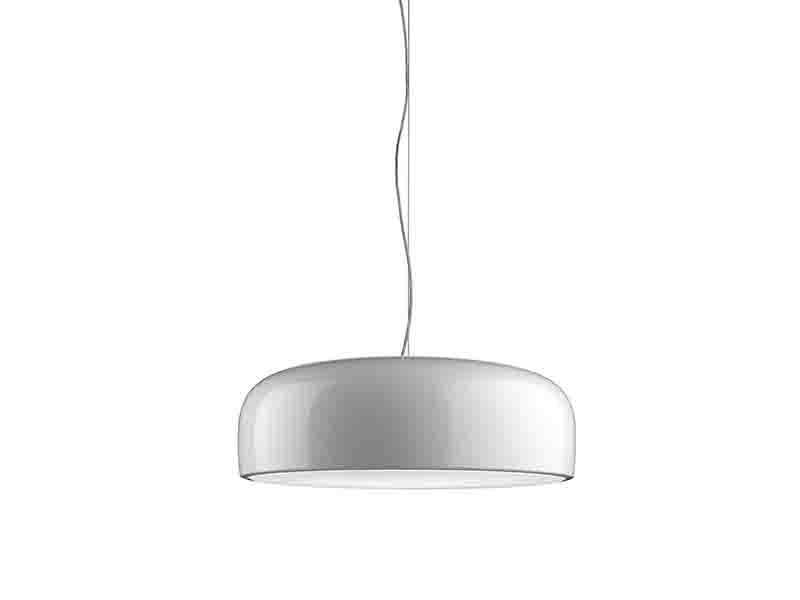
The Smithfield Suspension Pendant is a direct-light pendant lamp from FLOS, the Italian lighting brand known for iconic modern fixtures. The lamp has a rounded aluminum body, a clean dome-like profile, and an opalescent diffuser that softens the light below. It is available in several finishes, including white, gloss black, matte black, red, green, and mud, giving it more personality than its simple silhouette first suggests.
At roughly 23.6 inches in diameter and about 8.5 inches high, the Smithfield pendant has real presence. It is not a tiny accent light pretending to be useful. It is a full-size architectural pendant designed to illuminate dining tables, kitchen islands, work areas, and open-plan living spaces with confidence.
The fixture is especially known for its balance of industrial character and domestic warmth. It takes inspiration from functional market and factory lighting, then refines that idea into something smoother, more sophisticated, and far more suitable for a beautiful home. Think “warehouse lamp after a very good tailoring appointment.”
The Design Story: Jasper Morrison’s Quiet Genius
Jasper Morrison is often associated with a design philosophy that values usefulness, restraint, and everyday beauty. His best work does not feel over-designed. It feels inevitable, as though the object has always existed and simply waited for someone sensible enough to notice it.
The Smithfield Suspension Pendant follows that approach perfectly. Its form is familiar: a broad, shallow shade that recalls industrial lighting. Yet every detail is cleaned up, softened, and proportioned with care. The result is a pendant light that feels timeless rather than trendy.
Many modern lights try to become the main character in a room. Smithfield is different. It supports the room. It makes the table look better, the kitchen feel more complete, and the ceiling less empty. It gives light, structure, and style without behaving like a chandelier auditioning for Broadway.
Key Features of the Smithfield Suspension Pendant
1. Aluminum Body
The aluminum shade gives the Smithfield pendant durability, a crisp surface, and a premium feel. Aluminum also helps maintain the fixture’s smooth, sculptural shape without unnecessary bulk. The finish options enhance this material in different ways: white feels fresh and architectural, black feels graphic and bold, mud feels warm and understated, while red or green can create a stronger design statement.
2. Opalescent Diffuser
The lower diffuser is one of the most important parts of the design. Instead of leaving bulbs exposed, the Smithfield Suspension Pendant uses an opalescent diffuser to soften glare and distribute light more evenly. That means it can provide useful downward illumination while still feeling comfortable above a table or seating area.
3. Direct Lighting
This pendant is designed primarily for direct light. In simple terms, it shines downward where you need it most. That makes it excellent for dining rooms, breakfast nooks, kitchen islands, desks, conference tables, and other areas where visual comfort and task lighting both matter.
4. Multiple Finish Options
One of the best things about the Smithfield pendant is how much the finish changes its personality. A white Smithfield pendant can almost disappear into a pale ceiling while still giving the room a polished designer look. A matte black or glossy black version adds contrast and definition. Red brings energy. Green feels stylish and unexpected. Mud is the quiet luxury option, perfect for warm neutrals, natural woods, stone, and earthy interiors.
5. Bulb and LED Versions
Depending on the version and market, the Smithfield family includes traditional lamp-based options and integrated LED versions. Some models use multiple medium-base bulbs, while LED versions may offer warm color temperatures such as 2700K or 3000K. For residential spaces, 2700K usually feels warmer and more intimate, while 3000K feels a little brighter and cleaner without becoming cold.
Why the Smithfield Pendant Works So Well in Modern Interiors
The Smithfield Suspension Pendant succeeds because it has a rare quality: it is visually strong but not visually noisy. Its broad, rounded form gives the eye something to rest on, while its minimal detailing keeps the room from feeling cluttered.
In open-plan homes, lighting often has to perform double duty. It must provide illumination, but it also needs to define zones. A Smithfield pendant over a dining table immediately says, “This is the gathering spot.” Over a kitchen island, it creates a clean visual anchor. In an office, it can make a meeting table feel intentional rather than randomly placed under a ceiling grid of sadness.
The pendant’s shape also works beautifully with furniture. Round tables echo its curved form. Rectangular tables benefit from the contrast of a soft circular shade. Long islands can use multiple pendants for rhythm and symmetry. Because the design is simple, it can pair with wood, marble, stainless steel, terrazzo, concrete, leather, linen, and nearly every other material designers love to argue about over coffee.
Best Rooms for the Smithfield Suspension Pendant
Dining Room
The dining room is perhaps the most natural home for the Smithfield pendant. Its generous diameter helps center the table, while the diffuser keeps the light comfortable for meals. Nobody wants to enjoy pasta under a glare spotlight that makes dinner feel like an interrogation. Smithfield gives the table presence without ruining the mood.
Kitchen Island
For kitchen islands, the Smithfield pendant works best when the island is wide enough to handle its scale. A single pendant can suit a compact island or round breakfast table, while two pendants may work over a longer surface. The clean form pairs especially well with flat-panel cabinets, waterfall countertops, and modern appliances.
Living Room
In a living room, the pendant can replace a typical ceiling light with something more architectural. It works best in rooms with enough ceiling height and a clear central area. Pair it with floor lamps or wall sconces to create layered lighting rather than asking one pendant to do every job, pay rent, and walk the dog.
Home Office
A Smithfield Suspension Pendant can make a home office feel more intentional and less like a spare bedroom with a laptop problem. The direct light is useful above a worktable, while the soft diffuser helps reduce harshness. Choose black for a sharp studio look or white for a clean, calm workspace.
Commercial Spaces
The Smithfield pendant also suits restaurants, boutique retail spaces, reception areas, and creative studios. Its industrial heritage gives it enough character for commercial interiors, while the refined finish keeps it from looking too raw or temporary.
Choosing the Right Finish
Finish selection is where the Smithfield Suspension Pendant becomes personal. The same fixture can feel crisp, dramatic, playful, or earthy depending on color.
- White: Best for minimalist spaces, Scandinavian-inspired rooms, white kitchens, and interiors where you want the shape without heavy contrast.
- Gloss Black: Ideal for dramatic dining rooms, modern kitchens, and spaces with black hardware or dark furniture.
- Matte Black: A softer, more architectural black option that works well in contemporary homes.
- Mud: Excellent for warm neutrals, organic modern interiors, stone surfaces, and wood-heavy spaces.
- Red: A confident accent choice for creative rooms, restaurants, or anyone who believes lighting should have a pulse.
- Green: Stylish, unexpected, and especially attractive with walnut, brass, cream walls, and botanical palettes.
When in doubt, match the pendant’s finish to the mood of the room rather than simply copying cabinet hardware. Lighting sits in the visual center of a space, so it has permission to be a little more expressive.
Size, Scale, and Placement Tips
The Smithfield Suspension Pendant is not oversized, but it is substantial. Its approximately 23.6-inch diameter makes it best suited for medium to large tables, islands, and rooms with breathing space. Before buying, measure the surface below it and check ceiling height carefully.
For dining tables, a common guideline is to hang the bottom of the pendant about 30 to 36 inches above the tabletop. This can vary depending on ceiling height, table size, and personal preference, but the goal is simple: the lamp should feel connected to the table without blocking faces. A pendant that interrupts conversation is not lighting; it is a social obstacle.
For kitchen islands, hang height often falls in a similar range above the counter, though taller users may prefer slightly higher placement. If using multiple Smithfield pendants, leave enough space between them so each fixture can breathe visually.
Lighting Quality: What to Expect
The Smithfield Suspension Pendant is not just decorative. It is designed to deliver useful direct light. The diffuser helps reduce glare and creates a smooth, pleasant glow underneath. That makes it especially suitable for places where people gather, eat, work, or read.
For warm residential interiors, look for warm white light. A 2700K color temperature creates a cozy evening mood, while 3000K may be better for kitchens or workspaces where a slightly clearer light is useful. Color rendering is also worth considering. Higher CRI values help colors look more natural, which matters when you want your food, furniture, and paint colors to look like themselves rather than strange cousins from another planet.
If you choose a dimmable version, pair it with a compatible dimmer. This is not a glamorous detail, but it matters. The wrong dimmer can cause flicker, buzzing, or uneven performance. A professional electrician can help confirm compatibility before installation.
Smithfield Suspension Pendant vs. Similar Modern Pendants
Compared with glass globe pendants, the Smithfield feels more grounded and architectural. Compared with slim linear pendants, it feels warmer and more sculptural. Compared with decorative chandeliers, it is much cleaner and easier to integrate into modern interiors.
Its closest competitors are other large dome pendants and minimalist designer lights. What separates Smithfield is its refinement. Many dome pendants look either too industrial or too plain. Smithfield lands in the middle: functional enough to be useful, polished enough to feel luxurious, and quiet enough to age well.
That aging quality is important. Trendy lights can look dated quickly. The Smithfield Suspension Pendant has a familiar form and restrained detailing, which gives it a longer design life. It is a buy-once, enjoy-for-years kind of fixture, assuming you choose the right size and finish for your room.
Installation Considerations
Because the Smithfield pendant is a high-quality suspension fixture with a steel cable and ceiling canopy, professional installation is strongly recommended. The ceiling box should be properly rated, wiring should be handled safely, and the hanging height should be adjusted before final tightening.
Before installation, confirm the following:
- The ceiling height works with the pendant’s drop length.
- The fixture is centered over the table, island, or seating area.
- The dimmer is compatible with the selected bulb or LED version.
- The finish coordinates with nearby materials and sightlines.
- The room has additional light sources if layered lighting is needed.
Also consider how the pendant looks from adjoining rooms. In open-plan layouts, a large pendant becomes part of the view from several angles. The Smithfield’s simple form is helpful here because it looks good from the side, below, and across the room.
Pros and Cons of the Smithfield Suspension Pendant
Pros
- Timeless modern design by Jasper Morrison
- Premium FLOS construction and Italian design heritage
- Large enough to anchor dining rooms and kitchens
- Soft diffuser helps reduce glare
- Multiple finish options for different interiors
- Works in both residential and commercial spaces
Cons
- Premium price compared with basic pendant lights
- Large diameter may overwhelm small rooms
- Requires careful placement and installation
- Some versions require separate bulbs or specific dimmer compatibility
Who Should Buy the Smithfield Suspension Pendant?
The Smithfield Suspension Pendant is ideal for people who want a designer pendant light that feels modern but not cold. It is especially well-suited for homeowners investing in a long-term lighting upgrade, designers specifying a reliable architectural fixture, and commercial spaces that need a polished but understated focal point.
It may not be the best choice if you want an ornate chandelier, a tiny pendant, or a budget fixture for a temporary space. But if you want a clean, high-quality pendant with design credibility and everyday usefulness, Smithfield deserves serious consideration.
Real-World Experience With the Smithfield Suspension Pendant
Living with the Smithfield Suspension Pendant is less about dramatic surprise and more about daily satisfaction. It is the kind of fixture you appreciate in small moments: when the dining table looks complete, when the kitchen feels calmer in the evening, or when guests ask about the lamp without shouting over it visually. It has presence, but it does not demand applause every time someone enters the room. Frankly, more home decor should learn that skill.
One of the most noticeable experiences is how the pendant helps organize a space. In open-plan homes, furniture can sometimes feel like it is floating. Place the Smithfield pendant above a table or island, and suddenly the area has a center. The room feels designed instead of assembled during a weekend panic. This is especially helpful in apartments, lofts, and homes where the dining area shares space with the living room or kitchen.
The light quality is another major part of the experience. Because the diffuser covers the underside, the illumination feels smoother than exposed-bulb fixtures. That makes a difference during dinner, homework, remote work, or casual evenings when the kitchen island becomes a snack station, charging dock, mail pile, and family conference table all at once. With the right warm bulb or LED version, the Smithfield can create a comfortable glow that feels useful but not harsh.
Scale is the one detail people should respect. This pendant is not shy. In a small room with a low ceiling, it may feel too dominant. But in the right setting, its diameter is exactly what makes it successful. Above a six-person dining table, it feels balanced. Above a generous island, it looks intentional. In a room with clean lines and neutral colors, a black, mud, green, or red finish can become the design detail that prevents the space from feeling flat.
Maintenance is refreshingly simple. The smooth shade does not have dozens of decorative parts collecting dust like tiny architectural guilt traps. A soft cloth and gentle cleaning approach are usually enough for routine care. The diffuser should be handled carefully, of course, but the overall design is practical. That practicality is part of the Smithfield experience: it looks refined without becoming precious.
Another real-life advantage is flexibility. If you change chairs, repaint the walls, swap a table, or move from a minimalist style toward something warmer, the Smithfield pendant can usually adapt. It does not belong to one narrow trend. The white version can support a bright modern home; black can sharpen a room with contrast; mud can soften a neutral palette; green or red can make the pendant feel collected and personal.
The best experience comes when the Smithfield Suspension Pendant is treated as part of a layered lighting plan. Use it as the anchor, then add sconces, floor lamps, under-cabinet lighting, or table lamps as needed. That way, the pendant does what it does best: creates focus, provides direct light, and gives the room a beautifully calm center of gravity.
Conclusion
The Smithfield Suspension Pendant is a strong example of modern lighting done with restraint, intelligence, and lasting appeal. Designed by Jasper Morrison for FLOS, it transforms industrial inspiration into a refined pendant lamp suitable for homes, restaurants, offices, and stylish commercial interiors. Its aluminum body, opalescent diffuser, generous scale, and versatile finishes make it both practical and beautiful.
For anyone searching for a designer pendant light that can anchor a room without overwhelming it, Smithfield is a smart choice. It is not the loudest lamp in the lighting world, and that is exactly its charm. It simply works, looks excellent, and makes the space beneath it feel more intentional. In the world of ceiling lights, that is a pretty impressive résumé.