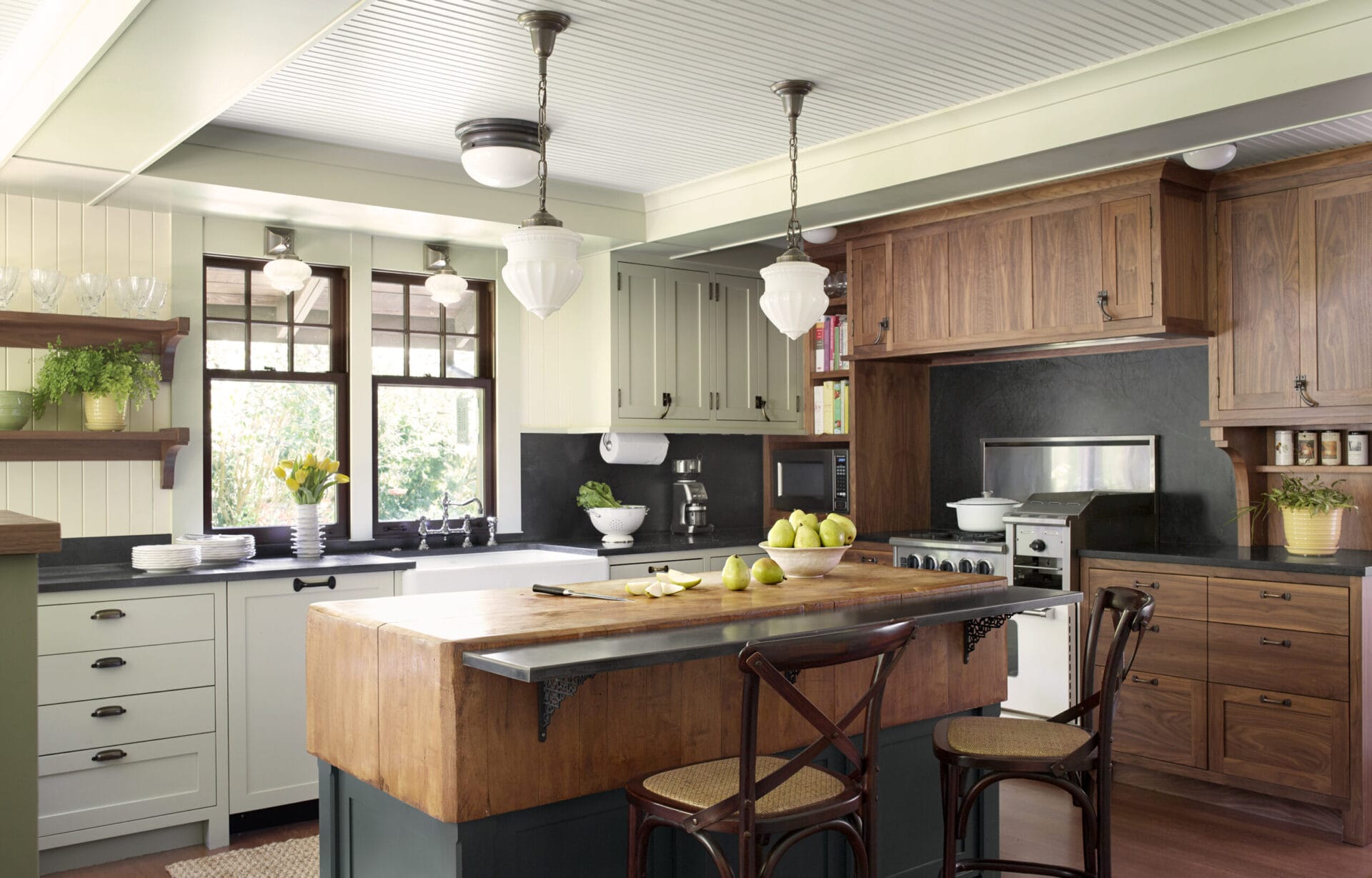
A gut kitchen redo is basically relationship counseling for your house. You’re sitting your kitchen down, looking it dead in the cabinet doors, and saying: “We’ve had great times. You’ve also made me cry while I searched for a spatula in 1997-era corner cabinets. We need to talk.”
The magic of a “something old, something new” kitchen renovation is that you don’t have to choose between charm and performance. You can keep the details that make your home feel like your homeoriginal floors, vintage hardware, a salvaged pantry doorwhile upgrading the parts that quietly sabotage daily life, like dim lighting, weak ventilation, and storage that seems designed by someone who’s never owned a colander.
This guide walks you through how to plan a gut renovation that respects what’s worth saving, modernizes what’s holding you back, and leaves you with a kitchen that feels intentional instead of “we picked things while hungry.”
What a “Gut Kitchen Redo” Really Means (and Why It’s Worth It)
A true gut remodel goes beyond swapping counters and painting cabinets. It typically means removing old finishes down to framing (or close to it), then rebuilding with updated electrical, plumbing, lighting, ventilation, surfaces, and layout. The upside is control: you can fix workflow problems, add storage where it belongs, and make the space safer and more efficient.
The tradeoff is obvious: it’s disruptive, it has more unknowns (hello, mystery plumbing), and it requires more decisions than any human should make while also trying to remember if they already own a toaster.
Start With a “Keep / Upgrade / Replace” Inventory
Before you plan a single backsplash tile, do a fast audit. Walk your current kitchen with a notepad and sort everything into three buckets: keep, upgrade, and replace.
Keep (the “something old” that adds character)
- Solid wood floors you can refinish (or patch with reclaimed boards).
- Vintage doors with real heftperfect for a pantry or broom closet.
- Old-school hardware (or the “old” look via quality reproduction hardware).
- Architectural details like original trim profiles, beadboard, or a pass-through opening worth preserving.
Upgrade (the “keep it, but make it behave” list)
- Cabinet boxes that are structurally sound (paint, refinish, or reface doors).
- Layout that’s closemaybe you don’t need a wall moved, just better zones and landing spaces.
- Lighting that exists, but only technically (we’ll fix that).
Replace (the “this is why we can’t have nice things” list)
- Weak ventilation that leaves your kitchen smelling like last Tuesday’s fish tacos.
- Failing plumbing, undersized electrical, or questionable DIY work from a previous era.
- Surfaces that chip, stain, or are impossible to sanitize comfortably.
This inventory is more than sentimental organizing. It becomes your decision filter. When you’re choosing between five shades of white, you’ll be glad you already decided what the kitchen must do, not just how it must photograph.
Budget Reality: Spend Where It Changes Daily Life
Kitchen remodel costs vary wildly by region and scope, but the big financial lesson stays consistent: not every dollar pays you back equally. Industry ROI reporting often shows smaller kitchen updates can recoup a higher percentage than major upscale overhauls. In the 2025 Cost vs. Value data, a minor (midrange) kitchen remodel shows a relatively modest project cost compared with resale value, while an upscale major kitchen remodel can be expensive with a much lower percentage recouped.
Translation: you don’t need to build a showroom to build a great kitchen. A smart gut kitchen redo spends on what improves function and durability: layout, storage, ventilation, lighting, and quality cabinet construction. Then you choose finishes that look great and last, without paying luxury prices for bragging rights.
A practical “gut kitchen redo” budget split
- Cabinetry & storage: where kitchens win or lose.
- Labor & trades: electrical, plumbing, drywall, flooring.
- Ventilation & lighting: the comfort upgrades people forget until they live without them.
- Surfaces: countertops, backsplash, flooring, paint.
- Appliances: choose reliability and efficiency over “it talks to my phone.”
- Contingency: set aside money for the surprise behind-the-wall discovery.
Layout: Keep the Soul, Fix the Flow
Your “something old” might be a charming footprintmaybe the kitchen sits where it has for 80 years. That doesn’t mean you have to keep the same clunky workflow. Good layout is less about trends and more about choreography: where you prep, cook, clean, store, and land items.
The National Kitchen & Bath Association (NKBA) planning guidance is widely used by designers to reduce daily friction. Traditional work-triangle thinking still matters, but modern kitchens often work better as zones: prep zone, cooking zone, cleanup zone, coffee zone, and pantry zone.
Examples of “old footprint, new function” moves
- Swap shelves for drawers in lower cabinets so you don’t have to spelunk for a pot lid.
- Add landing space beside the fridge, oven, and sink so hot and heavy items have somewhere safe to go.
- Widen pinch points near the dishwasher and trash so two people can exist in the same kitchen without negotiating a treaty.
- Keep the original window (old!) but center the sink and add better task lighting (new!).
Demo, Safety, and the “Please Don’t Surprise Me” Phase
Demo day feels like progress because, for a brief moment, you’re the boss of your kitchen. But demo is also when you’re most likely to accidentally create a problem you didn’t budget forespecially in older homes.
Shutoffs first, always
If you’re doing any DIY demolition, treat utilities like they’re plotting against you. Power, water, and gas should be safely shut off before removing appliances or opening walls. (Yes, even if you “just need to move the stove for a second.”)
If your home was built before 1978: lead safety matters
Renovations that disturb painted surfaces in pre-1978 homes can create hazardous lead dust. Federal requirements apply to contractors doing work for compensation, and best practices still matter for homeowners doing DIY in their own home. Containment, careful cleanup, and lead-safe methods are not optional if you want to keep your home healthy.
Asbestos and “can’t-tell-by-looking” materials
Some building materials can contain asbestos, and you generally can’t confirm it by sight alone. If you suspect a material could contain asbestos and your remodel will disturb it, get it properly assessed. Removal is specialized workimproper removal can increase risk rather than reduce it.
A note on countertop dust (especially engineered stone)
Quartz and other engineered stone surfaces can be durable and beautiful, but cutting and fabrication can generate respirable crystalline silica dusta serious occupational hazard. The takeaway for homeowners is simple: choose experienced fabricators who follow safety controls. You’re not at risk from simply living with a finished countertop, but the people cutting it deserve protection.
Deconstruction: The “Something Old” You Don’t Throw Away
A gut kitchen renovation doesn’t have to mean everything goes into a dumpster. Many cabinets, appliances, sinks, fixtures, and even doors can be donated or reusedespecially if they’re removed carefully.
Some Habitat for Humanity ReStores accept donated building materials and appliances, and some local programs offer deconstruction services that remove usable items for resale. Beyond the feel-good factor, salvage can reduce landfill waste and help your project align with sustainability goals without sacrificing your new-kitchen dream.
This matters because construction and demolition debris is a massive waste stream in the U.S. Even a single kitchen can generate surprising volume, so reclaiming what you can is a meaningful win.
Rough-Ins: Where “New” Quietly Makes Life Better
Rough-ins are not glamorous. No one posts “Look at my new wiring!” on social media unless they’re extremely fun at parties. But rough-ins are where your kitchen becomes safer, more comfortable, and more usable for the next decade.
Electrical upgrades worth prioritizing
- More circuits where you actually cook (so you can run a toaster and a kettle without blowing something dramatic).
- Planned outlet placement for coffee stations, charging drawers, and countertop appliances you use daily.
- Lighting circuits separated by purpose: task, ambient, and accent.
Plumbing upgrades worth the disruption
- Shutoff valves that are accessible and labeled.
- Modern supply lines and code-compliant drains.
- Water filtration at the sink (if your household will use it consistently).
Ventilation: The Upgrade People Notice the First Week
If your “something old” kitchen has a microwave that pretends to vent, you already know the truth: it doesn’t. A proper range hood moves smoke, grease, and odors out of the space more effectively than built-in microwave ventilation, and it can dramatically improve comfort.
When choosing a hood, focus on performance and fit for your cooking habits. Bigger output can be great, but higher-powered hoods may require makeup air depending on local code and how tight your home is. A good installer will help you plan this correctly so you don’t create a drafty, noisy problem while trying to solve a smelly one.
Appliances: Modern Efficiency Without the “Robot Kitchen” Vibe
Here’s the sweet spot for “something new”: appliances that reduce chores, save energy and water, and don’t become obsolete the second your Wi-Fi password changes.
Easy wins for efficiency
- Dishwasher: ENERGY STAR-certified models are designed to use less energy and water than standard models, and they can be more efficient than handwashing when used correctly (full loads, sensible settings).
- Refrigerator: Efficient models can reduce energy use compared with basic standards without sacrificing storage features.
Reliability matters, too. It’s worth checking independent performance and reliability testing when choosing major appliances, especially for dishwashers and range hoodstwo categories that can dramatically affect daily comfort.
Cabinets and Storage: Where Old and New Can Shake Hands
If you’re lucky enough to have older solid-wood cabinet boxes in good condition, you may be able to keep them and modernize the look with new doors, updated hinges, and smarter interiors. That’s “something old” doing real work, paired with “something new” that makes it feel fresh.
Storage upgrades that feel like cheating
- Deep drawers for pots, pans, and small appliances.
- Pull-out trash near prep space.
- Tray dividers for sheet pans and cutting boards.
- Corner solutions that don’t require yoga.
- A real pantry plan (even a tall cabinet pantry can change your life).
Surfaces: Pick Durable “New,” Then Layer in “Old” for Warmth
Surfaces are the most visible part of your kitchen, but they also take the most abuse. The smartest strategy is to choose durable, easy-to-clean foundational surfaces, then add vintage warmth through details that are easy to swap later.
A balanced combo that works in real homes
- Old: refinished wood floors, a salvaged light fixture, vintage stools, classic bridge faucet styling.
- New: hardwearing countertops, modern under-cabinet lighting, updated sink accessories, better ventilation.
If you love a vintage look, you don’t have to build a museum. Vintage-inspired kitchens can keep their timeless feel while still using present-day conveniences. The key is restraint: pick one or two “old” anchors, then keep the rest cohesive and functional.
Lighting: The Most Underrated “New” Feature
If you want your gut kitchen redo to feel like a glow-up instead of a beige-up, fix the lighting. Great kitchens use layers:
- Ambient lighting for overall brightness.
- Task lighting where you chop, cook, and read labels.
- Accent lighting for mood and depth (inside glass cabinets, toe-kick glow, or a statement pendant).
This is also a perfect place to weave in “something old”: a restored vintage pendant over the sink or an antique-inspired fixture over the islandrewired and installed to modern safety standards.
Timeline: How to Keep Your Project Moving (Without Losing Your Mind)
Kitchen remodel timelines vary, but full renovations commonly take months from planning through completion. The big drivers are design decisions, permitting, ordering lead times, and how many trades need to coordinate. The best way to shorten chaos is to finalize major selections earlyespecially cabinets, appliances, and plumbing fixturesso construction isn’t stalled by backorders or last-minute rethinks.
And yes, you should plan a temporary kitchen. Even a “microwave + coffee maker + dish tub” setup will save your sanity and your budget, because takeout for every meal turns into a lifestyle faster than you think.
How to Make Old + New Look Intentional (Not Accidental)
The difference between “curated” and “confusing” is usually one of three things: color, material repetition, and scale. Here’s a simple approach that works:
1) Choose a calm foundation
Let cabinets, counters, and walls be your steady background. This is your “new” canvas.
2) Pick one standout old element
A salvaged pantry door. A vintage runner. A restored light fixture. Something with patina. Make it the hero.
3) Echo it twice
Repeat the “old” element’s tone in two other placeswarm wood, aged brass, or a heritage colorso it reads as a design choice, not a random flea market incident.
4) Keep the “old” tactile, not cluttered
Vintage works best when it feels lived-in: a dough bowl on the counter, a pottery crock for utensils, framed recipe cards, or a single open shelf for everyday dishes. If every surface becomes a display, the kitchen stops being a kitchen.
Final Check: A Gut Kitchen Redo Punch List You’ll Actually Use
- Does the layout support how you cook, clean, and store food?
- Is there enough landing space near fridge, sink, and cooktop?
- Do you have strong ventilation sized for your cooking style?
- Is lighting layered (ambient + task + accent)?
- Did you plan outlets where you’ll actually use appliances?
- Are “old” elements protected (refinished, rewired, sealed) and safe?
- Do you have a contingency budget for surprises?
- Do you have a temporary kitchen plan?
Extra : The Real-Life Experience of “Something Old, Something New”
If you ask homeowners what they remember most about a gut kitchen renovation, you might expect them to say “the new countertops” or “the cabinets finally close quietly.” But the stories usually start earlierright around the moment the kitchen stops being a kitchen.
The first emotional landmark is demo shock. Even when you’re excited, there’s a split second where you stare at exposed studs and think, “Wow. I live in a movie montage now.” The charm of “something old” becomes very real in that phase, because you start discovering what your house has been hiding: old growth framing, patchwork repairs, maybe a surprising layer of flooring that tells a whole timeline of past trends.
Then comes the decision marathon. A gut kitchen redo asks you to choose hundreds of tiny things: outlet placements, grout color, cabinet interior finish, the exact height of a sconce. Homeowners often say the best antidote is a short list of non-negotiables. For some, it’s “a vent hood that actually works.” For others, it’s “a place for the coffee stuff that doesn’t take over the entire counter.” When you know your must-haves, the rest becomes easier: you’re building a kitchen for your life, not a photo shoot.
The “something old” part tends to create the most satisfying moments. People light up talking about salvaged finds: the vintage cabinet latch that matches the home’s age, the old door turned pantry entry, the original floors that were hiding under vinyl and suddenly look like they belong in a magazine. Those pieces add a sense of continuity. They make the new kitchen feel like it grew therelike it didn’t erase the home’s story, it edited it.
The “something new” part is where the everyday gratitude shows up. It’s the first night you sauté without the smoke alarm yelling at you. It’s opening a wide drawer and seeing every pot in one glance. It’s realizing you can unload the dishwasher without doing the sideways shuffle because the aisle is finally wide enough. These aren’t glamorous wins, but they’re the kind that make you love your kitchen on a random Tuesday.
Most people also remember the temporary kitchen era with surprising intensity. You learn quickly that washing dishes in a bathroom sink builds character… but not the kind you asked for. The homeowners who cope best set up a mini station on day one: a tub for washing, a drying rack, a coffee setup, and a spot for basic pantry items. It’s not fancy, but it prevents “we’ve eaten cereal for dinner three nights in a row” from becoming your personality.
Finally, there’s the re-entry moment when the space is technically done, but it doesn’t feel like yours yet. That’s normal. A kitchen becomes personal through use. Once you cook a few meals, hang the towels, stock the pantry, and add one or two meaningful old piecesa thrifted brass tray, your grandmother’s mixing bowl, a salvaged stoolthe newness relaxes. The kitchen stops performing and starts living.
That’s the real promise of “something old, something new” in a gut kitchen redo: you get modern comfort without losing the soul. You keep what matters, upgrade what doesn’t, and end up with a kitchen that feels both refreshed and familiarlike it’s been waiting for you all along.