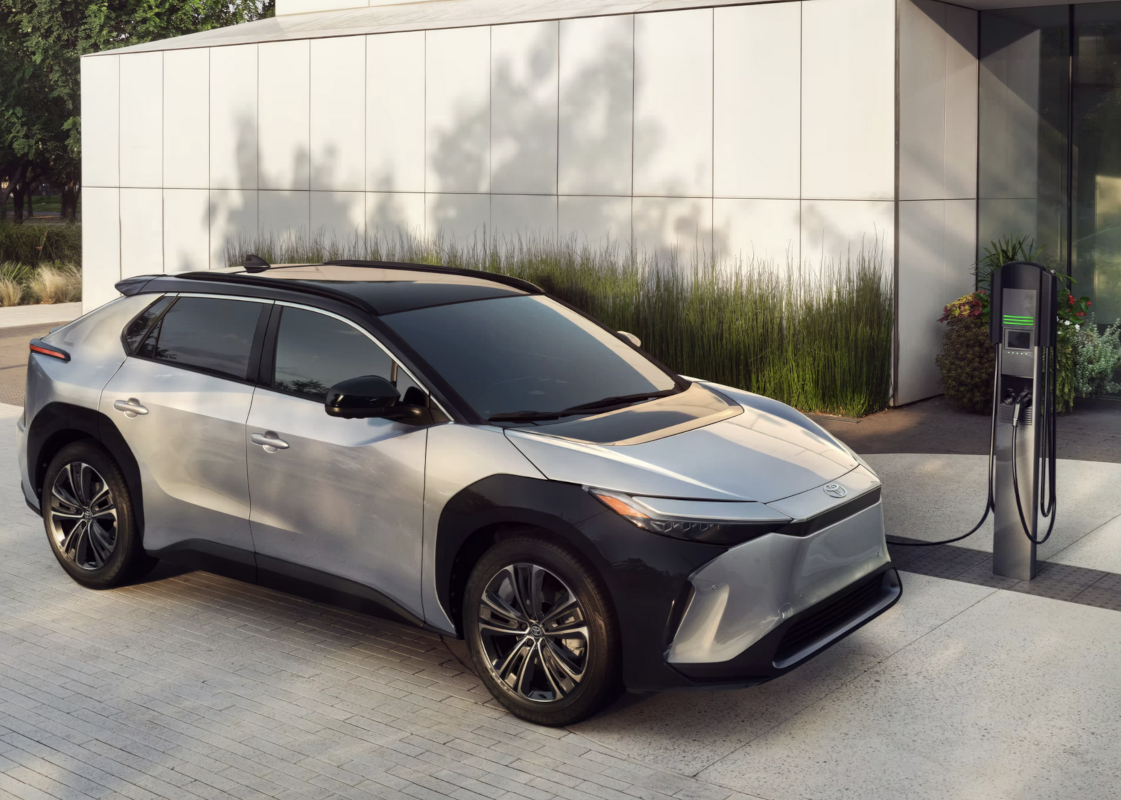
Toyota has never been the loudest kid at the electric vehicle lunch table. While Tesla brought the fireworks, Hyundai brought the futuristic styling, and legacy automakers rushed to staple “EV” onto every product plan, Toyota often looked like the calm engineer in the corner saying, “Let’s not trip over the extension cord.” But lately, that calm engineer has started making some very grand promises about battery technology.
The headline is big enough to make any EV shopper raise an eyebrow: longer driving ranges, faster charging, cheaper battery packs, more efficient electric vehicles, and eventually solid-state batteries that could make today’s lithium-ion packs feel like flip phones at a smartphone convention. Toyota says its next-generation battery strategy will not rely on one magic cell, but on a lineup of battery types designed for different vehicles, prices, and customer needs.
That is classic Toyota. Instead of betting the entire farm on one battery chemistry and hoping the cows learn software updates, the company is taking a “multi-pathway” approach. It wants hybrids, plug-in hybrids, battery electric vehicles, hydrogen fuel cell vehicles, and several battery technologies working together. Whether that strategy is brilliant patience or corporate hesitation depends on whom you ask. But one thing is clear: Toyota is now trying to convince the market that it can move from EV skeptic to battery-tech heavyweight.
Why Toyota’s Battery Promises Matter
Toyota is not just another automaker. It is one of the largest car companies in the world, famous for reliability, manufacturing discipline, and turning “boring but dependable” into a global superpower. When Toyota talks about battery technology, the industry listens because Toyota has the scale to make a technology mainstream if it can manufacture it reliably and profitably.
Battery technology sits at the center of the electric vehicle race. Range, charging time, cost, battery life, safety, and cold-weather performance all shape whether customers feel comfortable moving from gasoline to electricity. For many shoppers, the EV question is not philosophical. It is practical: Will the car get me to grandma’s house? Will it charge before my coffee gets cold? Will the battery still be healthy after years of school runs, grocery trips, and “oops, I forgot to plug it in” moments?
Toyota’s promises aim directly at those concerns. The company has discussed next-generation lithium-ion batteries, lower-cost lithium iron phosphate batteries, high-performance bipolar batteries, and all-solid-state batteries. That sounds like a chemistry exam wearing a seatbelt, but the basic idea is simple: Toyota wants batteries that fit different jobs. A budget-friendly city EV does not need the same battery as a long-range premium crossover. A rugged family SUV may need different priorities than a sleek commuter car.
The Big Claim: More Range, Less Waiting
The most attention-grabbing part of Toyota’s battery roadmap is range. Toyota has said its next-generation battery electric vehicles could reach around 1,000 kilometers of driving range in certain configurations, helped not only by battery improvements but also by better aerodynamics, lower vehicle weight, and smarter energy management. In plain American road-trip language, that is roughly 621 miles under ideal target conditions.
Then comes the even shinier claim: solid-state battery technology that could eventually push range even higher and reduce fast-charging times dramatically. Toyota has discussed all-solid-state batteries with ambitious goals, including extremely fast charging and long-distance capability. This is the part of the story where the internet usually puts on a cape and declares, “Gas cars are finished!”
Not so fast. Battery targets are not the same as vehicles sitting on dealer lots with window stickers and cupholders. Range numbers can vary depending on test cycles, vehicle weight, climate, speed, tire choice, and how aggressively someone treats the accelerator pedal. Anyone who has watched an estimated range number drop after turning on the heater knows EV range can be a little dramatic.
Still, Toyota’s ambitions are meaningful because they address the two issues that make many consumers hesitate: range anxiety and charging anxiety. Range anxiety asks, “Will I make it?” Charging anxiety asks, “How long am I stuck here?” Toyota’s battery pitch is designed to answer both with confidence: farther drives, shorter stops, and less mental math.
Solid-State Batteries: The Star Of The Show
Solid-state batteries are often described as the “holy grail” of electric vehicles, which is a dangerous phrase because it makes engineers nervous and marketing departments extremely excited. Traditional lithium-ion batteries use liquid electrolytes to move ions between electrodes. Solid-state batteries replace that liquid with a solid electrolyte.
Why does that matter? In theory, solid-state batteries can improve energy density, reduce fire risk, allow faster charging, and enable longer battery life. They may also allow the use of lithium-metal anodes, which can store more energy than the graphite anodes commonly used in today’s lithium-ion batteries. More energy in less space is the kind of phrase that makes automakers smile like they just found extra fries at the bottom of the bag.
But solid-state batteries are not easy. If they were, every EV would already have one and every automaker would be taking a victory lap. The challenges include durability, manufacturing scale, interface stability between the solid electrolyte and electrodes, material costs, dendrite formation, and keeping performance consistent through thousands of charge cycles. In other words, the science is promising, but the factory floor is where dreams go to be stress-tested.
Toyota has worked on solid-state battery research for years, and its confidence has grown. The company has talked about commercialization in the 2027–2028 window, with partners helping develop the materials and supply chain needed for production. That timeline is exciting, but consumers should read it with healthy caution. Early solid-state batteries may appear first in limited, expensive, or premium applications before showing up in mass-market vehicles.
Toyota Is Not Abandoning Lithium-Ion
For all the excitement around solid-state technology, Toyota’s near-term EV strategy still leans heavily on improved lithium-ion batteries. That is not a weakness. It is realism. Lithium-ion batteries are already manufactured at scale, understood by suppliers, and used across the EV industry. Toyota can improve them while solid-state technology matures.
The company has described a “Performance” lithium-ion battery planned for next-generation battery electric vehicles, designed to increase range while reducing cost compared with the current bZ4X generation. Toyota has also discussed a “Popularization” battery using lithium iron phosphate chemistry, better known as LFP. LFP batteries usually offer lower cost and strong durability, though they often have lower energy density than high-nickel chemistries.
This matters because not every EV buyer needs a moonshot battery. Many drivers need an affordable electric crossover that can handle commuting, errands, weekend drives, and the occasional longer trip. A lower-cost LFP battery could help Toyota sell EVs to practical shoppers who care more about monthly payments than bragging rights at a charging station.
Toyota has also discussed high-performance bipolar lithium-ion batteries that combine advanced structure with high-nickel cathodes. The purpose is to squeeze more range and performance from familiar chemistry. This layered strategy lets Toyota pursue the future without ignoring the present. It is less “one battery to rule them all” and more “the right battery for the right job.”
The U.S. Manufacturing Piece
Battery promises sound more convincing when they come with factories. Toyota has been building out its North American battery footprint, including major investment in a North Carolina battery plant designed to support hybrids, plug-in hybrids, and battery electric vehicles. That facility is part of Toyota’s effort to localize battery production and support U.S.-assembled electrified vehicles.
The North Carolina plant is important for several reasons. First, battery supply is one of the biggest bottlenecks in the EV industry. Automakers cannot sell millions of electric vehicles if they do not have enough cells, modules, packs, materials, and trained workers. Second, local manufacturing can help reduce logistics complexity. Third, U.S. battery production may help automakers respond to regulations, incentives, and consumer expectations around domestic supply chains.
Toyota has also signed a long-term supply agreement with LG Energy Solution for battery modules that will support U.S.-assembled battery electric vehicles. The agreement involves high-nickel NCMA battery modules produced in Michigan, showing that Toyota’s EV ramp-up depends not only on its own plants but also on major battery partners.
This is the less glamorous side of battery technology, but it may be the most important. A breakthrough cell in a lab is impressive. A reliable supply chain that can feed hundreds of thousands of vehicles is what actually changes the market.
Charging Access: Batteries Need Places To Eat
Even the best battery is only as useful as the charging network around it. Toyota has moved to adopt the North American Charging Standard, commonly associated with Tesla’s Supercharger network, for certain Toyota and Lexus battery electric vehicles. That decision should make future Toyota EVs more convenient for drivers who rely on public fast charging.
Charging access is a major part of the EV ownership experience. A large battery sounds wonderful until a driver is staring at a broken charger in a dark parking lot while the family asks whether dinner is still happening. By expanding access to a larger charging ecosystem, Toyota is trying to remove one of the everyday annoyances that has slowed EV adoption.
The company’s newer electric models also show signs of practical improvement. The 2026 Toyota bZ, for example, brings a larger battery option, more range, more power, and NACS compatibility. The 2026 C-HR Battery Electric Vehicle and bZ Woodland further expand Toyota’s BEV lineup. These vehicles are not solid-state moon rockets, but they show Toyota inching from cautious participation toward a more serious EV presence.
Why Toyota Still Faces Skepticism
Toyota’s battery promises are bold, but skepticism is fair. The company has long promoted hybrids and a multi-pathway approach while rivals pushed faster into full battery electric vehicles. Supporters say Toyota was wise not to overcommit before the market and infrastructure matured. Critics argue Toyota moved too slowly and now has to catch up.
Both views can be true at the same time. Toyota’s hybrid leadership is real. Its EV lineup has also been thinner than some competitors’. The bZ4X did not exactly storm the gates like an electric thunderbolt. Toyota now has to prove that its next generation of EVs can compete not only on reliability, but also on range, charging speed, software experience, pricing, and availability.
There is also the classic battery-tech problem: timelines slip. Automakers love future dates because future dates do not need warranty repairs. Commercializing new battery chemistry is brutally difficult. Solid-state batteries must survive real-world temperature swings, fast-charging stress, crash-safety requirements, manufacturing tolerances, and consumer expectations. A battery that works beautifully in a controlled test environment still has to survive potholes, snowstorms, desert heat, and teenagers borrowing the car.
Cost is another challenge. If solid-state batteries debut at a high price, they may initially serve premium models rather than affordable family vehicles. That would still be progress, but it would not instantly transform the whole market. Toyota’s lower-cost battery plans may be just as important as its most advanced battery dreams.
The Multi-Pathway Strategy: Smart Or Too Safe?
Toyota’s favorite phrase in electrification is “multi-pathway.” The company argues that different markets and customers need different solutions. Some regions lack robust charging networks. Some drivers need hybrids now. Some commercial uses may benefit from hydrogen. Some urban drivers are ready for full EVs. Toyota wants to serve all of them.
From a business perspective, this strategy spreads risk. If EV growth slows in one market, Toyota can lean on hybrids. If battery costs fall faster, it can scale BEVs. If regulations tighten, it has several technologies in motion. That flexibility has helped Toyota maintain strong sales while the industry argues about the future like a family debating where to eat dinner.
However, the risk is dilution. Trying to do everything can make it harder to dominate one thing. Tesla focused intensely on battery electric vehicles. BYD built deep battery and EV integration. Hyundai and Kia moved quickly with dedicated EV platforms. Toyota must show that its multi-pathway strategy is not just a comfortable blanket, but a launchpad.
What Toyota’s Battery Tech Could Mean For Drivers
If Toyota delivers on even part of its battery roadmap, everyday drivers could see major benefits. Longer range would make EVs more useful for road trips and rural areas. Faster charging would make public charging feel closer to a gasoline stop, though probably still not identical. Lower battery costs could bring EV prices closer to gasoline models. Better durability could improve resale value and reduce anxiety about long-term ownership.
For families, the dream is simple: an EV that behaves like a normal car. No dramatic charging rituals. No spreadsheet before vacation. No arguing about whether the heater is allowed. Just get in, drive, charge when needed, and trust the battery to last.
Toyota’s reputation for reliability gives it an advantage if it can combine advanced battery technology with the ownership confidence customers expect from the brand. Many people do not buy Toyotas because they want drama. They buy them because they want the opposite of drama. If Toyota can make EV ownership feel boring in the best possible way, it could win over buyers who have been waiting on the sidelines.
Experience-Based Perspective: Living With Toyota’s Battery Promises
Imagine being an ordinary driver watching Toyota’s battery announcements from the real world, not from a conference stage. You drive to work, pick up groceries, visit family, forget where you parked twice a month, and occasionally take a road trip that begins with optimism and ends with snack wrappers in every cupholder. Toyota’s grand battery promises sound exciting, but the question is personal: will this actually make life easier?
For many Toyota owners, the brand already represents trust. A Corolla that starts every morning is not glamorous, but neither is being stranded. That is why Toyota’s battery ambitions carry a different emotional weight from a startup’s flashy prototype. When Toyota says it is working on longer-range batteries, lower-cost EVs, and solid-state technology, many drivers hear, “Maybe electric cars are almost ready for people like me.”
The first experience-related benefit is confidence. A 300-mile EV can work for many drivers, but a future Toyota EV with much longer range could change how people think about charging. Instead of plugging in because they are nervous, drivers could plug in because it is convenient. That shift matters. The best technology often disappears into the background. Nobody wants to build their weekend around a battery percentage.
The second benefit is time. Fast charging is not just a technical specification; it is an emotional experience. A 10-to-80 percent charge in around 30 minutes is manageable on a road trip. A future battery that charges much faster would feel closer to the rhythm people already understand. Stop, stretch, grab coffee, regret buying gas-station sushi, and continue. Toyota’s promise of faster charging is really a promise to give drivers back their time.
The third experience is affordability. Battery breakthroughs only matter broadly if regular people can buy them. A luxury EV with futuristic cells is nice, but a reasonably priced Toyota crossover with dependable range would have a much bigger impact. That is why Toyota’s lower-cost battery development may be more important than the headline-grabbing solid-state claims. The mass market does not run on hype. It runs on monthly payments.
The fourth experience is trust over years of ownership. EV shoppers worry about battery degradation, repair costs, and resale value. Toyota’s challenge is to make battery health feel as predictable as an oil change schedule once felt. If Toyota can build batteries that age gracefully, maintain useful range, and avoid scary replacement costs, it can turn EV hesitation into EV loyalty.
Finally, there is the experience of choice. Some drivers are ready for full EVs today. Others want hybrids because they live in apartments, rural areas, or places where public chargers are still rare. Toyota’s multi-pathway strategy may frustrate EV purists, but it matches real life. People do not all drive the same routes, earn the same incomes, or have the same charging access. Battery technology should meet drivers where they are, not where a marketing slide wishes they were.
So, the practical takeaway is this: Toyota’s battery promises are worth watching, but not worshiping. The future sounds impressive, yet the real test will be vehicles people can buy, charge, insure, repair, and enjoy. If Toyota delivers, its battery tech could make EV ownership less like adopting a new lifestyle and more like buying a better car. That may not sound dramatic, but for Toyota, quiet confidence has always been the main event.
Conclusion
Toyota is making grand promises on battery tech, and this time the promises deserve attention. The company is not simply chasing one shiny breakthrough. It is building a layered strategy around improved lithium-ion batteries, lower-cost LFP options, high-performance battery structures, solid-state research, U.S. manufacturing, supplier partnerships, and broader charging access.
The most exciting possibility is Toyota solid-state battery technology, which could someday deliver longer range, faster charging, and improved safety. But the most important near-term development may be less dramatic: better lithium-ion batteries, more practical EVs, localized production, and charging compatibility that makes ownership easier.
Toyota still has plenty to prove. Ambitious targets must become real vehicles, at real prices, with real reliability. The EV market is crowded, fast-moving, and unforgiving. But if Toyota can combine its manufacturing discipline with next-generation battery performance, the company may turn its slow-and-steady reputation into a serious electric advantage.
For now, Toyota’s battery story is not a victory lap. It is a promise with a deadline. And in the auto industry, promises are nice, but production is where the rubber meets the road, or in this case, where the electrons meet the asphalt.