If you’ve ever been to ICFF (the International Contemporary Furniture Fair), you know the vibe: thousands of objects competing for your attention,
hundreds of booths whispering “touch me,” and one exhausted tote bag slowly turning into a black hole of brochures. In that chaos, something special
happens when a piece of furniture makes you stop mid-stridelike your brain just hit the “pause” button.
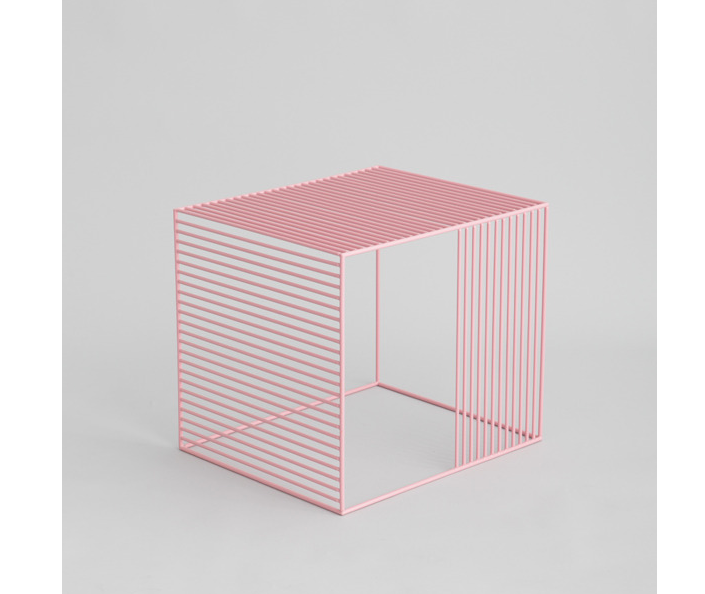
That’s exactly what Iacoli & McAllister’s Wire Side Table does. It’s not loud. It’s not trying to be the main character. It just sits
there, made of lines and negative space, quietly daring you to figure out how it’s standing up at all. And thenbecause you are a reasonable adult
with bills to payyou immediately imagine it beside your sofa holding a coffee mug and a book you swear you’ll finish.
This article breaks down why the Wire Side Table became a “best in show” kind of moment at ICFF, what makes it feel so fresh years after its debut,
and how to use wire-frame furniture without making your living room look like a geometry homework assignment.
ICFF in a Nutshell: Why Designers Flock to the Javits Center
ICFF is North America’s major contemporary furnishing fair, staged at New York City’s Javits Center as part of the broader spring design energy that
takes over the city. It’s where brands, studios, and emerging makers show new launches to a professional crowdarchitects, interior designers, retailers,
developers, and pressplus plenty of people who are “just looking” in the way that inevitably ends with a new obsession.
One reason ICFF matters: it rewards ideas. The fair’s editors’ awardsjudged by invited design-media editorsrecognize standout work across categories
like furniture, lighting, materials, and sustainability, with category winners considered finalists for Best in Show. That structure tends to elevate
pieces that feel both visually distinctive and conceptually clear. Translation: if your design can tell a story in under five seconds, you’re doing great.
Meet Iacoli & McAllister: A Seattle Studio That Makes Metal Feel Human
Iacoli & McAllister was a Seattle-based design studio formed by Jamie Iacoli and Brian McAllister. Their work has always had a particular signature:
clean geometry, warm restraint, and a knack for making hard materials (steel, brass, copper) feel approachablealmost friendly. They’ve been associated
with lighting and furniture that’s minimal, but never cold, like the design equivalent of someone who owns a black turtleneck and also laughs at your jokes.
Their story is refreshingly non-mythic. Depending on where you read it, it’s a blend of self-production grit, a small studio mindset, and a practical love of
fabricationdesigners who understand what a weld actually does, and what happens when people put drinks on things. Over time, they grew from scrappy,
hands-on production into a more refined studio model focused on designing and developing products made in the U.S.
The Wire Side Table: A 3D Line Drawing You Can Put a Drink On
The first time you notice the Wire Side Table, you probably don’t think “side table.” You think “optical illusion,” or “wire sculpture,” or “did someone
accidentally leave a prototype on the show floor and it’s somehow the best thing here?” That reaction is exactly the point: the table turns structure into
a visual trickthen backs it up with real-world usability.
The quick spec sheet (aka: the stuff you actually Google)
At its core, the table is a welded wire-frame form, commonly produced in powder-coated steel. Over the years, it’s been shown in a range of colorsfrom crisp
white and black to bolder hues like pink and tomato. Some versions have appeared in brass or copper finishes as well. Dimensions can vary by edition, but it
typically lands around that classic side-table sweet spot: roughly 19 inches tall, with a compact footprint designed for sofa-side or bedside duty.
Why it looks lighter than it is
Wire-frame furniture is basically a magic trick built out of math. You get all the cues of a solid objectedges, corners, planeswithout any bulk. Your eye
“completes” the shape, while the material stays airy. That negative space makes the table feel like it’s floating, even though it’s doing what furniture must do:
bearing weight, resisting wobble, surviving real life.
The Wire Side Table leans into that effect. The lines create a clean rectangular volume, but the openness keeps it from feeling blocky. It’s modern without
screaming “modern.” It’s minimal without feeling like a punishment. And it’s geometric in a way that feels intentionallike the table is politely reminding you
that yes, symmetry can be sexy.
Powder-coated steel: the unsung hero material
Powder coating is one of those finishes that’s easy to overlook until you live with it. It tends to be durable, smooth, and consistent, and it can handle daily
use without acting precious. In design terms, it’s a perfect match for a piece that’s visually delicate but functionally serious. A powder-coated wire table can
feel like sculpture, while still letting you set down keys, a mug, or an impulsive takeout order without panic.
So… Was It Actually “Best in Show” at ICFF?
Here’s where design-world language gets fun (and occasionally confusing). ICFF has official awards judged by editors, with category winners and a Best in Show.
But the phrase “best in show” also lives a second life: it’s shorthand used by editors and design sites for their favorite findsunofficial crowns based on taste,
surprise, and that very scientific measurement known as “I can’t stop thinking about it.”
In coverage around ICFF 2013, the Wire Side Table got exactly that kind of editorial coronationpraised as a standout object on the show floor, a piece that makes
you double back for a closer look. That reaction is the whole “best in show” phenomenon in miniature: not necessarily a trophy, but a moment of consensus where
multiple tastemakers point at the same object and go, “Yep. That one.”
What makes a side table win hearts at a design fair?
- Instant readability: You understand it from across the aisle, then it gets better up close.
- Photographic appeal: Wire geometry plays beautifully with shadows and anglescatnip for cameras.
- Small footprint, big personality: Side tables don’t need a huge booth to prove their point.
- Material honesty: The structure is the aesthetic. No hiding, no fake bravado.
- Real utility: You can imagine it in a home in two seconds flat.
How to Style a Wire Side Table Without Overthinking It
The Wire Side Table is one of those pieces that can swing multiple ways: gallery-clean, cozy-and-lived-in, playful, or glam. The trick is to treat it like a frame.
What you put on it (and what’s behind it) becomes part of the composition.
1) The small-space nightstand that doesn’t feel cramped
In a tight bedroom, solid nightstands can look like mini refrigerators. A wire side table stays visually light, which makes the whole room feel bigger.
Top it with a small lamp and a book stack, and let the negative space do the rest.
2) The sofa-side “landing pad” for real life
If your couch is where plans go to die (relatable), this table is your ally. It’s ideal for a mug, a phone, and a coaster you’ll use… eventually.
Because the frame is open, it also plays nicely with busy rugs and patterned upholstery without adding more visual weight.
3) The plant pedestal that turns shadows into décor
Put a plant on top and you get a bonus feature: shadows. In bright rooms, wire-frame furniture throws crisp lines across the floorlike your home is
accidentally doing graphic design. A simple ceramic planter on a wire table creates a layered look that reads “intentional,” even if you bought the plant
because TikTok told you it cleans the air (it’s fine; we all have hobbies).
4) Mix metals, but keep one thing consistent
If you’re pairing a wire side table with other finishesbrass lamp, chrome legs, matte black hardwarechoose one repeat element (color, texture, or material)
to keep the room from feeling like a hardware store sampler pack. The table’s geometry is already strong; it doesn’t need chaos for company.
Buying & Living With It: The Practical Side of a “Best in Show” Piece
Great design is only great if it survives Tuesday. Wire-frame tables look delicate, but welded steel construction is typically sturdy when properly fabricated.
The open structure also makes it easy to cleanno heavy slabs to haul around, no weird corners that collect dust like they’re hoarding it for winter.
A few real-life considerations:
- Lead times: Studio-made or small-batch pieces can take weeks. That’s normaland often worth it.
- Floor friendliness: If you have delicate floors, use felt pads. Your table will still look cool. Your floors will still exist.
- Outdoor use: Powder coating helps, but “outdoor” depends on the exact finish and environment. Covered patios are usually safer than full exposure.
- Price evolution: Pieces like this often shift in price over time as production methods, demand, and materials change.
The Bigger Design Lesson: Negative Space Is a Feature
The Wire Side Table is a great example of why certain objects keep resurfacing in design conversations: it doesn’t rely on trend-specific gimmicks.
It’s built on fundamentalsproportion, line, balance, and material clarity. When those things are right, the piece ages well. It can live in a clean,
minimalist space, or it can add structure to a more eclectic room.
It also hits a sweet spot for contemporary interiors: lightweight visual mass. People want rooms that feel open, but they still need furniture.
Wire-frame design lets you have both. You get function without heavinesslike the furniture equivalent of eating a salad that somehow tastes like fries.
Conclusion
ICFF is full of impressive things. Some are technically brilliant. Some are materially luxurious. Some are so conceptual you need a wall label and a small emotional
support latte to understand them. The Iacoli & McAllister Wire Side Table stands out because it’s simpler than all thatand still smarter.
It turns steel into a drawing, makes emptiness feel designed, and proves that a side table can be both sculptural and genuinely useful. Whether you call it “best in show”
because an editor said so or because you personally can’t stop thinking about it, the effect is the same: it earns the rare honor of making you pauseand making your home
feel sharper the moment it arrives.
Bonus: Experiencing ICFF Through a Wire-Frame Lens (About )
Picture the Javits Center on an ICFF morning. The escalators are full of people wearing the unofficial uniformblack sneakers, black jackets, and expressions that say,
“I’m here to be inspired, but I also have meetings.” The air smells like fresh print materials and coffee with ambitions. Somewhere, a tote bag is already giving up.
The first lesson you learn at ICFF is that scale messes with your head. A chair can look like a sculpture. A lamp can feel like architecture. And a side tablesomething
you thought was purely functionalcan suddenly become the object you remember most clearly. That’s the wire side table effect: among the visual noise, it reads like a clean
sentence in a crowded paragraph.
When you “walk” ICFF with wire-frame furniture in mind, you start noticing the quiet battles designers are fighting. How do you make something feel substantial without making
it look heavy? How do you get strength and stability from minimal material? How do you create a signature without slapping a logo on the front like a bumper sticker?
A table like Iacoli & McAllister’s is basically a master class in those questions. It doesn’t ask for attention; it rewards attention.
There’s also a very real, very human aspect to seeing pieces like this at a fair: you can watch other people react in real time. Someone slows down, tilts their head,
and leans in. Someone else takes a photo, then takes another from a slightly different angle because the shadows are doing something interesting. A third person points to
the jointsbecause if you’ve ever designed anything, your eyes become magnetized to the places where things meet. Wire-frame work makes those “meeting points” part of the
beauty, not something to hide.
And then you do what everyone does at ICFF: you imagine it at home. You mentally place the table beside your sofa. You picture it next to your bed. You see it as a plant
stand in a corner that needs a little structure. You imagine the colormaybe clean white for a bright room, matte black for a moody one, or a punchy tone that turns a
neutral space into something that smiles back.
The best part is how this kind of design changes the way you move through the rest of the show. After you’ve clocked a wire side table that feels like a “why didn’t anyone
do this sooner?” moment, you start hunting for objects that have the same clarity. You stop being impressed by complexity for complexity’s sake. You look for pieces that
feel inevitablelike they were always supposed to exist, and someone finally made them.
That’s the real ICFF souvenir: not the brochure, not the free pencil, not even the tote bag that’s now cutting off circulation. It’s the sharpened eye. A wire-frame table
can do that. It reminds you that good design isn’t always about adding more. Sometimes it’s about taking almost everything awayand still landing the drink safely.