If your dishwasher keeps producing mystery crust, upside-down puddles, and that one spoon that somehow comes out dirtier than it went in, the machine may not be the villain. In many kitchens, the real problem is loading. A dishwasher is not a magical cabinet that blesses dishes with cleanliness. It is a carefully choreographed spray-and-drain system, and when plates, bowls, pans, cups, and silverware are loaded the wrong way, the whole performance falls apart.
The good news is that learning how to load a dishwasher the correct way is not complicated. In fact, once you understand a few simple rules, you can get cleaner dishes, better drying, fewer cloudy glasses, and less post-cycle disappointment. This guide breaks down the right dishwasher loading method step by step, with practical examples, common mistakes, and real-life tips you can actually use in a busy American kitchen.
Why Proper Dishwasher Loading Matters
People often treat dishwasher loading like a game of household Tetris. If it fits, it ships. But a dishwasher works by spraying hot water and detergent through rotating arms, then draining everything away. That means every item needs enough space for water to reach dirty surfaces and enough angle for water to run off afterward.
When the dishwasher is loaded correctly, several good things happen at once: dirty surfaces get sprayed directly, detergent reaches the mess instead of a wall of oversized pans, fragile items avoid banging into each other, and water drains instead of pooling in cups like tiny indoor ponds. Proper loading also helps prevent blocked spray arms and detergent dispensers, which are two sneaky reasons a cycle can underperform.
In other words, loading well is not just a neat-freak hobby. It is the difference between “sparkling clean” and “why is there oatmeal glued to this bowl?”
The Quick Answer: The Golden Rules
If you only remember a handful of tips, make them these:
- Scrape off large food scraps, but do not obsessively pre-rinse everything.
- Put large, heavily soiled items on the bottom rack.
- Put cups, glasses, small bowls, and dishwasher-safe plastics on the top rack.
- Face dirty surfaces toward the center or toward the spray.
- Angle open items downward so water can wash in and drain out.
- Do not overcrowd or stack items so tightly that water cannot circulate.
- Make sure spray arms can spin freely and the detergent dispenser can open fully.
- Mix up silverware so spoons do not spoon, because spoons in love do not get clean.
Step 1: Prep the Dishes Before They Go In
Before loading anything, scrape off leftover food. Think chicken bones, lemon seeds, blobs of mashed potatoes, and the spaghetti cement that forms when pasta hits air. Your dishwasher is strong, but it is not a landfill with a degree in engineering.
That said, you usually do not need to fully pre-rinse dishes until they look hand-washed already. Modern detergents are designed to break down food residue, and some dishwashers actually perform better when there is a little mess left for the detergent to work on. The smarter approach is simple: remove big debris, skip the dramatic sink rinse, and load the machine.
Also check whether an item is truly dishwasher-safe. Some things should stay far away from the dishwasher, including many wooden utensils, cast iron, some nonstick cookware, fine china, crystal, sharp chef’s knives, and anything with labels that will peel off and cause chaos in the filter.
Step 2: Load the Bottom Rack Like It Means Business
The bottom rack is the heavyweight division. This is where dinner plates, serving bowls, pots, pans, casserole dishes, and sturdier mixing bowls usually belong.
How to place plates
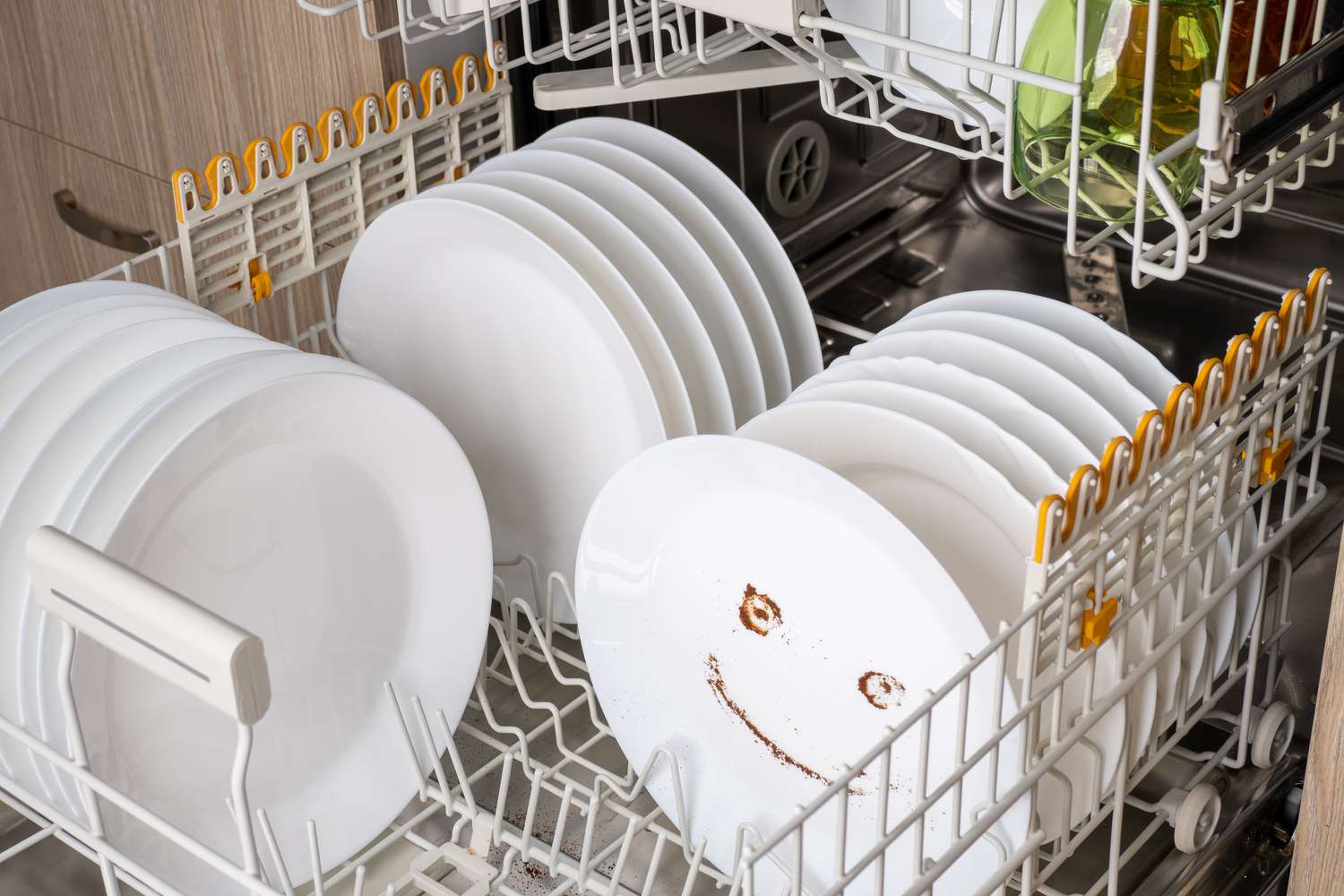
Stand plates vertically between the tines, not flat over them. Place the dirty sides facing inward, toward the center of the rack or toward the spray source. Give each plate a little breathing room so water and detergent can reach every surface.
How to place bowls and larger items
Large bowls, serving dishes, and casserole pans should usually go along the sides or back, angled downward. This helps water hit the inside surface and then drain away instead of collecting in a sad little soup pond at the end of the cycle.
How to place pots and pans
Dishwasher-safe pots and pans belong on the bottom rack, usually along the sides or back corners. Keep them low enough and angled enough that they do not block the spray arms, detergent dispenser, or other dishes. Flat baking sheets and cutting-board-style items should go on the sides, not across the front, because they can act like a giant metal wall and block water from reaching everything else.
A good mental image is this: the bottom rack should look organized, not like cookware lost a bar fight.
Step 3: Use the Top Rack for the Lightweights
The top rack is designed for cups, mugs, glasses, stemware, small bowls, and dishwasher-safe plastic items. It receives gentler spray than the bottom rack, which makes it the safer place for more delicate pieces.
Cups, mugs, and glasses
Load cups and glasses upside down and at a slight angle when possible. This keeps dirty surfaces exposed to the spray while allowing water to drain instead of collecting in the base. Avoid crowding glasses too closely together, especially delicate ones, because a full cycle of clinking and tapping is not how anyone wants to discover a chipped wine glass.
Small bowls
Small bowls usually belong on the top rack as well, angled downward and spaced so they do not nest together. Nesting is one of the most common dishwasher mistakes. If one bowl hugs another bowl too tightly, the water never gets inside, and you wind up re-washing both anyway.
Plastic items
Most dishwasher-safe plastic should go on the top rack. The upper rack is farther from the heating element, which lowers the risk of warping. Lightweight containers should be secured well so they do not flip over mid-cycle and become little bathtubs.
Step 4: Load Silverware So It Actually Gets Clean
The silverware basket seems simple until you realize it is capable of sabotaging an entire load. When utensils are packed too tightly or all face the same way, they nest together and shield one another from the water.
Best silverware loading method
Mix forks, spoons, and table knives throughout the basket instead of grouping identical utensils in one tight cluster. This reduces nesting and helps the spray reach all surfaces.
For forks and spoons, many people load some handles up and some handles down to improve separation. If hygiene is your main concern, handles down can be convenient because you avoid touching the eating end when unloading. For sharp knives, handles up is usually the safer choice so you do not grab a blade while reaching into the basket. The best answer is to balance cleanliness, safety, and your dishwasher’s basket design.
If your dishwasher has a dedicated third rack for flatware, use it. Third racks are great for utensils, serving spoons, measuring spoons, spatulas, and small kitchen tools because they keep everything separated and free up basket space below.
Step 5: Respect the Spray Arms and Detergent Dispenser
This is the part many people forget. You can load every item into the “correct” rack and still get lousy results if something blocks the machine itself.
Before starting a cycle, check that the spray arms can spin freely. A long spoon hanging through the rack, a tall cutting board, or a giant pan handle can stop the spray arm from rotating. When that happens, the dishwasher becomes less of a washing machine and more of a warm disappointment chamber.
Also make sure nothing blocks the detergent dispenser door. If a baking dish or pot prevents the dispenser from opening fully, the soap may not release at the right time. Then your dishes spend an entire cycle waiting for detergent that never really joins the party.
Common Dishwasher Loading Mistakes
1. Overcrowding the racks
Trying to cram in one more plate, one more bowl, and one more suspiciously large food-storage lid often backfires. Water needs space to move. When dishes are crammed together, detergent and spray cannot reach every surface, and drying performance drops too.
2. Laying items flat over the tines
Plates and bowls should sit between tines, not across them. Otherwise they block water flow and trap dirty water.
3. Facing everything the wrong direction
Dirty surfaces should face inward or downward toward the spray, not outward toward the door like they are trying to leave.
4. Putting plastics on the bottom rack
Even dishwasher-safe plastic can warp if placed too close to the heating element on some models. Top rack is the safer bet.
5. Washing the wrong items
Chef’s knives, wood cutting boards, cast iron, insulated travel mugs with delicate seals, hand-painted dishes, and some nonstick pans may not belong in the dishwasher at all. Always check the manufacturer’s care instructions.
6. Pre-rinsing too aggressively
Scraping is smart. Turning every plate into a showroom model before loading is usually unnecessary and wastes water.
How to Load Odd-Shaped Items
Real life is not just plates and forks. It is also blender lids, baby bottle parts, lunch containers, ladles, air fryer accessories, and one reusable straw that somehow migrates across the kitchen like wildlife.
Here is the rule: small items should be secured so they do not fall through the rack or block the spray arm. Use covered basket sections or upper-rack areas designed for tiny pieces. Long utensils such as spatulas, tongs, and ladles should go where they will not dangle through the racks and stop the spray arm from rotating.
Lids and flat items should go along the sides, not in the center where they can shield other dishes. Reusable containers should be angled down and spaced apart. And if an item is especially lightweight, make sure it is anchored well enough not to flip during the wash.
How to Get Dishes Drier
Better loading often means better drying. If cups are upright instead of angled down, they collect water. If bowls are nested, moisture gets trapped. If the dishwasher is stuffed too tightly, air cannot circulate well during the drying phase.
To improve drying, angle open items downward, leave space between dishes, use rinse aid if your model recommends it, and unload the bottom rack last. That last tip matters because water trapped on the top rack can spill onto the bottom dishes when you open the door, which is a rude way for a clean cycle to end.
Model Differences Matter
There is one final rule that outranks every internet article, including this one: your owner’s manual wins. Dishwasher rack layouts vary by brand and model. Some have fold-down tines, some have adjustable middle racks, some have third racks, and some place the heating element differently. The general loading principles stay the same, but the best arrangement for your specific machine may be slightly different.
So yes, trust the broad rules. But if your manual says a certain item belongs in a certain zone, let your actual dishwasher have the last word. It has seen things.
Final Thoughts
Learning how to load a dishwasher the correct way is one of those small household skills that pays off immediately. You save time, reduce rewashing, protect your dishes, and help your machine do what it was built to do. The secret is not loading more. It is loading smarter.
Keep large items on the bottom, lighter and more delicate items on the top, angle open surfaces downward, face dirty surfaces toward the spray, separate utensils, and never block the spray arms or detergent dispenser. Do that consistently, and your dishwasher stops feeling random and starts acting like the efficient kitchen hero it was always meant to be.
And if all else fails, remember this simple truth: dishes cannot get clean if they are spooning, hiding, stacking, or forming a ceramic traffic jam.
Real-Life Experiences With Loading a Dishwasher the Correct Way
In many households, people do not realize they are loading the dishwasher wrong because the machine kind of works. That is the trap. It runs, it hums, it finishes, and most of the dishes look fine from six feet away. Then someone grabs a cereal bowl with a stuck-on ring around the rim, or a glass full of clean-looking water droplets that dry into spots, and suddenly the dishwasher is accused of betrayal.
One common experience happens in busy family kitchens: whoever loads the dishwasher last is usually trying to clean up fast. That means pans get shoved across the front of the bottom rack, bowls get nested to save space, and a forest of forks lands in the basket handle-up, packed together like commuters on a late train. The cycle runs, but the results are mixed. The fix often feels almost too simple. Spread things out. Turn bowls downward. Move the giant skillet to the side. Mix the silverware. Suddenly the same dishwasher that seemed “bad” turns out to be perfectly capable.
Another very relatable moment comes from people who load cups upright because it feels tidy. It looks organized, sure, but it also creates tiny indoor swimming pools. When those cups come out wet, many people assume the drying cycle failed. In reality, the loading caused the problem. A slight downward angle changes everything. The same goes for plastic containers. When they flip over during the cycle, they collect water and spray it onto everything else when you unload them. Anyone who has opened the door and gotten a surprise splash on their socks knows exactly what that feels like.
There is also the classic “I can fit one more thing” experience. Nearly everyone has tried it. You are staring at one last plate, one last mug, one last lunch container, and your brain says, “Be efficient.” So you wedge it in. Then the detergent door cannot open all the way, or the spray arm catches on a spoon, or the water cannot reach the back row. That one extra item turns a full load into a half-clean load. It is a powerful lesson in the difference between maximum capacity and usable capacity.
People who switch from hand-washing to using a dishwasher more often also tend to go through a learning curve. At first, they may over-rinse everything because they do not trust the machine. Then they realize scraping is enough. Others learn the hard way that wood, cast iron, and good knives do not appreciate a steaming spin cycle. Over time, most experienced dishwasher users settle into a rhythm: scrape, sort, angle, space, check the spray arm, and press start.
That is why proper dishwasher loading feels so satisfying once it clicks. It turns a frustrating chore into a repeatable system. The machine works better, mornings start smoother, and the number of “Why is this still dirty?” arguments drops dramatically. For a humble kitchen habit, that is a surprisingly glorious return on investment.