Yes, fusion biopsies can detect prostate cancer, and in many cases they do a better job than old-school “let’s-sample-and-hope” biopsies at finding the cancers that matter most. But there is an important catch: a fusion biopsy is not a magic wand, a crystal ball, or a guarantee. It improves accuracy, especially for clinically significant prostate cancer, but it can still miss disease. That is why many specialists use fusion biopsy together with systematic sampling rather than treating it like a solo act.
If that sounds like the medical version of “good, but not perfect,” that is because it is. Still, for men with an elevated PSA, an abnormal digital rectal exam, a suspicious MRI, or a previous negative biopsy that did not match the rest of the story, fusion biopsy has become one of the smartest tools available. It helps doctors target suspicious areas more precisely, reduce some of the guesswork, and better sort out low-risk cancers from the aggressive ones nobody wants sneaking around unnoticed.
What Is a Fusion Biopsy?
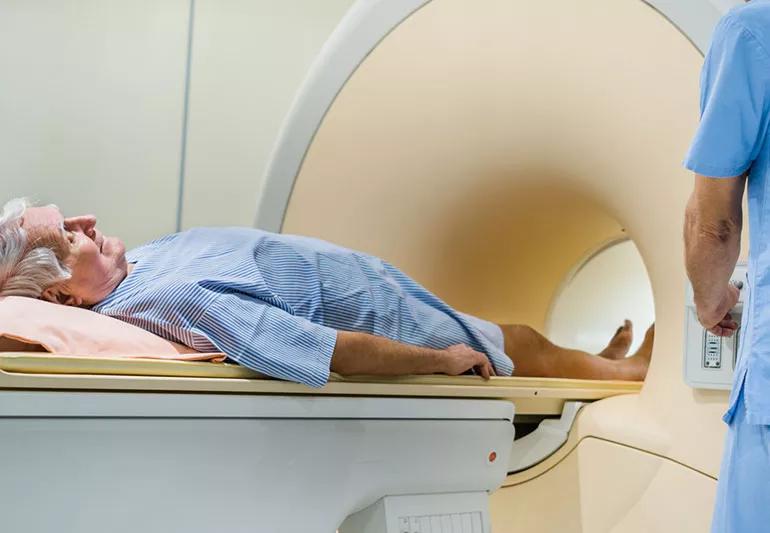
A fusion biopsy, often called an MRI-ultrasound fusion biopsy, combines two kinds of imaging. First, a multiparametric MRI is done before the procedure to highlight suspicious areas in the prostate. Then, during the biopsy, those MRI images are matched with real-time ultrasound images. Software “fuses” the two together so the doctor can guide the needle toward areas that look worrisome instead of sampling blindly across the gland.
Think of it like using GPS instead of a paper map from 1998. Standard ultrasound-guided biopsy can still be useful, but ultrasound alone does not always show suspicious prostate lesions clearly. MRI is better at spotting areas of concern, while ultrasound is excellent for real-time needle guidance. Put them together, and the biopsy becomes much more targeted.
That targeted approach is the main reason fusion biopsy has changed prostate cancer diagnosis. Instead of hoping random cores happen to hit the right area, the doctor can focus on lesions seen on MRI while often still taking systematic samples from other parts of the prostate. In other words, the biopsy becomes both smarter and more strategic.
So, Can Fusion Biopsies Detect Prostate Cancer?
Absolutely. In fact, fusion biopsies are especially valuable for detecting clinically significant prostate cancer, meaning cancers that are more likely to grow, spread, or require treatment. That matters because not every prostate cancer behaves the same way. Some tumors are slow-growing and may be monitored safely with active surveillance. Others are aggressive and need prompt treatment. A better biopsy helps doctors tell the difference.
This is where fusion biopsy earns its reputation. Compared with standard biopsy alone, MRI-targeted biopsy has been shown to find more high-risk cancers and fewer low-risk cancers. That is a big deal because overdiagnosing tiny, low-grade tumors can lead to overtreatment, while missing aggressive cancer can delay care. Fusion biopsy improves the odds of getting the diagnosis and the risk category right the first time.
But here is the honest answer patients deserve: fusion biopsy does not detect every prostate cancer. Some tumors do not show up well on MRI. Some lesions are small, oddly located, or difficult to sample. And some aggressive cancers can still be missed if only targeted cores are taken. That is why many specialists still favor combining targeted biopsy with systematic biopsy, especially in biopsy-naive men or when suspicion remains high.
Why Fusion Biopsy Often Beats Standard Biopsy Alone
1. It targets what looks suspicious
A standard biopsy traditionally samples multiple areas of the prostate in a fairly systematic pattern. That is useful, but it is still partly blind. Fusion biopsy adds direction. If the MRI shows a concerning lesion in the anterior prostate, apex, or another tricky location, the doctor can go after that exact spot instead of hoping a random core passes through it by luck.
2. It improves detection of meaningful cancer
The biggest advantage is not just “more cancer found.” It is better cancer found. Fusion biopsy is designed to improve detection of higher-grade, clinically significant prostate cancer while reducing the diagnosis of insignificant disease that may never cause harm. That can lead to better treatment planning and fewer unnecessary interventions.
3. It helps after a negative biopsy that does not fit the rest of the picture
One of the classic uses for fusion biopsy is the man whose PSA keeps rising, whose MRI looks suspicious, or whose doctor remains concerned even after a previous standard biopsy came back negative. In some of these cases, the cancer was simply missed the first time. Fusion biopsy can help uncover tumors in areas that are harder to reach with routine sampling.
4. It can support better risk stratification
The biopsy result does more than answer yes or no. It helps determine grade, aggressiveness, and next steps. If the biopsy more accurately identifies clinically significant disease, it can better guide decisions about active surveillance, surgery, radiation, or other treatment pathways. That makes fusion biopsy not just a diagnostic tool, but a planning tool.
Who Might Need a Fusion Biopsy?
Doctors may recommend fusion biopsy in several situations. One common reason is an elevated PSA. PSA is useful, but it is not cancer-specific, so a high result does not automatically mean cancer. Benign enlargement, inflammation, infection, and other factors can also raise PSA. That is why doctors look at the full picture before moving to biopsy.
Other reasons include an abnormal digital rectal exam, a suspicious lesion on prostate MRI, a previous negative biopsy with continued concern, or ongoing monitoring during active surveillance. In short, fusion biopsy is often used when doctors want more precision than a routine biopsy can offer.
For some men, MRI is used before biopsy to decide whether a biopsy is needed at all. For others, MRI helps guide where the biopsy should go. Either way, fusion biopsy tends to shine when there is a clear need to target specific areas rather than sampling the prostate like a dartboard with excellent health insurance.
What Happens During the Procedure?
The process usually starts with a prostate MRI done before biopsy day. That scan highlights suspicious regions that may need targeted sampling. Later, during the biopsy, an ultrasound probe is used to create live images, and software matches those images with the MRI. The doctor then takes tissue samples from the suspicious lesion or lesions.
Depending on the center and the patient’s situation, the biopsy may be done through the rectum (transrectal) or through the skin between the scrotum and anus (transperineal). The transperineal approach has gained attention because it lowers infection risk by avoiding the rectum. Many centers now view this as a safer route, especially for certain patients.
Local anesthesia is commonly used, and some men also receive sedation. The procedure itself is typically outpatient. Most men go home the same day, usually with instructions to rest, drink fluids, watch for signs of infection, and avoid strenuous activity for a short time. It is not exactly anyone’s dream afternoon, but it is usually manageable.
How Accurate Is a Fusion Biopsy?
Accuracy depends on several things: MRI quality, radiologist expertise, biopsy technique, lesion visibility, and whether systematic cores are taken in addition to targeted ones. In general, fusion biopsy is better than standard biopsy alone at finding clinically significant cancer. That is the headline.
The fine print is just as important. MRI-targeted biopsy alone can still miss some aggressive tumors. Research comparing systematic biopsy, MRI-targeted biopsy, and combined biopsy has shown that the combination often gives the most complete picture. In practical terms, that means a patient may have targeted cores taken from an MRI lesion and additional systematic cores from the rest of the gland.
So if you are asking, “Can fusion biopsies detect prostate cancer?” the answer is yes. If you are asking, “Can fusion biopsies detect every prostate cancer by themselves?” the answer is no. The strongest approach is often thoughtful use of MRI, targeted sampling, and systematic sampling when appropriate.
What Are the Risks and Side Effects?
Fusion biopsy is generally safe, but it is still a biopsy, which means needles, tissue samples, and a short list of very real side effects. Common issues include blood in the urine, blood in the semen, mild pain, minor rectal or perineal bleeding, and temporary urinary symptoms. These can be unsettling, especially if no one warned you in advance, but they are often expected and temporary.
Infection is one of the most important risks. That risk is lower with transperineal biopsy than with transrectal biopsy because the needle does not pass through the rectal wall. Some centers also use antibiotics before or around the procedure depending on the approach. Men should call their doctor right away for fever, chills, inability to urinate, or heavy bleeding.
Emotionally, the hardest side effect is often not physical at all. It is the waiting. Waiting for the biopsy. Waiting for the pathology report. Waiting for the doctor to call. Waiting, in some cases, while imagining every worst-case scenario the human brain can produce before breakfast. That part deserves more attention than it usually gets.
What Do the Results Mean?
If cancer is found, the biopsy helps determine how aggressive it appears. The pathology report may include Gleason patterns and a Grade Group, along with how many cores contain cancer and how much cancer is present in each core. These details help doctors decide whether active surveillance is reasonable or whether treatment is more appropriate.
If the biopsy is negative, that is reassuring, but not the same as a lifetime guarantee. A negative result lowers concern, yet it does not always end the evaluation. If PSA remains elevated, MRI findings remain suspicious, or symptoms continue, the doctor may recommend follow-up PSA testing, repeat imaging, another biopsy, or closer monitoring.
That is one of the most important truths in prostate cancer diagnosis: no single test stands alone. PSA, DRE, MRI, biomarkers, family history, symptoms, biopsy results, and time all work together. Fusion biopsy is a powerful piece of that puzzle, but it is still one piece.
Fusion Biopsy vs. Standard Biopsy: Which Is Better?
If the goal is to diagnose clinically significant prostate cancer more accurately, fusion biopsy usually has the edge. It is especially helpful when MRI shows a suspicious lesion or when a previous standard biopsy missed something important. It adds precision and can improve the odds of detecting aggressive disease.
That said, this is not always a clean “new beats old” story. Standard systematic biopsy still contributes valuable information because not every cancer shows up on MRI. That is why many urologists do not frame the question as fusion versus standard biopsy, but fusion plus systematic biopsy when the situation calls for it.
The best biopsy plan is personalized. A man with a clearly visible MRI lesion and a specific risk profile may need one approach, while another man with persistently abnormal PSA and a prior negative biopsy may need a different one. Medicine, annoyingly for anyone who loves simple answers, is rarely one-size-fits-all.
What Patients Often Experience Before, During, and After a Fusion Biopsy
For many men, the experience starts long before the biopsy itself. It begins with a PSA number that refuses to stay quiet, an MRI report full of unfamiliar words, or a doctor saying, “We should take a closer look.” That sentence tends to land like a bowling ball in the chest. Even when someone understands that many prostate cancers are treatable and some are low risk, the word biopsy changes the mood of the room fast.
Before the procedure, there is often a mix of practical planning and low-grade anxiety. Patients may need to stop blood thinners, take antibiotics, use an enema if instructed, arrange a ride if sedation is involved, and clear the schedule. Then comes the Googling, which is sometimes helpful and sometimes a terrible hobby. Men often worry about pain, embarrassment, infection, sexual side effects, and what the biopsy might find. Most of those fears are understandable, and talking through them with the care team usually helps more than silently marinating in them.
During the biopsy, the experience is often less dramatic than expected but definitely not luxurious. Men commonly describe pressure from the probe, a strange awareness of what is happening, and the clicking sound of the biopsy needle. With local anesthesia, many feel discomfort more than sharp pain. With sedation, the memory may be hazier. Either way, the procedure is usually brief. The weirdness often outweighs the pain. That is not a glowing spa review, but it is an honest one.
Afterward, patients often feel relieved that the procedure is over, only to discover that the next hard part is waiting for results. Physically, there may be soreness, fatigue, blood in the urine, blood in the semen, and temporary urinary irritation. These symptoms can be alarming if unexpected, especially blood-tinged semen that lingers longer than many men anticipate. Good discharge instructions matter here. Knowing what is normal can prevent a lot of panic.
The emotional side can be just as intense as the physical recovery. Some men feel fine until the first quiet evening at home, when their brain suddenly decides to rehearse every possible pathology result. Others swing between optimism and dread every few hours. Family members often go through their own version of the same roller coaster. When the results finally arrive, the reaction depends on the news. A negative biopsy may bring relief, though sometimes cautious relief. A low-risk result can open the door to active surveillance. A higher-risk result can be frightening, but it also gives the care team something crucial: a clearer map for what comes next. And in prostate cancer, a clearer map is no small thing.
Final Takeaway
Fusion biopsies can detect prostate cancer, and they are particularly good at finding clinically significant disease that may need treatment. By combining MRI with real-time ultrasound, they improve targeting, reduce some of the guesswork of standard biopsy, and help doctors make more informed decisions.
Still, fusion biopsy is not perfect. It can miss some cancers, especially if suspicious areas are not visible on MRI or if targeted cores are used alone. That is why the most effective strategy often combines targeted and systematic sampling when appropriate. For patients, the bottom line is simple: fusion biopsy is one of the best modern tools for prostate cancer diagnosis, but the smartest care still comes from using the right tool in the right clinical context.