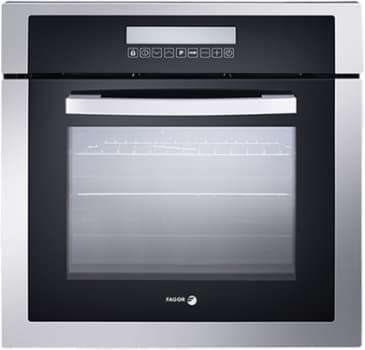
The Fagor 6HA200TDX is the sort of wall oven that makes a strong first impression without demanding half the kitchen in return. At roughly 24 inches wide, it was designed for compact cabinetry, apartments, condos, guest kitchens, and remodels where a standard 30-inch oven would arrive like an elephant at a dinner party. Its stainless steel exterior, digital controls, European convection system, and quick-preheat feature give it a surprisingly ambitious résumé for a small appliance.
There is one important reality check before the soufflé rises: the Fagor 6HA200TDX is a discontinued model. That means it is now most relevant to homeowners evaluating an existing unit, shopping for used or old-stock equipment, planning a replacement, or trying to understand whether the oven already installed in a home is worth keeping. The model remains interesting because its feature set still compares well with many compact wall ovens, but age, service access, and replacement-part availability matter just as much as cooking performance.
Fagor 6HA200TDX Specifications at a Glance
| Oven type | Built-in single electric wall oven |
|---|---|
| Nominal width | 24 inches |
| Usable capacity | 1.98 cubic feet |
| Cooking system | European convection with a rear heating element and fan |
| Cooking programs | Nine cooking programs plus convection defrost |
| Temperature range | 150°F to 500°F |
| Controls | LCD display with touch-pad controls |
| Cleaning system | Manual cleaning with an enameled interior |
| Electrical requirements | 208–240 volts, 3.2 kW, 15 amps |
| Exterior dimensions | Approximately 23 25/64 in. W x 23 15/64 in. H x 21 3/8 in. D |
| Recommended cutout | Approximately 22 1/4 in. W x 22 11/32 in. H x 21 3/8 in. D |
The official specification sheet lists a 1.98-cubic-foot cavity, touch controls, triple door glass, two telescopic rails, two chrome racks, a deep tray, a shallow tray, and a 240-volt electrical specification. The installation manual also identifies the model as a 3.2-kW appliance drawing 15 amps.
Compact Design Without a Toy-Oven Feel
A 24-Inch Footprint for Smaller Kitchens
The main appeal of the Fagor 6HA200TDX is obvious: it delivers built-in oven functionality in a narrow format. A 24-inch wall oven can be a practical solution in older urban homes, European-style cabinetry, accessory dwelling units, basement kitchens, and renovations where every inch has already been assigned a full-time job.
The stainless steel front looks clean and understated rather than aggressively futuristic. The drop-down door follows a familiar layout, unlike the related TLX and TRX versions that use side-opening doors. A large viewing window, interior light, and triple-layer glass help users monitor food while keeping heat inside. The door can still become warm during operation, so ordinary kitchen safety rules remain essential.
How Much Fits Inside 1.98 Cubic Feet?
A 1.98-cubic-foot cavity is not enormous, but it is more capable than the exterior dimensions suggest. Manufacturer and retailer descriptions stated that the oven could accommodate a turkey weighing up to approximately 20 pounds. That should be treated as a maximum-fit scenario rather than an invitation to purchase the roundest bird in the county. Pan shape, rack position, roasting clearance, and airflow still matter.
For everyday cooking, the cavity is better suited to sheet-pan vegetables, casseroles, pizzas, cakes, cookies, poultry, and moderate-size roasts. Before buying bakeware, compare its outside dimensions with the oven’s listed interior measurements: approximately 17 1/8 inches wide, 12 19/32 inches high, and 15 3/4 inches deep. A favorite oversized American sheet pan may discover that it has been voted off the island.
European Convection Is the Main Event
A Third Heating Element Around the Fan
The Fagor 6HA200TDX uses a European-style convection system with a heating element surrounding the fan at the back of the cavity. That arrangement differs from basic fan-assisted ovens that merely circulate heat produced elsewhere. The rear element and fan work together to distribute heated air, which can improve browning, support multi-rack baking, and reduce hot and cool zones.
Convection is particularly useful for cookies, pastries, roasted vegetables, and foods that benefit from a drier, more active cooking environment. It can also shorten cooking times, so recipes written for conventional ovens may need adjustment. Modern guidance from major appliance manufacturers commonly recommends monitoring food earlier and, in many cases, reducing a conventional recipe temperature by approximately 25°F unless the recipe or oven instructions state otherwise.
Celeris Fast Preheat
Fagor marketed its Celeris Pre-Heat Booster as capable of reaching 400°F in less than five minutes. That is a manufacturer performance claim, not a guarantee for every installation. Incoming voltage, room temperature, oven condition, calibration, and heat loss can influence actual results.
The feature is still genuinely useful in concept. Select a cooking mode and temperature, activate Celeris, and wait for the indicator and audible signal before loading the food. The manual specifically advises users not to place food inside until accelerated preheating has finished and the oven has transitioned to the selected cooking function. Celeris is the sprinter hired to warm the track; it is not supposed to carry the cake across the finish line.
Cooking Programs and Everyday Flexibility
The control system offers nine cooking programs plus convection defrost. The manual describes conventional bake, top cooking for browning, broil, convection broil, fast cooking, Turbo Plus, cake, pizza, and delicate cooking. These programs combine the upper element, lower element, rear convection element, and fan in different ways.
Best Modes for Common Foods
- Bake: A sensible choice for bread, filled pastries, cakes, and lean roasts when traditional top-and-bottom heat is preferred.
- Turbo Plus: Uses multiple heating elements with the fan and is designed for larger quantities or simultaneous dishes.
- Cake: Uses the rear element and fan to provide gentler, uniform heat for delicate baked goods that need to rise.
- Pizza: Emphasizes bottom heat and is intended to improve crust crispness and handle moist toppings.
- Convection broil: Combines high heat and airflow for larger roasts, poultry, and foods that need browning.
- Fast cooking: Activates upper and lower heat with the fan and can be useful for frozen or precooked foods.
The variety is impressive for a compact wall oven, although the symbols and touch-button sequence may require a brief courtship period. Keep the manual nearby until the icons stop looking like clues from an escape room.
Controls, Timer, Memory, and Safety Features
The LCD interface displays the selected function, temperature, clock information, operating time, and safety status. Temperature adjustments are made in 25°F increments. The oven also supports timed cooking, automatic stopping, delayed operation, and an audible signal at the end of a programmed cycle.
The memory function can store a frequently used combination of cooking mode, temperature, and timing settings. This is convenient for a household that repeatedly bakes the same bread, reheats the same casserole, or prepares Friday-night pizza with the consistency of a small but determined restaurant.
A child safety lock disables the control buttons when no cooking mode is selected. The triple-glass door, cooling fan system, safety thermostat, and automatic shutoff behavior add further protection, although none replaces supervision or careful handling around a hot appliance.
Installation Requirements: Measure Twice, Bake Once
Cabinet Cutout Dimensions
Wall ovens are unusually unforgiving roommates. A difference of half an inch can turn a straightforward replacement into a cabinetry project featuring sawdust, invoices, and colorful language. The Fagor’s listed cutout is approximately 22 1/4 inches wide, 22 11/32 inches high, and 21 3/8 inches deep, but the installation diagram and actual opening should be checked carefully.
Measure the existing appliance, cabinet opening, trim overlap, available depth, ventilation clearance, and door-opening space. General wall-oven replacement guidance from GE similarly emphasizes measuring both the oven and the cutout rather than assuming that two products with the same nominal width are interchangeable.
Electrical Connection
The Fagor 6HA200TDX requires a grounded 208–240-volt supply and is rated at 3.2 kW and 15 amps. The manual states that installation and electrical connection should be performed by qualified personnel in accordance with applicable codes. It also warns against improvised adapters and extension cords.
Anyone evaluating a used oven should verify the rating plate, wiring condition, breaker arrangement, grounding, and local code requirements with a licensed electrician. “The plug seems enthusiastic” is not an accepted electrical inspection standard.
Cleaning and Maintenance
The 6HA200TDX is not a self-cleaning oven. Its enameled cavity is intended to make spills easier to remove, but the owner must still perform regular cleaning. Fagor recommends wiping the interior while it is warmnot hotwith mild soapy water and a soft cloth. The manual warns against abrasive pads, acids, harsh metal tools on stainless steel, and oven cleaner on the rear plate or side panels.
Cleaning spills promptly matters because fruit juices and sugary mixtures can stain enamel, while accumulated grease may smoke and create odors. The stainless steel front should be cleaned with a mild product and dried with a soft cloth. Telescopic rails and removable trays improve access, but they also add components that should be kept free of baked-on debris.
Advantages and Drawbacks
Notable Advantages
- Compact 24-inch built-in design for space-conscious kitchens
- True European convection with a dedicated rear element
- Fast-preheat Celeris mode
- Specialized pizza, cake, broil, and multi-element programs
- LCD touch controls, timer functions, memory setting, and child lock
- Telescopic rails and a useful accessory package
- Wide 150°F to 500°F temperature range
Potential Drawbacks
- The model is discontinued, so parts and qualified service may be difficult to locate
- The 1.98-cubic-foot cavity limits oversized pans and very large meals
- There is no self-cleaning cycle
- Touch controls may feel less immediate than physical knobs
- The clock must be reset after a power interruption before the oven will operate
- A proper 208–240-volt installation is required
Who Is the Fagor 6HA200TDX Best For?
This oven is most appealing to someone who already owns one in good condition or finds a carefully inspected used or old-stock unit at a sensible price. It suits compact kitchens, smaller households, serious bakers with appropriately sized pans, and cooks who value convection performance more than maximum cavity volume.
It is less suitable for buyers who need nationwide service coverage, readily available replacement parts, self-cleaning convenience, smart-home controls, or enough space for multiple oversized roasting pans. Since current retailer pages label the model discontinued or no longer available, a modern replacement may be the safer long-term purchase unless the Fagor’s condition, price, and support options are unusually favorable.
Practical Ownership Experience: What Daily Use Is Likely to Feel Like
Living with the Fagor 6HA200TDX would probably be defined by a pleasant contradiction: the oven is compact, but it asks to be used like a serious cooking appliance. The first week would involve learning the touch controls, setting the clock, identifying the function icons, and discovering which pans actually fit. Once those basics become familiar, the small cavity and convection airflow should make the oven feel responsive, especially for meals that do not require banquet-level real estate.
For a weeknight pizza, the process is straightforward. Preheat with Celeris, use the pizza function, position the rack low enough to encourage bottom browning, and begin checking before the end of a conventional-oven recipe time. The smaller cavity means the heating elements are relatively close to the food, so crust color can change quickly. That is excellent when dinner needs crisp edges; it is less excellent when someone becomes distracted by a phone call and returns to a pizza that has entered its charcoal era.
Baking cookies or pastries should highlight the convection system’s strengths. Air movement can improve consistency across a tray and help moisture escape, creating crisper edges. However, lightweight parchment can lift or shift in strong airflow, and delicate batters may need a conventional or cake-oriented setting rather than the most aggressive convection program. A new owner should run small batches first, record the successful temperature and rack position, and use the memory feature once a reliable formula is found.
Roasting chicken with vegetables is another natural fit. The fan promotes browning, while the compact cavity makes efficient use of the available heat. A shallow tray can catch drippings beneath a rack, but clearance around the food should be preserved so air can circulate. Because visual browning does not prove that meat is safely cooked, the final decision should come from a food thermometer. USDA guidance recommends verifying internal temperature rather than relying only on time, color, or optimistic intuition.
The telescopic rails may become one of the most appreciated features during daily use. Pulling a hot casserole or roasting tray partly out of the cavity makes checking, stirring, and turning food easier. Still, the rails should glide smoothly and remain clean. On an older unit, resistance, wobbling, or uneven extension may indicate wear or baked-on residue. Replacement rails for a discontinued oven may not be as easy to obtain as a bottle of dish soap, so their condition matters.
Cleaning is where the relationship becomes less glamorous. Without self-cleaning, splatters need attention before they become permanent décor. Wiping the cavity after messy meals is faster than postponing the job until the oven smokes like it has elected a new pope. The enameled surface helps, but owners should follow the manual’s restrictions and avoid spraying aggressive cleaner onto protected rear and side components.
Power interruptions are another small quirk with real daily consequences. The manual states that the oven operates only after the clock is set. After an outage, a user may think the appliance has failed when it is actually waiting for the time to be entered. This is harmless once understood, but it can produce several minutes of unnecessary appliance-based betrayal.
For anyone considering a secondhand unit, the most revealing experience occurs before purchase. Test every touch button, verify that the display has no missing segments, listen for the convection fan, check that the oven heats in multiple modes, inspect the door gasket, examine the glass, confirm that racks and trays are present, and use an oven thermometer to assess temperature behavior.
USDA guidance notes that an oven thermometer can help verify whether an oven reaches and maintains the selected temperature. A consistently high or low reading may be manageable when the difference is known, but erratic temperature swings deserve professional evaluation.
In daily life, the Fagor 6HA200TDX should reward organized cooks. Choose pans that fit, learn the cooking programs, preheat correctly, check convection foods early, clean spills promptly, and keep a thermometer nearby. Do that, and this compact wall oven can remain a capable kitchen tool rather than a stainless steel mystery box.
Final Verdict
The Fagor 6HA200TDX was an unusually feature-rich 24-inch single electric wall oven. Its European convection system, Celeris preheat booster, specialized cooking modes, memory function, telescopic rails, and compact dimensions made it a strong option for small kitchens that still demanded serious baking and roasting performance.
Today, its biggest weakness is not the cooking design but its discontinued status. An existing oven that works well may be worth maintaining. A used unit can also make sense when it is inexpensive, fully tested, correctly sized for the cabinet, and supported by a local technician. For a major renovation or long-term investment, however, a current model with dependable parts and warranty coverage will usually be the more practical choice.
Note: Specifications should be confirmed against the appliance rating plate and original installation manual. Availability, replacement parts, warranty coverage, and service options may vary because the Fagor 6HA200TDX has been discontinued.