Prostate cancer treatment is usually discussed in terms of scans, PSA levels, surgery dates, radiation schedules, and whether the cancer is behaving itself. Fair enough. But there is another part of the story that deserves equal billing: the mind. For many men, the emotional fallout of treatment is not a side note. It is part of the main event.
That makes sense. Prostate cancer treatment can affect sexual function, urinary control, body image, sleep, energy, hormone levels, independence, relationships, and confidence. In other words, it can march through the very areas many people use to feel like themselves. So when mood changes, anxiety rises, or a man starts feeling less like “me” and more like “the guy with the pad, pillbox, and follow-up appointment,” that is not weakness. It is a human response to a major medical experience.
The good news is that mental health effects are common enough to be recognized, studied, and treated. The even better news is that many men improve when care teams address the whole person instead of focusing only on the tumor. Prostate cancer treatment may be aimed at the prostate, but its emotional ripple effects can land in the brain, the bedroom, the family, and the mirror. Let’s talk about how that happens, who is most vulnerable, and what actually helps.
Why prostate cancer treatment can hit mental health so hard
Some cancers are emotionally overwhelming because they threaten life. Prostate cancer can do that too. But prostate cancer treatment adds a second layer: it often touches identity. Men may suddenly be coping with erectile dysfunction, loss of libido, urinary leakage, fatigue, hot flashes, weight changes, muscle loss, or a body that feels unfamiliar. That can create a strange emotional mix of relief, grief, embarrassment, anger, and anxiety.
One man may feel grateful to be cancer-free and still mourn the loss of spontaneous sex. Another may look fine on paper but quietly stop going out because he is worried about incontinence. Someone else may be told his treatment worked, yet every future PSA test feels like a pop quiz written by the universe. None of this is rare. It is survivorship in real clothes.
Mental health changes can also show up because cancer treatment disrupts routine and control. Diagnosis forces decisions fast. Treatment may involve tradeoffs between longevity and quality of life. Follow-up can be long. And once active treatment ends, some men are surprised to feel more anxious, not less, because the safety net of frequent medical contact suddenly gets thinner.
Which prostate cancer treatments are most likely to affect mood and emotional well-being?
Surgery: relief can arrive with grief
Radical prostatectomy can be lifesaving, but it may also come with urinary incontinence and erectile dysfunction during recovery, and sometimes for much longer. Those side effects are not just physical inconveniences. They can chip away at confidence, social comfort, and intimate relationships. A man may feel embarrassed, less attractive, less capable, or simply older overnight.
That does not mean everyone has the same emotional response. Some men adapt well, especially when they expected these changes ahead of time and have support. But when patients feel rushed into treatment decisions or underprepared for side effects, regret and second-guessing can add to the distress. In plain English: surprises are bad for mental health, especially when they happen below the belt.
Radiation therapy: the emotional effect may be slower, but still real
Radiation can also affect sexual function, bowel habits, fatigue, and urinary symptoms. For some men, the physical side effects are mild. For others, the slow burn is the hard part. Symptoms may emerge gradually, and that uncertainty can become its own source of tension. If surgery feels like jumping into cold water, radiation can feel like waiting to see how chilly the pool really is.
Recent survivorship research suggests that long-term depression risk can remain relevant years after prostate cancer treatment, particularly in older survivors and in those whose care included radiation, with risk rising further when longer-term hormone therapy is added. That is a reminder that emotional recovery does not always follow the same timeline as medical recovery.
Hormone therapy and ADT: when testosterone drops, mood may follow
Androgen deprivation therapy, often called ADT or hormone therapy, is one of the clearest examples of treatment affecting mental health. Because ADT lowers testosterone or blocks its effects, it can trigger hot flashes, sleep disruption, fatigue, reduced sexual desire, erectile problems, body composition changes, and emotional shifts. Some men describe feeling flat, tearful, irritable, less motivated, or mentally foggy.
This is not just anecdotal. Research has linked ADT with higher risks of depression and psychiatric care use, and longer duration appears to increase the risk. That does not mean every man on ADT will become depressed. It does mean the possibility should be discussed before treatment starts rather than after everyone pretends the mood crash came out of nowhere.
Hormone therapy can also complicate self-image. For men who strongly tie masculinity to sexual performance, physical strength, or steady emotional control, the psychological adjustment can be tougher. The problem is not that they care too much. The problem is that the treatment may challenge deeply held ideas of who they are.
Active surveillance is not emotionally neutral
Even men who do not jump straight into surgery or radiation are not automatically on Easy Street. Active surveillance can spare side effects, but it can also fuel a simmering form of anxiety. Repeated PSA testing, scans, biopsies, and the knowledge that cancer is being watched rather than removed can keep fear in the background like an app running all day and draining the battery.
Fear of recurrence and PSA anxiety are well-documented issues in prostate cancer care. For some men, the worst days are not treatment days. They are waiting days.
What mental health problems are most common?
Anxiety
Anxiety may show up at diagnosis, before treatment, during treatment, or years later. It can be tied to fear of death, fear of recurrence, fear of sexual changes, or fear of public embarrassment from urinary symptoms. Some men become hyperfocused on PSA numbers. Others lose sleep before every scan. Anxiety is not always dramatic. Sometimes it looks like irritability, restlessness, doom-scrolling medical forums at midnight, or becoming weirdly obsessed with lab portals.
Depression
Depression may involve sadness, low motivation, hopelessness, social withdrawal, loss of pleasure, or feeling emotionally numb. In prostate cancer survivors, depression matters because it is associated with worse quality of life and can interfere with treatment decisions, recovery, and relationships. A man does not need to be crying every day to be depressed. Sometimes depression sounds more like, “I just don’t care anymore,” or, “I don’t feel like myself.”
Body image distress and loss of masculine self-esteem
This topic gets less attention than it deserves. Prostate cancer treatment can alter sexual function, continence, stamina, and body composition. Those changes can affect how a man sees himself as a partner, parent, worker, or simply as a person in his own skin. Harvard Health and major cancer centers increasingly point out that many survivors wrestle with body image and masculinity after treatment. That struggle is common, not vain.
Relationship stress
Partners often want to help, but intimacy may become awkward, communication may tighten, and both people may grieve different things at different speeds. One person may be focused on survival. The other may be focused on connection. Both are right, and both can still feel lonely. Couples counseling, sexual health counseling, and honest discussion can make a major difference here.
Cognitive and emotional “fog”
Some men receiving ADT report trouble with concentration, memory, or mental sharpness. The research is mixed, but enough concern exists that clinicians increasingly discuss it, especially in older adults and in men expected to be on long-term therapy. When brain fog combines with fatigue and poor sleep, mood can sink fast.
Who is at higher risk for mental health struggles after treatment?
Any patient can struggle, but some men may be more vulnerable. Risk may be higher in those with prior anxiety or depression, advanced or recurrent disease, multiple medical problems, strong distress around sexual side effects, limited social support, financial strain, or longer exposure to ADT. Older survivors can also face layered burdens, including other chronic illnesses, mobility limitations, or caregiving stress at home.
There is also a cultural issue: many men are less likely to ask for mental health care early. Some are uncomfortable discussing sex, pads, sadness, or fear. Some believe they should “handle it.” Some assume their distress is too minor to mention because they are technically doing well medically. Unfortunately, silence can turn manageable distress into a bigger problem.
What actually helps?
1. Talk about side effects before treatment, not only after
One of the best protections for mental health is realistic preparation. Patients who understand the likely tradeoffs tend to feel less blindsided. That does not make side effects fun. It does make them less lonely and less confusing. A pre-treatment conversation should include sexual changes, urinary effects, fatigue, hormonal symptoms, and how these may affect mood and identity.
2. Screen for distress routinely
Cancer guidelines increasingly recommend screening for anxiety and depression from diagnosis onward, not only when someone looks upset enough to alarm the room. Distress is common, and it deserves the same practical attention as pain, constipation, or blood pressure. If mood is slipping, early intervention works better than waiting for a crash landing.
3. Use evidence-based therapy
Cognitive behavioral therapy, supportive counseling, psychoeducation, and other structured psychosocial approaches can help survivors manage depression, anxiety, fear of recurrence, and treatment-related role changes. Men who are reluctant to see a therapist sometimes respond better when counseling is framed as part of cancer recovery rather than as a sign that they are “not coping well enough.”
4. Address sexual health directly
This is huge. Sexual side effects are often the gateway issue through which anxiety, shame, anger, and disconnection enter the room. Urologists, sexual medicine specialists, pelvic floor therapists, and counselors can all help. So can couples counseling. The goal is not just erections. It is intimacy, confidence, and a life that still feels like yours.
5. Exercise, even when motivation is low
Exercise is not a magic wand, but it is one of the most useful tools in the kit. Studies in older adults with cancer show that exercise can reduce depression and anxiety and improve quality of life. For men on ADT, movement can also help with fatigue, muscle loss, sleep, and mood. Walking counts. Resistance training counts. Mind-body approaches like yoga or tai chi count too. Your sneakers do not care about your PSA, but they may still save your week.
6. Lean on support groups and survivorship programs
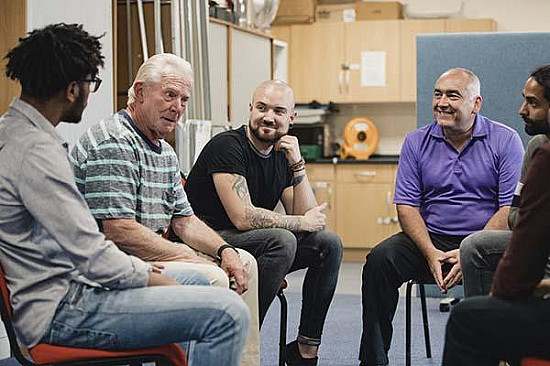
Support groups can be especially powerful in prostate cancer because they help normalize experiences that many men otherwise keep private. Hearing another survivor say, “Yeah, the first months after treatment were rough for me too,” can do more for shame than ten cheerful brochures. Survivorship programs, oncology social workers, and peer mentors can also help patients navigate relationships, work, and the “new normal” that follows treatment.
7. Treat depression and anxiety like real medical issues
If symptoms are persistent or significant, professional treatment matters. That may include therapy, medication, or both. The key is not to dismiss emotional symptoms as “just part of cancer.” Some distress is expected. Suffering in silence is not a treatment plan.
The bottom line
Prostate cancer treatment can affect mental health in ways that are direct, indirect, and deeply personal. Surgery, radiation, and hormone therapy do not only change the body. They can change mood, identity, confidence, intimacy, and the sense of control a person has over daily life. Anxiety, depression, body image distress, fear of recurrence, and relationship strain are all common enough to be taken seriously.
But this story is not all loss. Many men adapt. Many couples rebuild intimacy in new forms. Many survivors feel better once they name what is happening and get the right support. The best prostate cancer care is not only about controlling disease. It is about helping people live well afterward, with emotional honesty, evidence-based support, and a little grace for the fact that recovery is rarely as tidy as a discharge summary.
If there is one message worth underlining, highlighting, and maybe taping to the refrigerator, it is this: mental health care should be part of prostate cancer treatment, not an optional side quest unlocked after everything gets hard.
Extended Experiences: What This Often Looks Like in Real Life
Many men do not describe their experience by saying, “I am having treatment-related psychological distress.” They say things like, “I snap at everyone now,” or, “I don’t want to go out for long because I’m worried about leaking,” or, “My doctor says I’m doing great, so why do I feel awful?” That gap between medical success and emotional struggle is one of the most important realities in prostate cancer survivorship.
A common experience after surgery is a strange combination of gratitude and grief. A man may be relieved that the cancer was removed and still feel blindsided by incontinence or erectile dysfunction. He may avoid intimacy, not because he does not love his partner, but because he is embarrassed, frustrated, or afraid of disappointing them. He may also stop talking about it because each conversation feels like reopening a wound. On the outside, recovery looks “on track.” On the inside, confidence may be hanging on by a thread.
Men on hormone therapy often describe a different pattern. They may notice that their body composition changes, energy drops, sleep becomes messy, and emotions feel unfamiliar. Some say they feel flatter, more irritable, or oddly detached. Others become tearful in ways that are unlike them. A few describe it as feeling as if someone quietly turned down the volume on motivation and turned up the static in their head. When that happens without warning, it can be unsettling. When it is explained ahead of time, it can still be hard, but it feels less like losing one’s mind and more like managing a known side effect.
Another real-world pattern is PSA-related anxiety. Even men who are stable for years can feel their pulse rise before follow-up testing. Logically, they know one number is just one data point. Emotionally, it can feel like judgment day in spreadsheet form. Some men sleep poorly the week before testing. Others check portals compulsively. Some become quiet and withdrawn, while partners notice the shift before the patient says anything at all.
Relationships also change in ways that are subtle but profound. Some couples become closer because cancer forces honest conversations they had put off for years. Others struggle because both people are scared, tired, and trying not to burden each other. A partner may focus on survival, while the patient feels consumed by sexual loss or identity change and then feels guilty for caring about it. That guilt can deepen isolation. It helps enormously when clinicians say plainly that sexual function, body image, and emotional well-being are legitimate health concerns, not vanity projects.
Over time, many survivors do find a steadier footing. They learn practical strategies, regain trust in their bodies, or redefine intimacy and masculinity in ways that feel less rigid and more humane. Support groups, exercise, counseling, honest conversations, and simply hearing “this is common” can reduce shame. Recovery may not mean going back to the exact person you were before cancer. Often, it means becoming someone who knows how to carry both vulnerability and strength at the same time.