An old, dirty fish tank has a special talent: it can make you feel guilty from across the room. The water looks like weak tea, the glass has a green beard, the gravel is hiding mysteries, and the filter sounds like it is filing a complaint. The good news is that most neglected aquariums can be cleaned up safely. The bad news is that you should not attack them like you are pressure-washing a driveway.
If there is one golden rule in fish tank cleaning, it is this: do not try to make the tank look brand-new in one dramatic session. Fish do not need a sterile glass box. They need stable water, working equipment, and beneficial bacteria that help process waste. So the goal is not “sparkly at any cost.” The goal is “clean enough to be healthy, without causing a fishy meltdown.”
This guide walks you through how to clean an old, dirty fish tank the smart way, whether it still has fish in it or has been sitting abandoned like an underwater haunted house. You will learn what supplies to use, what mistakes to avoid, and how to bring the aquarium back without crashing the tank’s balance.
First, Figure Out What Kind of Mess You’re Dealing With
Before you clean anything, take a good look at the tank and answer one important question: Is this an active tank with fish still living in it, or an empty tank that is being revived?
If fish are still in the tank
Be gentle. Your goal is to remove waste, algae, and dirty water in stages while protecting the biological balance. This means partial water changes, careful gravel vacuuming, and light filter cleaning. In most routine situations, fish can stay in the tank during the cleaning process.
If the tank is empty
You have more freedom. You can remove all décor, deep-clean surfaces, deal with hard-water stains, rinse substrate thoroughly, and restart the setup. An empty tank is the easiest kind to rescue because you are not trying to protect fish from sudden water chemistry swings.
If the tank smells awful
A bad smell usually means something organic is rotting: uneaten food, plant debris, fish waste, a clogged filter, or even a dead fish hidden behind décor. Before you do anything else, look for the source. Cleaning without removing the cause is like spraying air freshener in a gym bag. Bold effort. Poor result.
Supplies You’ll Want Before You Start
Get your tools ready so you are not sprinting through the house with wet hands and a guilty expression. The basics include:
- A gravel vacuum or siphon
- A clean bucket used only for aquarium work
- An algae pad, scraper, or magnetic cleaner
- Water conditioner or dechlorinator
- A clean cloth or paper towels for the outside glass
- A fish net
- A soft brush or toothbrush reserved for aquarium use
- Water test kit, if available
Skip soap, dish detergent, kitchen sponges, and household glass sprays. Those products can leave behind residues that are dangerous for fish. Also, if you have cuts on your hands, wear gloves and wash up well afterward. Aquarium water looks peaceful, but it is still a live microbial soup.
How to Clean an Old, Dirty Fish Tank Step by Step
Step 1: Turn Off the Equipment
Unplug the heater, filter, and any air or circulation equipment before lowering the water level. Heaters can crack if they run without enough water around them, and filters do not appreciate being asked to perform while half-dry and full of gunk.
Step 2: Scrape the Inside Glass First
Start with the algae on the inside glass. Use an aquarium-safe algae pad or scraper and work from top to bottom. This is smart for two reasons. First, it immediately improves visibility, which is emotionally healing. Second, loosened algae will fall into the water, where you can remove it later during the water change.
If mineral crust or white residue is clinging to the top edge of an empty tank, white vinegar can help break it down. Do not pour random cleaning products into a tank that contains fish.
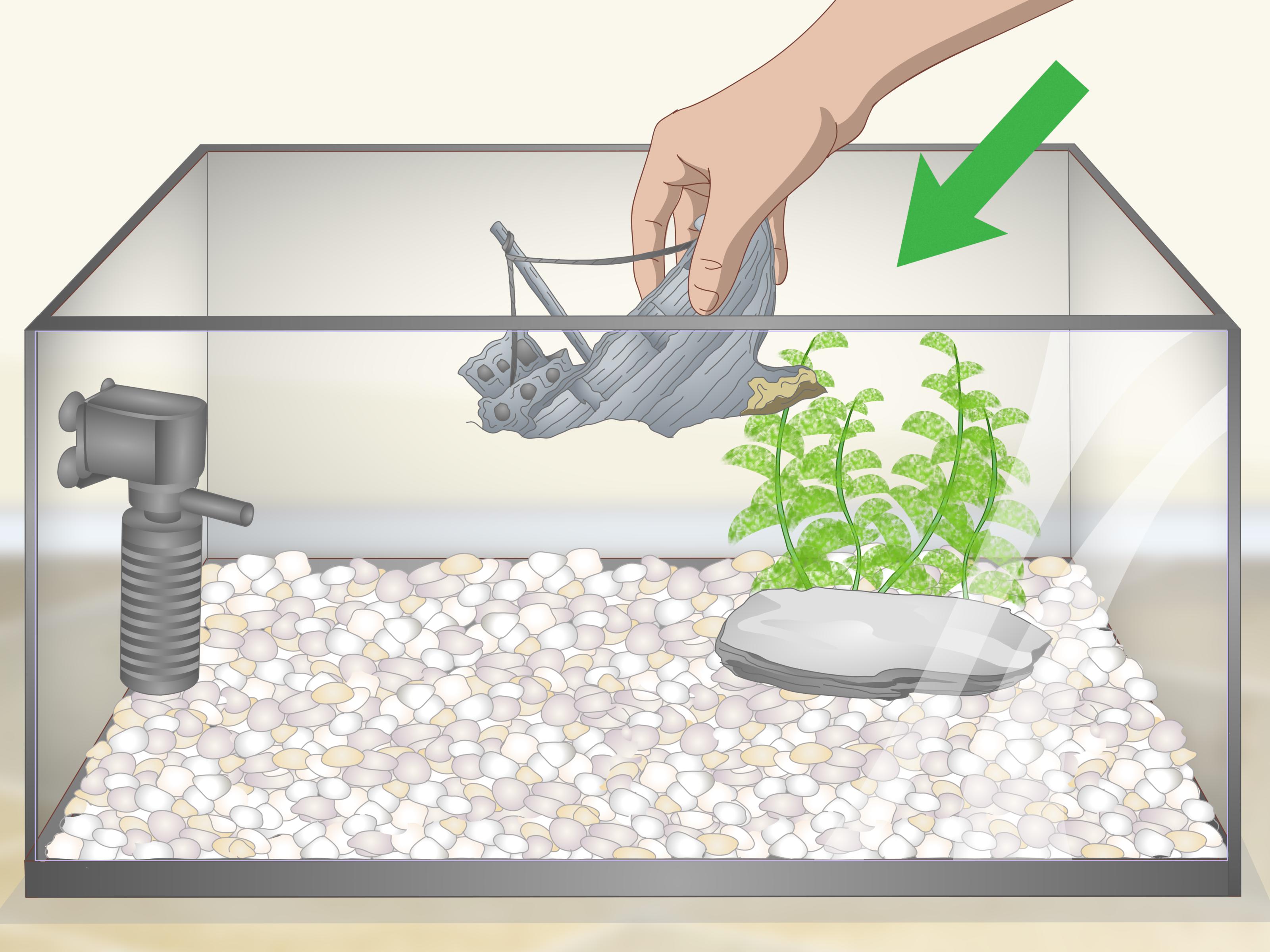
Step 3: Remove and Lightly Clean Dirty Decorations
If the rocks, fake plants, caves, or ornaments are covered in slime or algae, remove only the dirtiest pieces and scrub them in warm water with an aquarium-only brush. No soap. No scented anything. No “just a tiny drop.” Fish are not impressed by citrus-fresh décor.
Do not strip out every single decoration if fish are still living in the tank and the setup has been stable for a long time. Surfaces in the aquarium help support beneficial bacteria. Over-cleaning everything at once can create more trouble than the algae ever did.
Step 4: Siphon the Gravel or Sand
This is the heart of the cleanup. Use a gravel vacuum to remove debris trapped in the substrate while siphoning out old water. Push the vacuum into the gravel, lift, and move section by section. If you use sand, hover just above the surface so you pull out mulm and waste without vacuuming the beach into the bucket.
For a tank that is merely overdue for maintenance, aim to remove about 20% to 30% of the water. For a truly filthy, neglected tank with fish still inside, resist the urge to drain everything. A safer approach is to do a moderate change, test the water, and repeat another partial cleaning the next day or later in the week if needed.
Think of it like cleaning a messy bedroom with a sleeping cat in it. You can absolutely improve things. You just should not set off a leaf blower.
Step 5: Clean the Filter the Right Way
The filter is often the dirtiest part of an old aquarium, but it is also home to the bacteria that help detoxify fish waste. That means you want to clean it gently, not sterilize it.
Open the filter and rinse sponges, floss, or mechanical media in the bucket of old tank water you just removed. Squeeze out sludge until water can pass through again, but do not scrub the media until it looks factory-fresh. Biological media should be preserved as much as possible. Replacing every cartridge or rinsing everything under hot tap water can wipe out helpful bacteria and trigger ammonia or nitrite trouble.
If the impeller is clogged with slime, clean that too. A filter cannot do its job if it sounds like a tiny blender full of gravel.
Step 6: Refill With Conditioned Water
Add fresh water that has been treated with a dechlorinator. Match the new water as closely as possible to the tank’s temperature. Sudden shifts can stress fish, especially in neglected tanks that may already be dealing with poor water quality.
Pour the water in gently. You can pour it onto a plate, bowl, or your hand to avoid blasting the gravel into a crater and redecorating the tank in a way your fish did not request.
Step 7: Restart the Tank and Observe
Turn the heater and filter back on. Make sure the filter is actually flowing again and the heater is fully submerged before it runs. Then watch the tank for the next hour. Fish should settle down, not gasp at the surface or dart frantically.
If you have a test kit, check ammonia, nitrite, nitrate, and pH. In older neglected tanks, the water may have drifted slowly over time. Cleaning improves conditions, but testing tells you whether the tank needs another partial water change or closer monitoring.
What Not to Do When Cleaning a Dirty Fish Tank
When people run into trouble, it is usually because they go too hard, too fast. Avoid these classic mistakes:
- Do not replace all the water at once unless the tank is empty and you are fully restarting it.
- Do not wash filter media in hot tap water or let it dry out.
- Do not replace all filter media at the same time unless your manufacturer specifically directs staged replacement and you are prepared to monitor water quality closely.
- Do not use soap, detergent, or household cleaners anywhere inside the tank, on décor, or on equipment that touches the water.
- Do not overfeed right after cleaning. A “celebratory buffet” is how a dirty tank becomes dirty again by Tuesday.
- Do not panic if the water looks slightly cloudy right after cleaning. Loose debris often settles or clears as the filter catches it.
How to Handle Specific Ugly-Tank Problems
Cloudy water
Cloudiness can come from disturbed debris, bacterial blooms, overfeeding, or a dirty filter. Start with substrate vacuuming, partial water changes, and checking the filter flow. Then reduce feeding for a few days and test the water. If the cloudiness followed a major filter replacement, the tank may need time to rebalance.
Green glass and algae-covered décor
Algae is not always a disaster, but heavy growth often points to excess light, too many nutrients, or weak maintenance habits. Scrape the glass, clean the dirtiest decorations, shorten lighting time, and remove excess waste from the substrate. A cleanup crew can help in some tanks, but it is not a substitute for maintenance.
Brown or tea-colored water
This can come from tannins released by driftwood, but it can also signal a buildup of dissolved organic waste. If the tank has gone neglected, partial water changes and filter maintenance are your best first move.
White crust around the rim
That is usually mineral residue from hard water. If the tank is empty, vinegar can loosen it. If the tank is occupied, keep vinegar away from the aquarium water and focus on wiping the outside edge carefully.
Thick sludge in the gravel
Do not stir the entire bed like you are mixing cake batter. Vacuum sections over multiple sessions. In a badly neglected tank, a staged cleanup is safer than a one-day deep dig.
If the Tank Has Been Abandoned and Is Empty
An empty old aquarium is much easier to restore. Remove all décor, substrate, and equipment. Clean the tank walls with aquarium-safe methods, remove mineral buildup, rinse everything thoroughly, and inspect the seals, heater, filter housing, tubing, and cords before setting it back up.
Old substrate is often better replaced than “rescued,” especially if it smells foul or releases clouds of muck every time you touch it. Rinse any new gravel or sand before use. Once reassembled, fill the tank, dechlorinate the water, run the filter and heater, and cycle the aquarium before adding fish. A shiny tank is not the same thing as a biologically ready tank.
How to Keep the Tank From Getting This Gross Again
Once the aquarium looks respectable again, keep it that way with a realistic maintenance rhythm:
- Scrape algae from the glass weekly or as needed
- Do partial water changes regularly
- Vacuum part of the substrate during water changes
- Rinse mechanical filter media when flow slows down
- Remove dead leaves, uneaten food, and obvious debris
- Test water periodically, especially after major cleaning or stocking changes
- Feed lightly enough that food is gone within a minute or two
The cleanest tanks are not usually the ones with the fanciest gear. They are the ones with boring, consistent maintenance. Fishkeeping rewards routine more than heroics.
Real-World Experiences Cleaning an Old, Dirty Fish Tank
Anyone who has cleaned an old aquarium knows that the job is never just about cleaning glass. It is usually about undoing a slow-motion chain of small neglects. Maybe life got busy. Maybe the fish tank became background furniture. Maybe the filter got louder little by little until it sounded normal. Then one day you looked over and realized the tank had gone from “lived in” to “this looks like a swamp documentary.”
One of the most common experiences is discovering that the tank looks worse than the water tests suggest. The glass is coated, the decorations are shaggy, and the gravel appears to be storing ancient secrets, yet the fish may still be acting mostly normal. That can tempt people into doing an aggressive total teardown because the tank looks terrible. In practice, the best recoveries usually happen when the owner slows down and treats the cleanup like rehab instead of demolition.
Another common experience is realizing how much dirt hides in the substrate. You think you are going to remove one bucket of dirty water, and suddenly the siphon is pulling out enough brown sludge to qualify as archaeological evidence. The first pass through an old gravel bed can be surprisingly gross, but it is also satisfying. You can literally watch the tank begin to breathe again as trapped waste leaves the system.
People are often shocked by how much better a tank looks after only a few basic moves: scraping the glass, vacuuming the gravel, cleaning the filter, and replacing part of the water. Not all ugly aquariums need expensive treatments, miracle clarifiers, or a complete redesign. Many just need patient maintenance and less overfeeding. Fish are remarkably good at telling you this without ever saying it out loud.
There is also a learning moment that comes from cleaning the filter properly for the first time. Beginners often assume the filter’s job is to make dirt disappear forever. Then they open it and discover that it is more like a lint trap, a compost collector, and a biological apartment complex all rolled into one. Once you understand that the filter needs cleaning but not sterilizing, tank care starts to make a lot more sense.
Experienced hobbyists will tell you that the emotional part matters too. A dirty tank can create a weird cycle of avoidance. The worse it looks, the less you want to deal with it. The less you deal with it, the worse it gets. Then the whole job feels bigger than it really is. Breaking that cycle with one solid maintenance session usually changes everything. Even a modest cleanup can restore your motivation because the tank starts looking alive again instead of abandoned.
And perhaps the most useful lesson from real-life fish tank cleanups is this: tanks rarely become disasters overnight. They drift there. That is actually good news, because it means the solution is rarely one dramatic rescue. It is a return to small, repeatable habits. Clean a little, change some water, test when needed, feed more carefully, and keep the filter moving. Do that, and even a sad old aquarium can become the calm, beautiful centerpiece it was supposed to be all along.
Conclusion
Cleaning an old, dirty fish tank is less about brute force and more about strategy. Remove algae, vacuum waste, clean the filter gently, and replace water in reasonable stages. Protect the good bacteria, avoid soap and chemical shortcuts, and let consistency do the heavy lifting. Whether your aquarium is mildly embarrassing or fully auditioning for a swamp remake, a steady cleanup plan can bring it back.