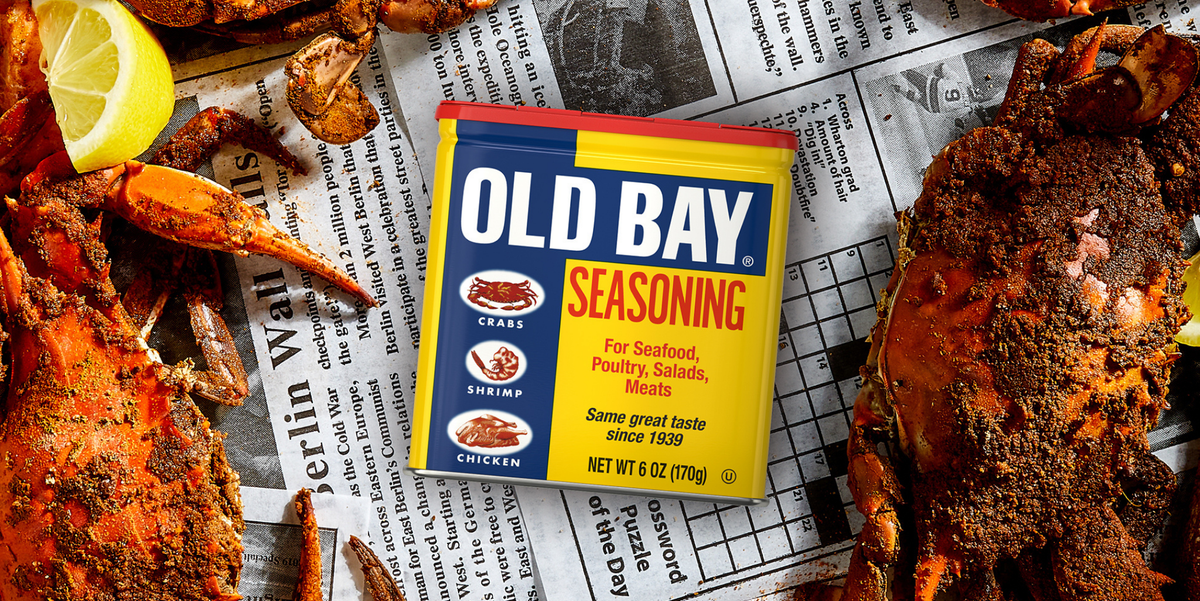
If you grew up anywhere near Maryland, the Old Bay tin was never just a spice container. It was part pantry staple, part regional flag, part unofficial member of the family. You saw it next to the stove, next to the steamed crabs, next to the fries, next to the popcorn, and probably next to at least one person insisting, with complete sincerity, that Old Bay belongs on absolutely everything except breakfast cereal. Probably.
That is why McCormick’s decision to bring Old Bay back to its classic tin packaging feels bigger than a normal packaging update. On paper, this is a container story. In real life, it is a nostalgia story, a branding story, a usability story, and a very Baltimore story. The company announced in late 2025 that Old Bay would move away from plastic and return to tin, reviving the iconic look longtime fans never truly stopped missing. And the reaction was exactly what you would expect when a beloved food brand says, “You know that thing you’ve been complaining about for years? Fine. You were right.”
For shoppers, it is a small victory with big emotional energy. For McCormick, it is a savvy recognition that packaging is not just a wrapper around the product. Sometimes the package is part of the product. In Old Bay’s case, the tin is not background scenery. It is part of the legend.
Why This Packaging Change Feels So Important
Old Bay did not announce a new flavor, a new formula, or some wild celebrity crossover that leaves everybody wondering whether crab seasoning really needed to become a lifestyle brand. The seasoning itself remains the familiar blend fans know: the same signature Chesapeake-style flavor built around celery salt, paprika, and a mix of 18 herbs and spices. What changed is the vessel.
And yet, that vessel matters. A lot.
The return to tin restores the familiar yellow, blue, and red look that helped make Old Bay instantly recognizable in kitchens and grocery aisles. McCormick positioned the move as a return to the “classic feeling and user experience of years past,” which is corporate language for, “We heard you, and yes, the metal tin really was part of the magic.” That is an unusually honest brand correction, and honestly, a refreshing one.
In a market packed with sleek redesigns and “modernized” packaging that often strips products of their charm, Old Bay is doing the opposite. It is leaning into heritage. That is smart because Old Bay does not win by looking futuristic. It wins by looking like the spice your grandparents trusted, your parents used, and you now keep in the cabinet because one day you woke up and realized your food felt emotionally underdressed without it.
What Changed, Exactly?
The tin is back, but the identity never left
McCormick is moving Old Bay away from the plastic format introduced in 2017 and back to the classic tin style that many consumers associate with the brand’s golden age. The look remains unmistakably Old Bay: bright, bold, and impossible to confuse with anything else on the shelf.
That point matters because this is not a rebrand. It is a restoration. The company is not trying to reinvent Old Bay for a new audience. It is restoring something longtime fans believed should never have been retired in the first place.
It is a packaging revival, not a recipe reboot
Nothing in the announcement suggests a flavor overhaul. This is still the same beloved seasoning people shake onto crab cakes, shrimp boils, fries, corn, wings, deviled eggs, chowder, roasted vegetables, and whatever mystery leftovers are currently staring at them from the refrigerator. The product’s reach has expanded far beyond seafood over the years, but the core identity remains intact: bold, savory, zesty, and unmistakably rooted in Chesapeake Bay food culture.
So no, your crab dip is not entering a period of emotional uncertainty. The seasoning is the same. The container simply got its swagger back.
Why Fans Never Really Forgave the Plastic Era
Back in 2017, McCormick moved Old Bay from metal tins to plastic containers. At the time, the shift was presented as an environmentally minded decision tied to packaging goals and a reported reduction in carbon emissions. From a corporate sustainability perspective, it made sense on paper. From a fan perspective, however, it landed like somebody replacing a vintage diner sign with a tablet menu.
People objected for two main reasons.
First, the emotional reason: the plastic container simply did not feel like Old Bay. The seasoning is one of those products whose packaging became inseparable from its identity. People did not just love the flavor. They loved the familiar ritual of the tin, the look of it, the feel of it, and the weirdly comforting certainty that it belonged exactly where it had always been.
Second, the practical reason: many consumers said the plastic container did not work as well. Complaints about loose lids, spills, and flimsier handling kept bubbling up in food coverage and fan discussions. That may sound trivial until you have accidentally dusted half your kitchen counter with a surprise orange blizzard. At that point, the packaging debate becomes deeply personal.
Some fans even held onto old tins and refilled them rather than switch emotionally, spiritually, or ergonomically to plastic. That is when a brand should realize it is no longer dealing with a mere container preference. It is dealing with a cultural attachment.
Why the Tin Matters Beyond Nostalgia
1. It strengthens the brand’s visual power
Great packaging works like shorthand. Before you read a label or compare ingredients, you recognize the thing you trust. Old Bay’s classic tin does that instantly. It carries decades of memory in one glance. On a crowded spice shelf, that kind of recognition is worth real money.
Packaging trade coverage has already pointed out that Old Bay’s return to tin aligns with a broader interest in packaging that delivers shelf impact, vintage charm, and a more premium pantry presence. In plain English: people like products that work well and look cool sitting on the counter. Not every buying decision is romantic, but food is one category where design absolutely affects perception.
2. It improves the everyday user experience
The best packaging is not the flashiest. It is the one that feels intuitive. Old Bay’s tin has long been associated with sturdiness and familiarity. The return matters because spice packaging is handled often, stored visibly, and judged subconsciously every single time it is used.
You do not have to be a packaging engineer to know that some containers feel cheap and some feel right. The Old Bay tin feels right because it matches what the brand promises: tradition, confidence, and a little swagger. It says, “This product knows exactly what it is.”
3. It reopens a bigger sustainability conversation
This part is worth handling carefully, because packaging debates tend to get oversimplified fast. When McCormick moved Old Bay to plastic in 2017, the company tied that change to lower packaging-related emissions. That was not imaginary. It reflected a real sustainability calculation at the time.
But in 2025 and 2026, the conversation around packaging has become more layered. Consumers are increasingly focused not just on theoretical material efficiency, but also on recyclability, waste visibility, and the long-term discomfort many people feel about plastic-heavy everyday goods. U.S. EPA data also show stronger recycling performance for steel packaging than for PET bottles and jars in national waste reporting, which helps explain why metal packaging often carries stronger circular-economy appeal in public discussion.
Does that automatically make tin the universal sustainability winner? Not necessarily. Packaging sustainability depends on manufacturing, transport, recycling access, end-of-life behavior, and local waste systems. But Old Bay’s return to tin taps into a broader consumer mood: many shoppers want packaging that feels more durable, more recyclable, and less disposable. Even when the math is complicated, the message is simple.
Old Bay’s Baltimore Story Is a Big Reason This Works
Old Bay is not just a nationally distributed seasoning brand. It is a regional icon with deep historical roots. The blend was created in Baltimore, and its backstory is inseparable from the story of Gustav Brunn, the German-Jewish immigrant who built the Baltimore Spice Company after fleeing Nazi Germany. The seasoning was named after the Old Bay Line, the passenger steamship route once associated with the Chesapeake region.
That history matters because it explains why the brand feels personal to so many people. Old Bay did not become famous by pretending to be everything to everyone. It became famous by being deeply, specifically, and proudly itself. McCormick later acquired the brand in 1990, but its regional soul never disappeared. If anything, the company’s smartest Old Bay decisions have been the ones that preserve that feeling rather than polish it away.
The tin belongs to that story. It looks local. It feels historical. It reminds people that Old Bay is not just another seasoning blend with a catchy label. It is part of a food tradition. In Maryland, that tradition borders on civic religion.
McCormick Is Not Just Selling Seasoning Here
Let’s be honest: this move is also brilliant marketing.
Brands spend fortunes trying to manufacture authenticity. Old Bay already has it. The return to tin gives McCormick a chance to reconnect with longtime loyalists, energize regional pride, create collectible appeal, and generate a wave of earned media without changing the product itself. That is an excellent return on emotional investment.
The company clearly understood the moment. The announcement came with a “This Just Tin” campaign, a limited-edition collectible tie-in with the Baltimore Ravens, and a launch event with Jimmy’s Famous Seafood. That is not just packaging. That is theater, and it is good theater, because it builds on something consumers were already primed to care about.
In other words, McCormick did not invent demand for the comeback. Fans did. The company simply had the wisdom to stop arguing with them.
What Shoppers Can Expect
- The same seasoning: This is a packaging comeback, not a flavor reinvention.
- A more iconic pantry look: The old-school tin instantly feels more collectible and display-worthy.
- Plenty of nostalgia: For longtime users, this will feel like a small but satisfying correction.
- Renewed cultural buzz: The return to tin gives Old Bay fresh momentum without making the brand feel gimmicky.
That last point is important. Plenty of brands chase attention through novelty. Old Bay just earned attention by being less novel and more itself. That is a rare win.
Could Old Bay Influence Other Food Brands?
Maybe. Trade publications covering the packaging industry have already framed Old Bay’s comeback as part of a renewed interest in printed tins and other retro-inspired formats. That does not mean every spice company is about to run back to metal with tears in its eyes. Packaging choices still depend on cost, sourcing, production lines, and shipping realities.
But Old Bay’s move does highlight a broader truth: consumers do not separate packaging from brand meaning as neatly as executives sometimes do. If a package is part of the product’s ritual, memory, or usefulness, changing it can alter how the product is experienced. Bringing it back can rebuild trust surprisingly fast.
That makes Old Bay an interesting case study. The brand is proving that a packaging reversal is not necessarily an admission of failure. It can be a sign of maturity. Sometimes the boldest move is not innovation for innovation’s sake. Sometimes it is recognizing that the classic version became classic for a reason.
The Real Reason This Comeback Works
At the heart of all this is one simple idea: food is emotional. People do not just buy seasoning for chemistry. They buy it for memory, ritual, identity, comfort, and habit. Old Bay has all of that in abundance. The tin amplifies it.
That is why this story has resonated so widely. It is not really about metal versus plastic. It is about what happens when a company remembers that customers are attached to more than ingredients. They are attached to the whole experience. The logo, the shake, the look on the shelf, the family traditions, the summer crab feast, the smell when the lid opens, the visual shorthand of home. Old Bay’s classic tin contains all of that before it even contains a single spice grain.
So yes, this is packaging news. But it is also a reminder that the smallest details often carry the biggest meaning. Or, in Old Bay’s case, the loudest little tin in the pantry just got its microphone back.
Experience: Why Seeing the Old Bay Tin Again Hits So Hard
There is a very specific kind of joy attached to a food package you grew up with. Not a fancy joy. Not a luxury joy. More like the immediate little spark your brain gets when it sees something familiar and thinks, Oh, there you are. That is the feeling the Old Bay tin brings back.
Picture a summer table covered in newspaper, a mountain of steamed crabs in the middle, paper towels disappearing at an alarming rate, and one bright yellow tin sitting nearby like it owns the whole event. Because, in a way, it does. The tin is never loud, but it is always present. It is part condiment, part mascot, part silent witness to every backyard debate about the right way to crack claws.
Even outside seafood season, the old tin had a way of showing up in ordinary moments and making them feel a little more fun. It sat on kitchen shelves next to the salt and pepper like the slightly more interesting cousin who always had better stories. It turned plain fries into something worth hovering over. It made corn on the cob feel festive. It somehow convinced generations of people that sprinkling seafood seasoning onto snack food was not only acceptable, but inspired.
That is why the return of the classic packaging feels emotional. The tin carries the atmosphere around the seasoning. It calls up the sound of cabinet doors, the smell of dinner starting, the sight of grandparents cooking without measuring a single thing, and the low-key certainty that whatever is being made is about to taste better than it has any right to.
Plastic never really did that. Plastic was functional. Plastic was modern. Plastic was probably the kind of choice made in a conference room with charts and sensible objectives. But the tin had personality. The tin looked like a keeper. The tin looked like it had survived cookouts, beach weekends, church picnics, and at least one family member ignoring the recipe and saying, “I know what I’m doing.”
And then there is the visual part of it. The old-school Old Bay tin is one of those packages that does not need updating because it already solved the assignment. It is cheerful without trying too hard. It is bold without being slick. It feels regional in the best way, like something that belongs somewhere real. Put it on a kitchen counter and it adds a tiny bit of character instantly. That is not a small thing in an era when so much packaging is forgettable on purpose.
The comeback also says something comforting about consumer culture, surprisingly enough. Every now and then, a company changes course and admits that people were attached to a thing for good reason. That is refreshing. It makes the return of the tin feel less like a trend stunt and more like a restoration. Like somebody put the right picture back in the frame.
For longtime fans, the new old tin will probably produce a double reaction. First: delight. Second: a tiny, triumphant “Finally.” And honestly, that may be the most Old Bay response possible. A little sentimental, a little dramatic, completely sincere, and already halfway to the kitchen.
Conclusion
Old Bay’s return to classic tin packaging is a rare brand move that feels both strategic and heartfelt. It restores an iconic look, responds to long-running customer frustration, strengthens the product’s Baltimore-rooted identity, and gives McCormick a powerful reminder that packaging is not just about containment. It is about meaning.
For fans, the comeback validates something they understood all along: the Old Bay tin was never just a shell around the seasoning. It was part of the ritual. Part of the memory. Part of the flavor, even if not literally. And when a food brand manages to bring back a container and make people feel seen, that is not small news. That is what good branding tastes like.