Ovulation tests are the tiny, judgment-free roommates of the fertility world. They don’t care if you’re wearing yesterday’s sweatpants or eating cereal for dinner. They just want one thing: your luteinizing hormone (LH) intel. And if you’re trying to conceive (TTC), that little hormone spike can help you stop guessing and start timing.
But here’s the catch: ovulation tests aren’t magic wands. They’re more like weather forecastsuseful, but best when you understand what they measure, when to check, and what to do when you get that long-awaited positive.
Ovulation tests 101: What they’re really measuring
Most at-home ovulation tests (also called ovulation predictor kits or OPKs) look for a surge in LH in your urine. LH rises right before ovulationaka when your ovary is gearing up to release an egg. A positive test usually means ovulation is likely within the next day or two, which is why OPKs are popular for timing intercourse or insemination.
What OPKs can do well:
- Spot the LH surge so you can identify your most fertile timing.
- Narrow the window if your cycles are regular-ish and you’re tired of calendar math.
- Help you learn your pattern over a few cyclesespecially if your ovulation day isn’t always “textbook.”
What OPKs can’t promise:
- They don’t confirm ovulation happened. They confirm your body attempted the hormonal lead-up.
- They can’t diagnose fertility issues or tell you anything about egg quality, sperm quality, or whether implantation will happen.
- They won’t always behave if you have irregular cycles, certain hormone conditions, or you’re using specific fertility medications.
The best day to start testing (without burning through a whole box)
The number-one reason people miss their surge is painfully simple: they started too late. The number-two reason: they started so early they tested for half a month, got annoyed, and rage-quit. Let’s avoid both.
Step 1: Know your cycle length
Cycle length is counted from Day 1 of your period (first day of full flow) to Day 1 of your next period. Do this for at least a few cycles if you can. An “average” cycle is often cited as 28 days, but plenty of healthy cycles fall outside that.
Step 2: Estimate when you might ovulate
A common rule of thumb: many people ovulate about 12–14 days before their next period. That means if your cycles are usually 28 days, ovulation often lands around day 14. If your cycles are 32 days, ovulation might be closer to day 18–20, and so on.
Step 3: Start testing 3–5 days before expected ovulation
If your cycles are fairly consistent, a practical approach is to begin OPKs three to five days before you expect to ovulate. That gives you enough runway to catch the rise without testing every day of your life.
Examples (because real life needs examples):
- 28-day cycle: You might ovulate around day 14 → start OPKs around day 9–11.
- 24-day cycle: You might ovulate around day 10 → start OPKs around day 6–8.
- 32-day cycle: You might ovulate around day 18 → start OPKs around day 13–15.
- 35-day cycle: You might ovulate around day 21 → start OPKs around day 16–18.
And yes, many OPK brands include their own start-day charts. If your package gives directions, follow themespecially if it’s a digital test with a monitor, because the “rules” can vary slightly by design.
What if your cycles are irregular?
If your cycle length changes a lot from month to month, timing gets trickier. Use these strategies instead of guessing:
- Start based on your shortest recent cycle (so you don’t miss an early surge).
- Use body clues (more on cervical mucus below) to decide when to begin daily testing.
- Consider testing longerbut if you’re testing for weeks with no clear positive, that’s a good reason to check in with a clinician.
What time of day should you take an ovulation test?
This is where the internet gets loud. Some advice says “first thing in the morning,” some says “afternoon,” and some says “whenever your cat allows you to have privacy.” The truth is: time of day matters less than consistencybut there are a few science-backed tips that can improve your odds.
A practical “best time” rule
- Pick a consistent testing time you can realistically stick to for several days in a row.
- Try late morning to evening if your instructions allow itmany clinicians note OPKs can correlate well when urine is collected later in the day.
- Avoid testing right after chugging water because diluted urine can make the surge harder to detect.
Hydration tip that saves a lot of confusion: For the couple hours before testing, keep fluids reasonable. You don’t need to dehydrate yourself like you’re training for a desert marathonjust don’t test immediately after you’ve had a giant drink.
Should you test once a day or twice?
Many people do fine with once daily testing starting a few days before expected ovulation. But if you suspect your LH surge is short (some are!), testing twice a day during your likely fertile window can help you catch a surge you’d otherwise miss.
A simple “twice-a-day” approach:
- Late morning (for example, 10 a.m.–noon)
- Early evening (for example, 6–8 p.m.)
If that sounds like a lot, remember: you only need the twice-a-day schedule for a few days around when you expect the surgenot for the entire month.
How to read your results (without spiraling)
Ovulation tests generally come in two styles:
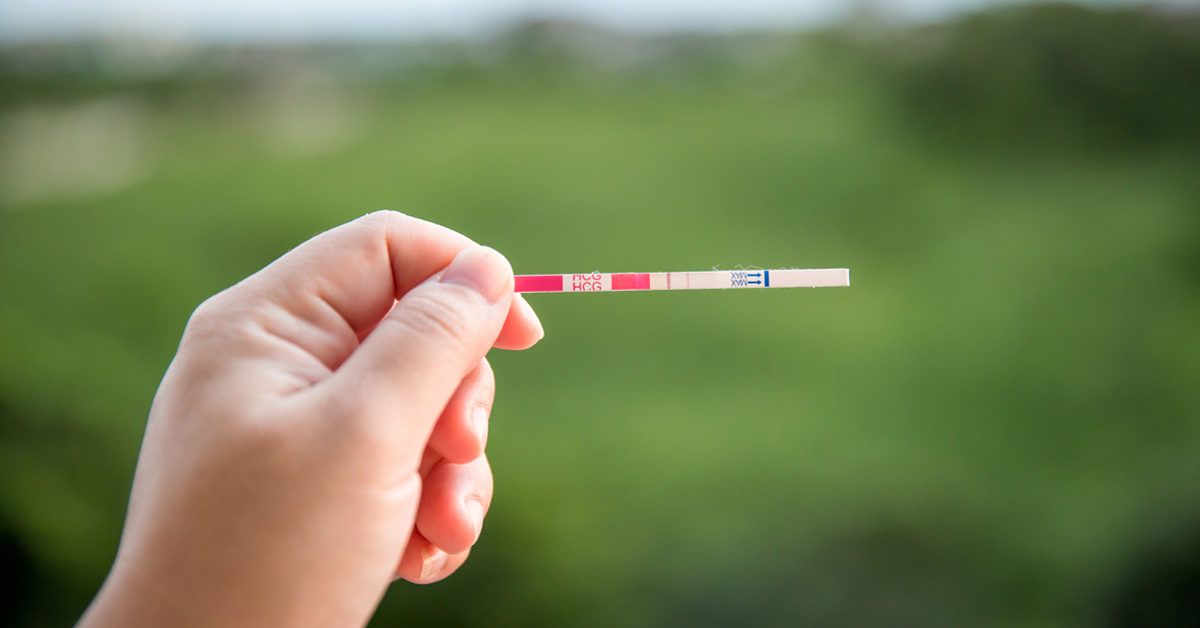
- Line strips: Two lines appear, and you compare darkness.
- Digital tests: A symbol or word result (often simpler, sometimes pricier).
If you’re using line strips
Most strip tests work like this:
- The control line should show up to prove the test worked.
- The test line gets darker as LH rises.
- A result is commonly considered positive when the test line is as dark as or darker than the control line.
Two important sanity-saving notes:
- “Almost as dark” is usually not positive. It can mean LH is rising, which is still useful information.
- Read within the time window in the instructions. If you check it 45 minutes later, your test might be telling a fictional story.
If you’re using a digital test
Digital tests remove the “line detective” part. You’ll usually get a clear result like a symbol that indicates a surge. If you’re prone to squinting at lines and texting friends photos like it’s an art critique, digital can be worth it for peace of mind.
Okay, it’s positivenow what?
When an ovulation test turns positive, you’re likely in your most fertile stretch. That’s your cue to prioritize timing.
The fertile window in plain English
Pregnancy is most likely when sperm is already “on site” before the egg is released, because the egg’s window is short. The fertile window is typically described as the five days before ovulation and the day of ovulation (and some guidance also includes the day after). Translation: waiting until ovulation is over is like showing up to a concert after the band has packed up.
A simple TTC game plan
- Have sex the day you get a positive OPK.
- Have sex again the next day (and even the day after if you can and want to).
- More broadly, aim for every day or every other day through your fertile window if that’s comfortable and realistic.
If you’re using IUI or timing a clinic-based cycle, follow your clinic’s instructions closelythey may time insemination based on your surge and other monitoring.
When ovulation tests get confusing (and what to do about it)
Sometimes OPKs act like that one friend who insists they’re “five minutes away” while still in the shower. Common reasons include:
1) Irregular cycles or PCOS
Some people with polycystic ovary syndrome (PCOS) can have higher baseline LH, which can lead to repeated positives or unclear patterns. If your tests look positive for many daysor never clearly peakit may be worth switching to a different tracking method or getting guidance from a clinician.
2) False positives or constant negatives
False positives and consistent negatives can happen for several reasons, including hormonal variation, ovulatory dysfunction (not releasing an egg), or testing conditions that make LH harder to detect.
3) Testing too late, too early, or too diluted
If you never catch a positive, the fix is often annoyingly basic:
- Start testing earlier next cycle.
- Test at the same time each day.
- Avoid heavy fluids right before testing.
- Consider twice-a-day testing for a few days.
Make OPKs work better by pairing them with other signs
If OPKs are your “headline,” these are your supporting details:
Cervical mucus
As you approach ovulation, cervical mucus often becomes clearer, wetter, and stretchy (many people compare it to raw egg whites). When you see that pattern, it’s a smart time to begin OPKs if you haven’t already.
Basal body temperature (BBT)
BBT rises slightly after ovulation due to progesterone. This method is great for confirming a pattern over time, but it usually tells you ovulation already happenedso it’s better as a “did it happen?” tool than a “when will it happen?” tool.
Cycle tracking (with a reality check)
Apps and calendars can be helpful for spotting trends, but your body doesn’t always follow the app’s schedule. Treat predictions as a starting point, not a guaranteeand use OPKs or physical signs to refine timing.
When to talk to a clinician
Sometimes the most efficient TTC move is getting expert input sooner rather than later. Consider reaching out if:
- Your cycles are consistently outside the typical range or vary widely month to month.
- You never see a clear positive over multiple cycles.
- You have known conditions that affect ovulation (like PCOS or thyroid issues).
- You’ve been trying for 12 months if you’re under 35, or 6 months if you’re 35 or older (or sooner if advised based on your history).
Also: if TTC is starting to feel like a second job with no PTO, that alone is a valid reason to ask for support. Fertility planning is medical, emotional, and logisticalsometimes all before breakfast.
Real-life TTC experiences (the stuff people don’t put on the box)
There’s the science of ovulation tests, and then there’s the lived reality: standing in your bathroom, holding a strip like it’s a tiny hormone mood ring, thinking, “Is that line darker… or am I just emotionally attached to it?” If you’ve been there, you’re in extremely good company.
One of the most common early-TTC experiences is what I call “The Optimism Cycle”: you buy a small pack of OPKs, assume you’ll only need a few, and tell yourself you’ll be “casual” about it. Then day 10 arrives and suddenly you’re scheduling your afternoon around a bathroom break like a very specific kind of time-management professional. Many people realize quickly that TTC is not about perfectionit’s about patterns. The first month is often less “instant results” and more “data collection with feelings.”
Then comes “The Line Detective Era.” If you’re using strips, you may discover that your eyes can invent at least 12 shades of pink that do not exist in nature. Plenty of people start taking photos in the same lighting, on the same counter, at the same angle, like they’re building an art exhibit titled Fifty Variations of Almost Positive. This is also where humor can save your sanity: the test isn’t judging you, but your bathroom lighting absolutely is.
A super common “aha” moment happens when someone realizes their surge is short. They tested once a day, always in the morning, and got negativesuntil they tried late morning or early evening, or tested twice a day for a few days. Suddenly: positive. It can feel dramatic, like your hormones were hiding behind a curtain waiting for a better time slot. In reality, it’s just biology plus timing plus diluted urine. Annoying, yes. Fixable, often.
Another real-life pattern: the emotional whiplash of a positive OPK. It’s exciting because it means “go time,” but it can also create pressure. Many couples discover that “have sex now because the stick said so” is not the most romantic sentence ever spoken. Some people handle this by planning low-pressure connection time in the fertile windowthink date-night energy, less performance energy. Others keep it simple: aim for every other day, and if a positive OPK shows up, add an extra attempt. TTC doesn’t have to be a nightly final exam.
And if you have irregular cycles, TTC can feel like trying to catch a bus that changes routes weekly. Lots of people in this situation find it helpful to pair OPKs with cervical mucus tracking or to talk with a clinician soonerbecause the goal isn’t “test forever,” it’s “get clear answers.” The biggest shared experience, across almost everyone TTC, is this: the more you can treat the first couple cycles like learning your personal pattern (instead of passing/failing), the more grounded you’ll feel. You’re not behind. You’re calibrating.
Finally, a gentle truth that shows up in many TTC stories: sometimes doing everything “right” still takes time. That’s not a reflection of effort, worth, or discipline. It’s biology being biology. If OPKs help you feel more informed, great. If they make you feel more stressed, it’s also okay to step back and choose a different methodor ask for support. TTC should be informed, not punishing.
Conclusion
If you’re trying to conceive, an ovulation test can be a smart, simple way to pinpoint your fertile timingespecially when you start testing a few days before expected ovulation, test consistently, and use the positive result as a cue to prioritize sex (or insemination) over the next day or two. Pair OPKs with cervical mucus signs and a realistic plan for your fertile window, and you’ll get the best blend of science and sanity.