Note: This article is based on current information from official Meta/Threads updates, Meta Engineering, Mastodon documentation, W3C ActivityPub documentation, TechCrunch, The Verge, 9to5Mac, WIRED, TIME, Lifehacker-related coverage, and other reputable technology reporting. Source links are intentionally omitted for publishing cleanliness.
For years, social media platforms have acted like digital islands. You could wave from one shoreline to another, but actually talking across platforms usually meant screenshots, copy-pasted links, or the classic “just make another account” routine. That is why Threads’ growing connection to Mastodon and the wider fediverse feels like a real shifteven if it still comes with a giant asterisk wearing a tiny hat.
Yes, Threads users can now follow some Mastodon users and other fediverse accounts through Threads. Sort of. The feature is part of Meta’s longer plan to connect Threads to ActivityPub, the open protocol used by Mastodon, WordPress, Flipboard, Ghost, BookWyrm, WriteFreely, and other decentralized social platforms. In plain English, Threads is slowly learning how to talk to social networks outside Meta’s garden wall.
But before you imagine your Threads feed magically turning into a universal dashboard for every Mastodon post, slow the scroll. This is not yet full, seamless, native, bidirectional social networking. It is more like Threads has installed a side door into the fediverse. Useful? Absolutely. Perfect? Not even close. Interesting? Very.
What Actually Changed on Threads?
The biggest change is that Threads now gives users who have enabled fediverse sharing more ways to discover and follow people from other ActivityPub-compatible platforms. That includes Mastodon users, but also accounts from services such as Flipboard, WordPress, Ghost, BookWyrm, and WriteFreely when those accounts are federated.
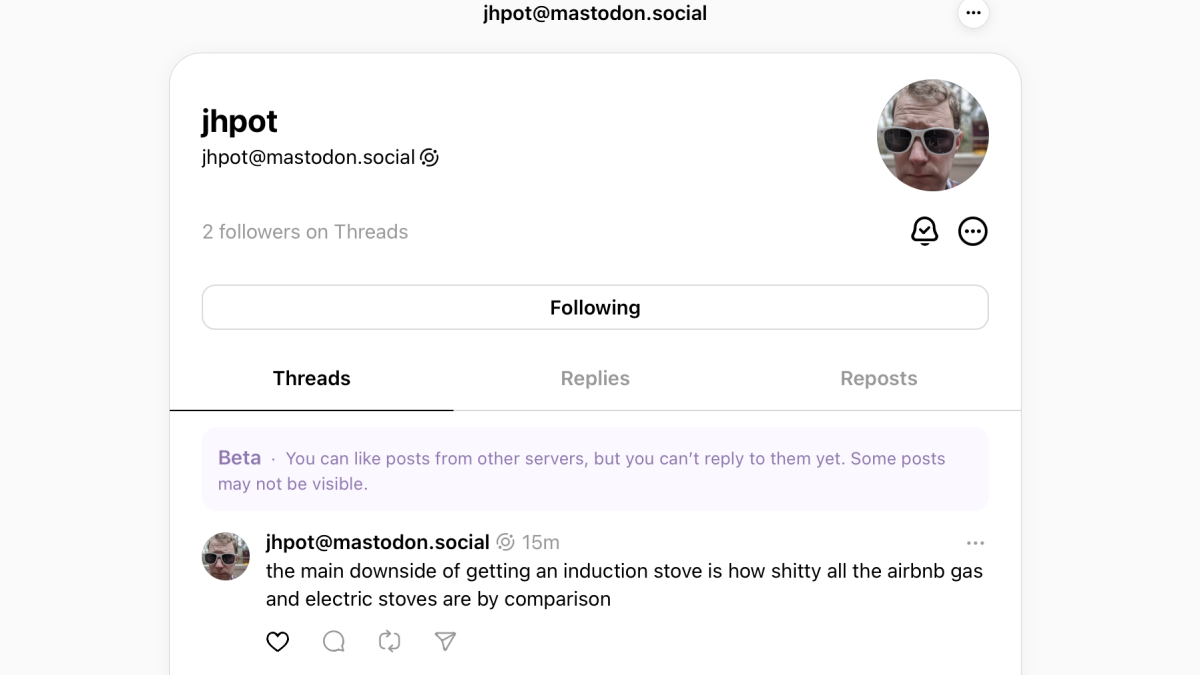
Threads added two important pieces: a way to search for fediverse profiles directly inside Threads, and a dedicated fediverse feed where posts from followed external accounts can appear. Instead of being fully blended into the main “For You” or “Following” timelines, these posts live in their own space. That separation is intentional, partly because moderation, identity, and user expectations work differently across decentralized platforms.
So when people say, “You can now follow Mastodon users on Threads,” the practical translation is: you can search for certain federated profiles, follow them from Threads, and see posts they share to the fediverse in a dedicated feedprovided your Threads account has the right fediverse settings enabled and the remote account is available through federation.
What Is the Fediverse, Anyway?
The fediverse, short for “federated universe,” is a network of independent social platforms that can communicate using shared open standards. Mastodon is the most recognizable example, but it is not the whole fediverse. Think of Mastodon as one big neighborhood in a much larger city.
The key technology behind much of this system is ActivityPub. It is an open social networking protocol standardized by the World Wide Web Consortium. Instead of forcing everyone onto one company’s platform, ActivityPub allows different servers and apps to exchange posts, follows, replies, likes, and other social actions.
Email is the easiest comparison. A Gmail user can email someone on Outlook because email uses shared protocols. The two companies do not need to merge. You do not need a separate Gmail account, Outlook account, Yahoo account, and Proton account just to communicate with different people. The fediverse tries to bring a similar idea to social media.
Why Threads Connecting to Mastodon Matters
Threads is not a small indie app with three users and a raccoon mascot. It is Meta’s text-based social platform connected to Instagram’s massive user base. When a platform that large starts adopting ActivityPub, it changes the visibility of the open social web.
For Mastodon users, this creates a bigger potential audience. A writer, developer, journalist, researcher, artist, or hobbyist posting from a Mastodon server may become easier for Threads users to discover. For Threads users, it means they may not need to leave Threads just to keep up with certain people who prefer decentralized platforms.
That matters because the social web has been fractured for years. One person is on Threads, another is on Mastodon, another is on Bluesky, another still posts only on WordPress, and one brave soul insists their RSS feed is “the real social network.” Interoperability gives users a chance to follow people rather than platforms.
How to Follow Mastodon Users on Threads
The exact interface may change over time, but the general process is simple in concept.
1. Turn On Fediverse Sharing
To see and interact with fediverse content in Threads, you generally need to enable sharing to the fediverse in your Threads settings. Meta has rolled this out gradually, and availability can vary by account type, age, region, and profile status. Public profiles have been the main focus of Threads’ fediverse features.
2. Search for a Federated Handle
Once enabled, you can search for a fediverse profile by using its full handle. A Mastodon handle usually looks like this: @[email protected]. For example, someone might be @[email protected] or @[email protected]. The second part matters because Mastodon is made up of many independent servers.
3. Look for the Fediverse Badge
Threads can show a fediverse icon or badge next to profiles that are not native Threads accounts. That helps users understand they are looking at an external profile rather than a regular Threads user.
4. Follow the Account
If Threads can locate the profile and the account is federated, you may be able to follow it. Posts from that profile can then appear in the dedicated fediverse section rather than being mixed directly into your main Threads feed.
Why the “Sort Of” Is Important
The “sort of” in this story is doing a lot of heavy lifting. Threads’ fediverse support is real, but it is still limited. The experience is not the same as following a native Threads account.
First, fediverse posts are separated from the main Threads feed. That means you may need to tap into a specific area to see them. For users who expect everything to appear naturally in one unified timeline, this can feel a little like being invited to dinner and then told the dessert is in the garage.
Second, interactions may not work exactly the same way across every platform. Replies, likes, reposts, and visibility can depend on the remote server, the user’s settings, Meta’s current rollout stage, and how ActivityPub is implemented by each service. The fediverse is powerful, but it is not always tidy.
Third, not every Mastodon account will necessarily appear instantly in Threads search. Federation is not magic dust. Servers have policies. Users have privacy settings. Some Mastodon administrators block or limit Threads federation. Some users may not want Meta-connected accounts interacting with their posts. The open social web includes openness, but also choice.
Why Some Mastodon Users Are Skeptical
Many Mastodon users are excited about interoperability in theory but cautious about Meta in practice. That caution is not random. Mastodon grew partly because people wanted alternatives to large centralized platforms. The idea of Meta entering the fediverse raises questions about privacy, moderation, power, and culture.
Some fediverse administrators worry that Meta’s scale could overwhelm smaller communities. Others worry about data collection, content moderation conflicts, or the possibility that Meta could embrace ActivityPub only partially. There is even a term in open technology circles: “embrace, extend, extinguish.” It describes the fear that a dominant company may adopt an open standard, add proprietary twists, and eventually weaken the original ecosystem.
That does not mean Threads federation is bad. It means people are watching closely. The fediverse is built on independent servers, and those servers can choose how they interact with Threads. That freedom is part of the point.
Why Meta Is Moving Slowly
From the outside, Threads’ federation rollout can look painfully gradual. First, Threads users could share some posts outward. Then users on Mastodon and other services could follow certain Threads profiles. Later came features for seeing fediverse followers, likes, profile search, and a separate feed. It is not the dramatic “flip the switch” moment some people wanted.
But slow implementation makes sense. ActivityPub is open, but real-world interoperability is complicated. Platforms need to handle deleted posts, edited posts, media attachments, user blocking, reporting, moderation, impersonation, quote posts, server rules, and rate limits. Now multiply that by thousands of servers, each with its own culture and configuration. Suddenly, “just connect the apps” sounds less like a product roadmap and more like a group project where everyone uses a different spreadsheet format.
Meta also has to manage trust. Threads users may not understand why a post from an outside server follows different moderation rules. Mastodon users may not want Meta users arriving without context. A separate feed gives Meta room to introduce the fediverse without throwing users into the deep end wearing algorithmic floaties.
What This Means for Creators and Publishers
For creators, this is potentially big. If you publish on Mastodon, WordPress, Ghost, Flipboard, or another federated platform, Threads may become another place where people can discover your work. That is especially useful for writers, podcasters, journalists, developers, educators, and independent publishers who do not want to build separate audiences from scratch on every platform.
A blogger using a federated WordPress setup, for example, may eventually be discoverable by Threads users. A Mastodon-based journalist may gain followers from Threads without abandoning their preferred server. A newsletter publisher using Ghost’s social web features may reach readers who would never knowingly say, “Ah yes, today I shall browse the fediverse,” but will happily tap a profile inside Threads.
The practical lesson is simple: identity portability is becoming more valuable. Your audience should not have to live inside one app. The more social platforms support open protocols, the more creators can build durable relationships that survive platform trends.
What This Means for Regular Users
For everyday users, the benefit is convenience. Maybe your favorite tech writer posts on Mastodon, your local community group uses a federated WordPress site, and your friends are mostly on Threads. Instead of bouncing between apps, you may be able to follow more of that content from one place.
It also makes Mastodon slightly less confusing. One of Mastodon’s biggest challenges has always been discovery. New users often ask, “Which server do I join?” followed immediately by, “Why does this person’s username have two @ symbols?” Threads’ search support for fediverse handles can reduce that friction, even if it does not solve every problem.
Still, users should understand the limitations. If you want the full Mastodon experience, including local timelines, server culture, community moderation, and native fediverse interactions, you still need a Mastodon account or a dedicated fediverse app. Threads gives you a window into the fediverse, not the whole house.
Threads vs. Mastodon: Different Philosophies
Threads and Mastodon may now communicate, but they come from very different worlds.
Threads is centralized, polished, and tied to Meta’s broader ecosystem. It is designed to feel familiar to Instagram users, reduce onboarding friction, and scale quickly. It benefits from Meta’s infrastructure, recommendation systems, and mainstream reach.
Mastodon is decentralized, community-driven, and server-based. Users choose an instance, follow people across servers, and experience moderation based on local community rules. It can feel more confusing at first, but it gives communities more control.
That difference is why federation is both exciting and awkward. Threads wants simplicity. Mastodon values decentralization. ActivityPub tries to make them interoperable without forcing them to become identical. That is the beauty and the comedy of the whole thing: two very different social media personalities trying to share a group chat.
Is This the Future of Social Media?
Possibly. The old model of social media was platform-first: join the app, build followers inside the app, and hope the app does not change the rules overnight. The open social web suggests a different model: choose your home base, publish through open standards, and let people follow you from compatible services.
That future is not guaranteed. Open protocols need strong implementation, clear user experience, healthy moderation tools, and trust. But the direction is important. Threads supporting Mastodon accounts, even imperfectly, signals that mainstream platforms are paying attention to interoperability.
For years, decentralized social networking sounded like something only developers, privacy advocates, and people with three mechanical keyboards cared about. Now it is showing up in apps used by millions of casual users. That is a meaningful shift.
Should You Turn On Fediverse Sharing?
If you are curious, yes, it is worth exploring. Turning on fediverse sharing can help you discover people outside Threads and make your own public posts more reachable across compatible platforms. For creators, it may be especially useful.
However, be mindful of privacy and visibility. When you connect to the fediverse, your public posts may be accessible from other servers. Deleting or editing content across federated systems can also involve more complexity than deleting something inside one closed app. The fediverse is open by design, and openness comes with trade-offs.
If you prefer maximum control and minimal exposure, read the settings carefully before enabling anything. If you enjoy experimentation and want a broader social graph, the feature is worth trying.
Experience Notes: What It Feels Like to Follow Mastodon Users on Threads
Using this feature feels a little like visiting a farmers market inside a shopping mall. You are still in the familiar Threads environment, but suddenly you notice people who clearly came from somewhere else. The names look different. The handles are longer. The posts may feel less algorithm-polished and more conversational. There is a charming “wait, where did this come from?” quality to it.
The first experience most users will probably have is search. You hear that someone posts on Mastodon, so you type their full fediverse handle into Threads. If it works, greatyou see a profile with a badge that signals it lives outside Threads. That small badge matters more than it seems. It teaches users that the social web can have multiple homes, not just one login screen controlled by one company.
The second experience is mild confusion. You follow the account, then wonder why the posts do not appear exactly where normal Threads posts appear. Instead, you have to check the dedicated fediverse feed. At first, this feels like an extra chore. After a while, it starts to make sense. The fediverse feed behaves more like an intentional reading list. It is less “algorithm, please entertain me” and more “show me the people I chose to follow.”
That difference changes how you read. Main social feeds often feel like a loud restaurant where every table is shouting for attention. A dedicated fediverse feed can feel quieter, at least for now. You may see posts from independent bloggers, Mastodon users, newsletter writers, and niche communities. The tone can be more thoughtful, sometimes nerdier, occasionally weirder, and often less optimized for viral performance.
For creators, the experience is encouraging but incomplete. Imagine you are a writer who prefers posting from Mastodon because you like open networks and community moderation. A Threads user can now find you more easily, but the relationship still depends on federation settings, server compatibility, and Threads’ current feature limits. You get reach, but not always the smoothness of a native platform.
For casual users, the best approach is to treat the feature as a bridge, not a replacement. Follow a few Mastodon accounts you already know. Search for journalists, open-source developers, local organizations, artists, or niche experts. Then check the dedicated feed once a day instead of expecting it to behave like the main Threads timeline. Used that way, it can become a useful little window into a broader internet.
The biggest lesson from actually using the feature is that interoperability is not just technical. It is emotional. People are used to apps being sealed boxes. When a Threads user follows a Mastodon account, even imperfectly, it challenges that habit. It suggests that your social identity does not have to be trapped inside one company’s app. That is a subtle but powerful idea.
Of course, the experience still needs work. Discovery could be clearer. Interaction rules could be easier to understand. The fediverse feed could become more visible without becoming overwhelming. Users need plain-language explanations, not protocol lectures. Nobody should have to read a standards document before following a gardener from @[email protected].
Still, this is progress. Not the fireworks-and-confetti kind of progress, but the kind where a locked door now opens halfway. Threads can follow Mastodon userssort of. And that “sort of” may be the beginning of a much bigger change in how social media works.
Conclusion
Threads’ ability to follow Mastodon and other fediverse users is an important step toward a more open social web. It is not perfect, not fully native, and not as seamless as following another Threads account. But it is real progress.
The feature gives Threads users a way to discover people outside Meta’s platform, while giving Mastodon and other ActivityPub users a potential path to broader reach. It also introduces mainstream users to a powerful idea: social media does not have to be a collection of isolated kingdoms.
The best way to understand the update is this: Threads has not fully joined hands with Mastodon and skipped into the decentralized sunset. But it has opened a door, placed a sign that says “fediverse this way,” and invited curious users to peek through. For a social web that has spent years asking for more interoperability, that is worth paying attention to.