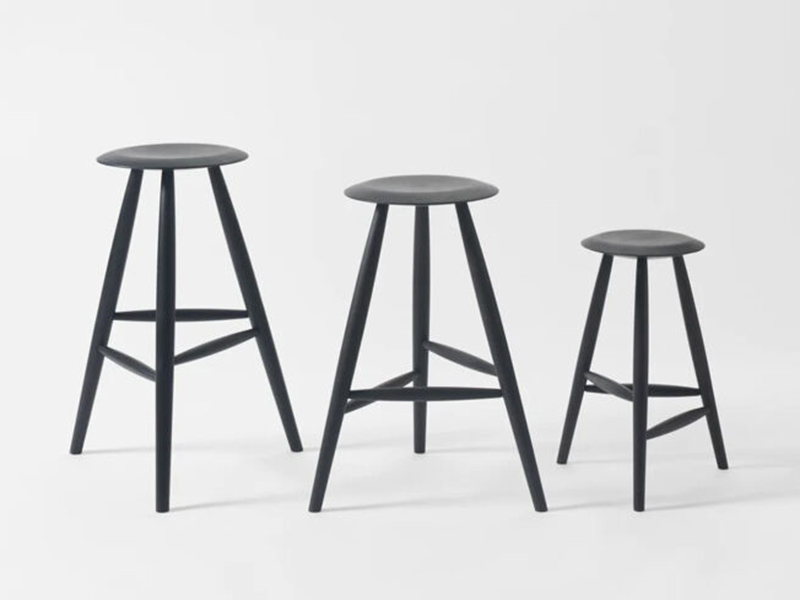
If regular stools are the background actors of furniture, ebonized black walnut stools are the scene-stealers. They walk into a room wearing a tailored black suit, somehow looking both refined and a little dangerous, like they know exactly where the good bourbon is. They are sculptural without being fussy, dark without feeling gloomy, and practical enough to survive actual human behavior, which is more than some “statement furniture” can honestly say.
At first glance, the phrase sounds almost too fancy: ebonized, black walnut, stools. But the appeal is beautifully simple. Black walnut is already one of the most admired American hardwoods thanks to its strength, stability, rich grain, and naturally dark heartwood. Ebonizing pushes that beauty further, deepening the color into a dramatic near-black tone while still letting the grain show through. The result is a stool that feels warm and handmade rather than flat or factory-dipped in sadness.
Whether you are shopping for kitchen island stools, counter stools, bar stools, or a small accent seat for a moody corner, ebonized black walnut hits a sweet spot that’s hard to fake. It brings craftsmanship, texture, and a level of visual confidence that says, “Yes, I do belong here, next to marble, brass, linen, concrete, or whatever design identity crisis is happening in this room.”
Why Black Walnut Is Such a Big Deal
Black walnut has earned its reputation the old-fashioned way: by being reliably gorgeous and annoyingly versatile. Woodworkers love it because it machines well, sands nicely, glues without drama, and usually finishes beautifully. Designers love it because the wood has character even before a finish is applied. Homeowners love it because it looks expensive, and to be fair, it often is.
The natural color of walnut ranges from creamy sapwood to chocolate-brown heartwood, and that contrast is part of its charm. Unlike lighter woods that beg for heavy stain just to look grown-up, walnut starts with depth. Its grain can appear straight, wavy, or lightly figured, which means even a minimalist stool still has visual motion. That matters in a small piece of furniture. A stool does not have a giant tabletop or broad cabinet face to show off; it has legs, a seat, and a few precious opportunities to look interesting.
Walnut is also valued for its balance. It is durable without being punishing to work with. It feels substantial without the visual bulk of some heavier-looking species. In other words, it has enough toughness for everyday seating but enough elegance to avoid looking like it belongs in a sports bar themed after lumberjacks.
What “Ebonized” Actually Means
Here’s where things get interesting. Ebonizing wood is not just painting it black and hoping nobody asks questions. Traditional ebonizing uses a reactive process, often involving iron acetate, that interacts with the natural tannins in the wood. On tannin-rich woods like walnut, that reaction creates a deep, dark finish that penetrates more naturally than a surface-level pigment alone.
That distinction matters. A basic black stain can mute or muddy grain if it sits too heavily on the surface. A well-executed ebonized finish tends to preserve the visual texture of the wood. You still see the figure, pores, and movement of the walnut, but now the whole piece reads as moodier, sleeker, and more architectural. Think “midnight with good posture.”
Not every ebonized stool looks exactly the same, either. Some lean charcoal with brown undertones. Others go nearly ink-black. The final look depends on the walnut itself, the finishing process, the topcoat sheen, and how much contrast the maker wants to preserve. Satin and matte sheens are especially popular because they keep the stool looking sophisticated rather than shiny in a “wet grand piano” sort of way.
Why Ebonized Black Walnut Stools Work So Well in Modern Homes
Dark wood has made a strong comeback in American interiors, especially in kitchens, dining spaces, and multipurpose living areas. There is a good reason for that. Pale woods are lovely, but a room full of them can start to feel like a Scandinavian hostage situation. Ebonized walnut brings contrast, weight, and grounding energy.
In a white kitchen, these stools create instant definition. Against stone countertops, they sharpen the lines of an island and keep the room from washing out. In kitchens with black cabinetry or dark countertops, they build depth rather than making the space feel one-note. In wood-heavy interiors, they add tonal variation and make everything look more intentional.
They also play well with other materials. Pair them with brass hardware for warmth, steel for an industrial edge, leather for a tailored look, or bouclé upholstery if you enjoy mixing hard structure with soft texture. An ebonized black walnut stool can lean modern, Japandi, transitional, rustic-luxe, or quietly traditional depending on its silhouette.
Choosing the Right Stool Height Without Ruining Dinner
A beautiful stool that is the wrong height is basically a sculpture with a grudge. This is one of the biggest mistakes people make when buying seating. For most kitchen counters and islands around 36 inches high, a stool seat around 24 to 27 inches usually works well. For bars around 40 to 42 inches high, a seat around 28 to 30 inches is the usual target.
The comfort trick is legroom. You generally want about 10 to 12 inches between the seat and the underside of the counter or tabletop. Less than that, and knees start filing complaints. More than that, and people perch awkwardly like they are waiting for a train that may never come.
Spacing Matters More Than People Think
Even gorgeous stools become annoying when packed too tightly. A common design rule is to allow roughly 22 to 24 inches of width per stool, with extra room if the stools swivel or have arms. You also want enough clearance behind them so people can sit down and stand up without starting a low-level traffic incident. If the stools back into a walkway, the room needs breathing space.
This is where ebonized black walnut stools often shine. Many are visually slim, with narrow legs, open bases, and smaller footprints than bulky upholstered seating. They bring drama without hogging square footage, which is honestly a rare personality trait.
What to Look for in Construction
If you are investing in handcrafted walnut stools, look past the color and pay attention to the bones. Good stool design is not just about style; it is about joinery, stability, and comfort over time.
1. Joinery
Strong mortise-and-tenon or similarly robust joinery is a very good sign. Stools take a surprising amount of abuse: people lean back, drag them sideways, hook feet on stretchers, and occasionally use them as a ladder because optimism is powerful. A well-built walnut stool should feel tight, sturdy, and unbothered.
2. Footrests and Stretchers
A footrest is not a tiny detail. It is the difference between “stay awhile” and “my legs have gone emotionally distant.” On counter and bar stools especially, well-placed stretchers improve comfort and add structural strength.
3. Seat Shape
A flat seat can look clean, but a subtly scooped or contoured seat usually feels better during long meals or laptop sessions. If the stool is backless, seat comfort matters even more because there is no upper support doing any of the work.
4. Finish Quality
With ebonized walnut, finishing quality separates heirloom charm from regret. The best finishes look deep and even without hiding the grain. Watch for blotchiness, roughness, or thick topcoats that make the stool look more painted than ebonized.
Best Places to Use Ebonized Black Walnut Stools
Kitchen Islands
This is the obvious one, and for good reason. Ebonized stools anchor an island beautifully, especially when you want the seating to feel intentional rather than like a last-minute purchase made during a coupon event. They can disappear into a dark palette or punctuate a light one.
Home Bars
If there is ever a place for moody wood furniture, it is a home bar. Ebonized black walnut looks especially sharp with stone, metal shelving, vintage glassware, and dim lighting that makes everyone look wealthier and more interesting.
Entryways and Bedrooms
A single stool can work as a side seat, a place to stack books, or the elegant landing pad for a sweater you swear you are not leaving there permanently. In bedrooms, an ebonized stool at a vanity or dressing area adds contrast without bulk.
Small Dining Nooks
Backless versions can tuck neatly under a console-height table or compact breakfast ledge. Because walnut has strong visual texture, even simple forms feel decorative enough to pull their weight in a small room.
How to Style Them Without Trying Too Hard
The easiest way to style ebonized black walnut stools is to let them do what they do best: bring depth. In a bright kitchen, repeat the dark tone in one or two other places, such as pendant lighting, cabinet hardware, or window trim. In a darker room, balance them with lighter upholstery, warm stone, brushed metals, or natural textiles so the space feels layered instead of heavy.
If your stools have upholstered seats, fabrics like cognac leather, oatmeal linen, charcoal woven blends, and textured creams work particularly well. If they are all wood, consider mixing them with softer surrounding elements such as a runner, roman shades, or curved light fixtures. A good room is usually a conversation between textures, not a monologue delivered by one finish.
Care and Maintenance
The good news is that walnut furniture is not fragile theater. It just likes basic respect. Wipe spills promptly, avoid standing water, and protect the finish from excessive heat and rough contact. Felt pads under the legs are smart, especially on hard floors. If the stool lives at a busy island, expect honest wear over time. That is not failure; that is furniture doing its job.
Ebonized finishes can show dust a little more readily than medium-brown wood, so a quick soft-cloth wipe now and then keeps them looking sharp. Harsh cleaners are unnecessary. Gentle wood-safe care products and a bit of common sense go a long way. This is not a museum artifact. It is a seat. A beautiful seat, yes, but still a seat.
Are Ebonized Black Walnut Stools Worth It?
For many buyers, yes. They are not the cheapest option on the floor, and they are not trying to be. What you are paying for is a combination of premium hardwood, craftsmanship, richer finishing, and long-term design value. Cheap stools often look tired quickly. Good walnut stools usually look better after the room around them evolves.
That makes them a smart choice for people who want fewer, better pieces. They can move from one home to another, from one style phase to the next, and from “new purchase” to “where did you get those?” without much effort. A well-made ebonized walnut stool is the kind of furniture that quietly improves a room every day.
Real-World Experiences With Ebonized Black Walnut Stools
Living with ebonized black walnut stools is a little different from merely admiring them in a showroom. In real homes, they become part seating, part architecture, part accidental gathering point. People do not just sit on them. They lean on them while talking, pile mail on them, spin them half around while waiting for coffee, and use them as front-row seats to all the little everyday dramas of a kitchen.
One of the first things people notice is how much visual weight these stools carry without actually feeling bulky. In a bright kitchen, they often become the grounding element that makes the entire room look finished. A white island with pale floors can feel a little floaty until a row of dark walnut stools shows up and says, “Relax, I brought structure.” Suddenly the space has contrast, rhythm, and a focal line.
Another common experience is that the finish looks better in person than in photos. Online images often flatten the effect, making the stools appear simply black. But up close, the ebonized surface usually reveals subtle brown undertones, shifting grain, and a softness that paint rarely achieves. That is the magic: they read bold from across the room and detailed from a few feet away.
Comfort is also more important than buyers expect. People who choose a stool with a gently scooped seat or a properly placed stretcher almost always mention the difference. It changes the stool from “nice to look at” into “the seat everyone picks first.” The footrest matters, the seat height matters, and the spacing between stools matters. Design is glamorous right up until someone’s knees hit the countertop.
Owners also tend to appreciate how adaptable these stools are. They work in modern kitchens, but they do not feel trapped there. Move them into a darker dining room, a studio workspace, a home bar, or even a bedroom corner, and they still make sense. That flexibility is part of their value. You are not buying a trendy object that only works with one backsplash and a specific shade of brass. You are buying a piece with range.
There is also something satisfying about the way walnut ages. Over time, a good stool picks up tiny signs of use that make it feel lived-in rather than worn out. A softened edge here, a subtle polish where hands rest there, a little character from years of breakfasts, late-night snacks, and overly ambitious meal prep. Good wood furniture does not just survive life; it records it without becoming melodramatic.
Perhaps the most telling experience is this: people keep noticing them. Guests ask about them. Family members claim unofficial favorite seats. The stools end up in the background of photos and the center of conversations. That is usually the sign of a worthwhile furniture purchase. Not that it screams for attention every day, but that it keeps rewarding attention when it gets it. Ebonized black walnut stools have that quality. They are practical enough for daily use, handsome enough for design people, and sturdy enough to tolerate everybody else.
Final Thoughts
Ebonized black walnut stools offer a rare combination of warmth, drama, craftsmanship, and everyday usefulness. They take one of America’s most beloved hardwoods and give it a darker, more contemporary edge without erasing the natural grain that makes walnut special in the first place. They work in kitchens, bars, nooks, and quiet corners. They can be modern, classic, sculptural, or understated. Most importantly, they can actually live with you, which is more than can be said for many beautiful things.
If you want seating that feels refined but not precious, bold but not bossy, and timeless without being boring, this is a category worth serious attention. Ebonized black walnut stools are not just somewhere to sit. They are where material quality, smart proportion, and great finish work all decide to show off together.