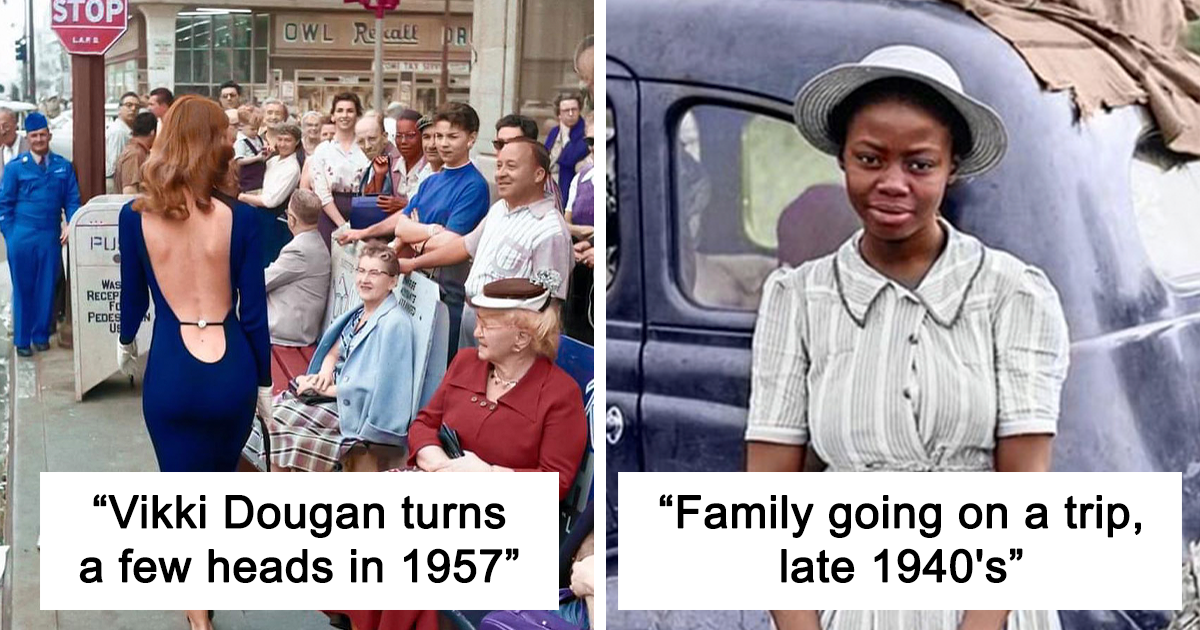
Black-and-white photographs can feel like tiny time machines, but they often leave our brains doing most of the decorating. Was that coat navy, charcoal, or the color of a very determined potato? Was the storefront bright red? Did the sky look peaceful, or was it secretly plotting rain? Restoring vintage photographs with color does not change history. It simply gives viewers another doorway into it.
For this collection, I brought color back to 16 vintage images while keeping the original photographs close at hand. Every restored image started with the same rule: respect the photograph first, then let color support the story. The goal was never to make the past look like it was shot on a smartphone during golden hour. The goal was to make it feel a little more immediate, human, and wonderfully alive.
Why Vintage Photo Color Restoration Feels So Powerful
Old photographs already carry emotion. A tired parent holding a child, friends standing shoulder-to-shoulder outside a factory, a couple dressed up for a wedding, or a teenager trying to look cool before “cool” had an official definition: these images hold real moments that happened to real people.
Adding color can make the smallest details suddenly matter. A faded shirt becomes a work shirt. A pale blur becomes a sunflower-yellow dress. Brick buildings, dusty roads, wooden porches, lipstick, uniforms, market signs, and green fields stop feeling like distant symbols and start feeling like parts of a lived-in world.
That said, color restoration is not a magical truth machine. A black-and-white image does not contain a hidden label that says, “The hat was definitely burgundy.” Restoring color requires research, visual clues, period references, lighting awareness, and a healthy fear of turning every old street into a suspiciously cinematic movie set. The best restored photographs remain honest about what is known, what is likely, and what is interpretive.
Restoration Is About Context, Not Just Color
A thoughtful vintage photo restoration begins long before the first color layer is added. Clothing styles, military uniforms, car models, architecture, local landscapes, common advertising colors, and photographic techniques can all offer clues. Even then, some choices remain educated guesses. That is why the original black-and-white image should always be preserved and displayed whenever possible.
Think of it this way: the original photograph is the historical record. The colorized version is a carefully researched companion. One is the document; the other is the conversation starter that makes people lean closer and say, “Wait, that actually feels real.”
The 16 Restored Vintage Photographs
These gallery captions are designed to accompany the original 16 restored image files. Each one focuses on the visual details that color can reveal without pretending that every shade arrived by telegram directly from the year the photo was taken.
What first looked like a simple family pose became warmer once the porch wood, summer greenery, and soft tones of everyday clothing appeared. The image suddenly felt less like “the past” and more like someone’s Sunday afternoon.
Color brought attention to the weathered denim, rusty steel, and dust-covered boots. The restored version highlights the texture of hard work without making the scene look like a commercial for luxury workwear.
The storefront sign, produce crates, and bright little details of packaging helped turn this image into a miniature neighborhood story. Suddenly, the street felt busy enough to hear.
Vintage wedding photos often look like everyone was informed that smiling would void the marriage license. Adding gentle color to flowers, fabric, and skin tones made the moment feel tender instead of intimidating.
The restored colors gave new life to the dress pattern and ribbon details. What had been a gray silhouette became an outfit clearly chosen with pride, care, and possibly parental negotiation.
Muted storefront colors, weathered pavement, and the warm interior glow of the streetcar transformed the scene. It became easier to imagine commuters carrying newspapers, lunches, worries, and probably a few dramatic opinions.
The original image had charm; color gave it sugar. Bright fairground signs, red-and-white booths, and cheerful summer clothing made the scene feel like it smelled faintly of popcorn and irresponsible amounts of lemonade.
Uniform details matter in restoration, especially when colors carry meaning. Keeping the palette restrained helped the portrait remain dignified while revealing the crisp structure of the clothing.
The restored photo brought grass, dusty uniforms, leather gloves, and team caps into focus. Every player looked ready to become a hometown legend by Tuesday afternoon.
Color gave the landscape a stronger role in the photograph. Golden crops, faded work shirts, and the deep earth beneath their boots made the image feel grounded in effort and season.
The painted sign, polished glass, striped pole, and subtle interior light created a scene packed with personality. It is the kind of place where everyone probably knew everyone else’s haircut history.
Soft greens, flower colors, and delicate fabric tones changed the emotional temperature of the image. The restored version feels playful, personal, and only slightly suspicious of whoever told them to stand still.
Adding warm lights and careful clothing colors made the room feel lively without turning it into a neon nightclub. The restored image suggests music, movement, and at least one person pretending they knew how to dance.
Color made the reunion more immediate: a familiar front door, a child’s bright outfit, the green of a yard, and the unmistakable emotional weight of someone finally coming back.
Traffic, signage, umbrellas, coats, and brick buildings gained definition once color was added. The scene feels chaotic in the best way, like the city was already late for something important.
Even the smallest domestic details changed the image: tablecloth colors, bowls, wallpaper, and warm indoor light. It became less about posing for a camera and more about remembering who sat where.
How I Approach Colorizing Old Photographs
1. I Protect the Original First
The original scan or photograph stays untouched. Restoration should be non-destructive, meaning all color adjustments, repairs, and cleanup happen on separate digital layers or copies. The vintage print may have scratches, fading, creases, dust, or water damage, but those imperfections are part of the physical object’s story. The restoration can reduce distractions without erasing the image’s personality.
2. I Research Before I Guess
Whenever possible, I look at the likely year, location, clothing, objects, and visual culture around the photograph. A 1940s service uniform should not receive colors inspired by a modern costume department. A neighborhood storefront should not be painted in random candy-shop colors simply because the palette looks exciting. Historical photo colorization works best when imagination is guided by evidence.
3. I Use Color Like a Whisper, Not a Megaphone
The temptation to make every restored image extra vibrant is real. It is also how an otherwise beautiful photograph ends up looking like it spent too long in a fluorescent grocery aisle. Vintage photo restoration usually benefits from restrained contrast, believable skin tones, natural shadows, and colors that match the image’s mood.
4. I Label the Result Clearly
A restored color image should never be presented as an untouched historical original. Transparency matters, especially when photographs document communities, war, migration, labor, family histories, and major events. A simple label such as “digitally restored and colorized from an original black-and-white photograph” helps viewers appreciate both the artistry and the historical record.
What Color Adds That Black and White Cannot
Black-and-white photography has its own magic. It reduces the world to shape, shadow, light, gesture, and composition. Sometimes it can make an ordinary moment look monumental. Color does something different. It gives the eye more pathways into the scene.
A blue collar may make a worker feel more specific. A red scarf may become the first thing viewers notice. A yellow kitchen wall can make a family memory feel warmer. A green field can remind us that historical photographs were not made in grayscale reality; people lived in the same colorful world we do.
That is the heart of vintage photo color restoration. It does not replace the original image. It offers another way to meet the people inside it.
My Experience Restoring Vintage Photographs
The first thing I learned while restoring vintage photographs is that old images have a strange way of making you feel responsible. You are not just adjusting pixels. You are looking at someone’s grandparents, someone’s childhood home, someone’s uniform, someone’s first car, someone’s last photograph with a loved one. That realization changes how you work.
At the beginning, I thought color restoration was mostly about technical skill. I expected the difficult part to be selecting colors, fixing scratches, balancing shadows, and making skin tones look natural. Those things matter, of course. But the real challenge is restraint. The farther I went into the process, the more I understood that the best restoration is often the one people barely notice at first.
When a photo looks believable, viewers do not immediately ask, “Which software did you use?” They start looking at the people. They notice the child gripping a parent’s hand. They notice a faded sign in the background. They wonder why someone is smiling while everyone else looks like they were summoned to court. That shift is the goal.
I have also learned that color can create emotional surprises. A photograph that feels formal in black and white can become gentle in color. A crowded street scene can suddenly feel noisy. A family portrait can reveal an unexpected sense of humor through a bright tie, a patterned dress, or a stubbornly cheerful wall behind them. Color gives the eye more information, but it also gives the imagination more room to work.
Still, there are moments when the right choice is to leave something uncertain. Sometimes the exact color of a jacket, car, curtain, or building cannot be proven. In those cases, I prefer a subtle and historically plausible approach rather than pretending certainty where none exists. Restoring old photographs should make viewers curious, not mislead them with a confident-looking guess.
One of my favorite parts of the process is studying the overlooked details. A pair of shoes can suggest whether someone was dressed for work or celebration. A painted storefront can reveal the personality of a neighborhood. A patterned blanket can change the whole mood of a living room. Even the color of the sky matters, because skies carry emotion faster than almost anything else in an image. A pale blue sky feels calm. A stormy gray sky feels heavy. A warm sunset can make a scene feel like a memory before anyone has even looked at the people.
The most rewarding reactions come from viewers who say a restored photograph made history feel closer. That is exactly what I hope happens. The people in these images were never actually black and white. They laughed in color, worked in color, worried in color, celebrated in color, and probably argued about paint colors in color, too.
Restoring vintage photographs has taught me to look more carefully at the past and at the present. Every photograph is already a small act of preservation. Adding color is simply another way of saying: this moment mattered, these people mattered, and their story still deserves to be seen.
Final Thoughts
These 16 restored vintage photographs are not meant to overwrite history. They are meant to invite us closer to it. Color restoration can add warmth, detail, and emotional connection, but the original image remains the foundation of everything.
When done carefully, vintage photograph colorization becomes more than a visual effect. It becomes an act of attention. It asks us to slow down, notice the details, respect uncertainty, and remember that every old photograph once captured a present-day moment for someone else.
Note: For publication, pair each restored image with its original black-and-white version whenever possible, use descriptive alt text, and clearly label the colorized version as a modern digital restoration.