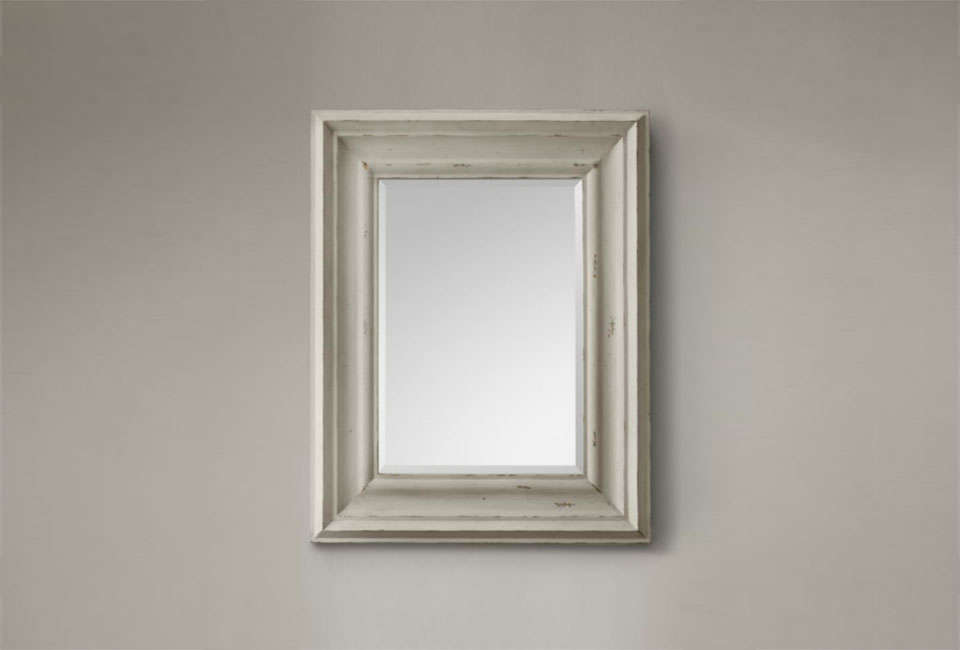
The St. James Mirror Small proves that “small” is sometimes a matter of perspective. At approximately 32 inches wide by 40 inches high, this is not a timid little mirror hiding behind a houseplant. It is a substantial decorative piece designed to bring architectural character, reflected light, and a sense of history into a room without demanding an entire wall.
Originally associated with Restoration Hardware’s St. James collection, the mirror combines a solid hardwood frame, carved detailing, and a carefully layered finish. Its design takes inspiration from turn-of-the-century architectural classicism, giving it a tailored, old-world look that can work in traditional, transitional, rustic, and even surprisingly modern homes. Archived product information listed it at $349 at the time of publication, although current availability and secondhand prices can vary considerably.
Why does this particular mirror continue to attract attention? Because it does more than show you whether your hair has started a rebellion. It functions as furniture for the wall: decorative, practical, visually substantial, and capable of changing how an entire room feels.
What Is the St. James Mirror Small?
The St. James Mirror Small is a rectangular, wood-framed wall mirror created as part of a classically inspired furniture collection. According to archived specifications, its frame was constructed from solid hardwood and featured hand-carved Craftsman details. A multistep finishing process was used to create a smooth surface while preserving some of the wood’s natural character.
The mirror was also designed to hang either vertically or horizontally, making it more versatile than a frame with a fixed orientation. Mounting hardware was included with the original product, although buyers purchasing a used mirror should never assume that the original hardware is still present, complete, or suitable for their wall.
Archived St. James Mirror Small specifications
- Dimensions: Approximately 32 inches wide by 40 inches high
- Frame material: Solid hardwood
- Design: Hand-carved architectural and Craftsman-inspired details
- Finish: Applied through a multistep finishing process
- Orientation: Vertical or horizontal installation
- Original listed price: $349 at the time of the archived publication
Because the piece was described as artisan-crafted and hand-finished, slight variations in color, grain, carving, and surface texture were considered part of its character rather than manufacturing defects. In other words, two examples may look like siblings, but not identical twins who coordinate their outfits.
Why Its Design Still Works
The St. James Mirror Small sits comfortably between ornate antique reproductions and plain contemporary mirrors. Its frame has enough detail to feel special, but its rectangular shape keeps it orderly. That balance allows it to work in rooms that need warmth without excessive decoration.
Ornate and vintage-inspired mirrors have also returned to favor as homeowners move away from completely uniform interiors. Designers increasingly use carved or gilded frames to add history and contrast to rooms filled with simple modern lines. A detailed mirror above a streamlined console, for example, can make the space feel collected rather than purchased as one matching set.
It adds architectural weight
A thin frameless mirror primarily reflects what is in front of it. A carved hardwood mirror contributes shape, shadow, texture, and visual depth even when nobody is standing nearby. The St. James frame effectively acts like decorative molding, making an empty wall look more intentional.
It can brighten a compact room
Mirrors reflect both views and available light, which can make a small or dim room feel brighter and more open. Placement matters: a mirror positioned across from or near a window can distribute daylight deeper into the room. It should reflect something attractive, however. Doubling the view of a sunny garden is excellent. Doubling the view of an overflowing laundry basket is less of a design triumph.
Its size is flexible rather than miniature
At 32 by 40 inches, the St. James Mirror Small is large enough to serve as a focal point but compact enough for many entryways, powder rooms, bedrooms, and dining areas. It occupies the useful middle ground between a small accent mirror and an oversized floor mirror.
Best Places to Use the St. James Mirror Small
Above an entryway console
An entryway is one of the most natural locations for this mirror. Hang it vertically above a narrow console to create a practical place for a final appearance check before leaving home. Add a lamp, a small bowl for keys, and one decorative object. Avoid covering the entire console with tiny accessories, unless your design theme is “gift shop experiencing a minor earthquake.”
A horizontal installation may work better over a wider console or bench. The frame’s traditional character pairs especially well with wood furniture, stoneware, brass lighting, woven baskets, and simple greenery.
Over a bathroom vanity
The mirror’s dimensions can suit a single-sink vanity, particularly when hung vertically. Its decorative frame can elevate a basic bathroom by introducing the warmth and detail often missing from tile, porcelain, and metal fixtures.
Before using a wood-framed mirror in a bathroom, consider ventilation and splash exposure. Keep the frame away from direct shower spray, wipe off standing moisture promptly, and inspect the back and mounting hardware periodically. In humid rooms, secure installation and some airflow behind the mirror are particularly valuable.
Above a bedroom dresser
Installed horizontally over a dresser, the St. James Mirror Small becomes both a grooming mirror and a visual anchor. Its substantial frame can balance a solid dresser without requiring additional wall art. Leave enough space between the dresser and mirror for practical objects, but keep the gap visually connected rather than floating the mirror near the ceiling.
In a dining room
A dining room mirror can reflect candlelight, a chandelier, artwork, or an attractive table arrangement. Hanging the St. James Mirror Small above a sideboard creates a classic composition that feels polished without being excessively formal.
Check the reflection from both standing and seated positions before drilling. A mirror that beautifully reflects a pendant light while standing may provide seated guests with an uninterrupted view of an air vent. Temporary painter’s tape can help you test the outline and height first.
As part of a modern interior
Traditional does not have to mean predictable. Place the mirror against a deep charcoal, muted green, warm white, or clay-colored wall, then pair it with contemporary lighting and clean-lined furniture. The contrast between old-world carving and modern simplicity can make both elements look more interesting.
How to Style the Mirror Without Overdecorating
The St. James Mirror Small already has a detailed frame, so it rarely needs a crowd of decorative companions. The safest approach is to treat it as the primary wall feature and use simpler objects around it.
Build a balanced arrangement
- Pair the mirror with one lamp and one smaller decorative object.
- Use a vase with branches or greenery to soften the hardwood frame.
- Repeat the frame’s color in one or two nearby accents.
- Choose simple artwork if the mirror shares a wall with other pieces.
- Leave visible negative space so the carving can be appreciated.
The frame does not need to match every finish in the room. In fact, an exact furniture-suite look can sometimes feel overly coordinated. Mixing the mirror with painted furniture, natural oak, marble, iron, or aged brass often creates a more relaxed and layered result.
Choose the orientation deliberately
Vertical placement emphasizes height and is usually best above a narrow vanity or console. Horizontal placement widens the visual composition and may better complement a dresser, sideboard, or fireplace mantel.
When hanging a mirror above a mantel or piece of furniture, consider the width relationship. A mirror that is dramatically narrower than the furniture can look stranded, while one that nearly matches or slightly undercuts its width usually feels connected. General design guidance often recommends selecting an over-mantel mirror at roughly two-thirds of the mantel’s width, although the surrounding architecture should guide the final choice.
Buying a St. James Mirror Small Secondhand
Because the product appears primarily in archived design and retail references, shoppers may encounter it through resale websites, estate sales, consignment stores, or local marketplaces. Condition matters more than a glamorous listing description containing twelve uses of the word “rare.”
Inspect these areas before buying
- The mirror glass: Look for chips, deep scratches, cloudy areas, black edge spots, and separation of the reflective backing.
- The hardwood frame: Check corners for cracks, loose joints, repaired breaks, warping, or missing carved details.
- The finish: Distinguish intentional antiquing from water damage, peeling, sticky residue, or careless repainting.
- The back: Examine the backing board, hanging points, labels, screws, and evidence of previous repairs.
- The hardware: Confirm that hangers are firmly attached. Replace questionable hardware rather than trusting it with several square feet of glass.
- The dimensions: Measure the actual piece. Product names and marketplace descriptions are not always reliable.
Also calculate transportation before purchasing. Protect the corners, keep the mirror upright when possible, and avoid laying heavy objects against the glass. A bargain mirror stops feeling like a bargain when it arrives home as an ambitious mosaic kit.
How to Hang It Safely
Although the product name includes “Small,” a solid hardwood frame and glass panel may still be heavy. Do not choose hardware based only on the mirror’s dimensions. Weigh the actual piece and identify the wall material before installation.
Heavy mirrors are generally safest when fastened into wall studs or mounted with hardware specifically rated for the mirror’s weight and wall type. A properly installed metal cleat can distribute the load, while suitable anchors may be used when stud placement is not practical. Drywall, plaster, brick, and masonry require different fasteners.
Falling mirrors can cause impact and laceration injuries, and consumer recalls have documented failures involving hanging mechanisms and mounting fittings. Replace damaged, corroded, loose, or unidentified hardware. When uncertain, hire a qualified installer rather than testing gravity’s commitment to its profession.
Basic installation checklist
- Measure and record the mirror’s actual weight.
- Identify whether the wall is drywall, plaster, masonry, or another material.
- Locate studs when possible.
- Use fasteners rated above the total load.
- Confirm that the mirror’s rear mounting points are secure.
- Use two people to lift and position the mirror.
- Check that the frame is level and cannot shift sideways.
- Reinspect the hardware after installation.
Cleaning and Caring for the Mirror
Dust the frame with a dry, soft cloth, paying attention to carved recesses. Avoid saturating the wood or allowing glass cleaner to pool along the lower edge of the frame. Apply cleaner to a microfiber cloth rather than spraying heavily across the mirror, then wipe the glass using overlapping strokes.
A dedicated glass cleaner and clean microfiber cloth can reduce streaks and residue. Consumer testing has found meaningful differences in how easily glass-cleaning products remove bathroom marks and leave a clear finish, so using a suitable product is more effective than repeatedly polishing with a dusty paper towel.
Do not aggressively sand, strip, or repaint an original finish without considering the mirror’s resale and decorative value. Gentle cleaning is usually preferable to turning a pleasantly aged frame into a weekend refinishing experiment with emotional consequences.
Living With the St. James Mirror Small: Practical Experience Scenarios
The following experience-based scenarios describe what homeowners may reasonably notice when using a mirror of this size, construction, and style. They are not presented as fabricated personal ownership claims.
The entryway experience
In a compact entry, the first noticeable change is usually brightness. The mirror catches light from the doorway or nearby window and sends it back into an area that may otherwise feel narrow. The carved frame also gives the wall a finished appearance, even when the rest of the arrangement is minimal.
Daily use quickly reveals whether the height is correct. Hung too high, it becomes a decorative portrait of the ceiling. Hung too low, taller family members must develop a suspicious crouching ritual before leaving home. Testing the placement with a paper template helps accommodate the people who will actually use it.
The bedroom experience
Over a dresser, the St. James Mirror Small can make an ordinary storage piece feel more substantial. Its size offers a useful upper-body reflection without occupying the floor space required by a full-length mirror. In the morning, the broad glass also distributes window light across the room, which can be especially pleasant in bedrooms with only one natural-light source.
The main practical lesson is restraint. Once the mirror is installed, a dresser covered with tall lamps, framed photographs, candles, jewelry stands, perfume bottles, and decorative boxes can hide much of the frame. Leaving breathing room around the lower edge makes the mirror easier to use and allows its craftsmanship to remain visible.
The bathroom experience
In a powder room, the frame can become the room’s defining feature. Even plain walls and a basic vanity gain personality when paired with carved hardwood. Guests may read the space as thoughtfully renovated even when the actual changes consist of paint, lighting, and one excellent mirrorwhich is decorating’s version of arriving late but bringing dessert.
In a frequently used full bathroom, maintenance becomes more important. Toothpaste mist, fingerprints, and humidity are less charming than natural wood variation. Regular light cleaning works better than waiting for the mirror to develop its own weather system. Good ventilation and careful wiping around the frame help preserve the finish.
The small-space experience
The word “small” can be misleading when planning a compact room. A 32-by-40-inch mirror has real visual presence. In a tiny apartment entry or narrow powder room, it may feel closer to a statement piece than a minor accessory. Measuring the wall and marking the full outline with painter’s tape prevents a scale surprise.
Once correctly placed, however, that visual weight can be beneficial. Small rooms do not always need miniature decor. One confident mirror often looks cleaner and more intentional than a collection of undersized frames. Designers frequently use statement pieces and reflective surfaces to create depth without adding floor clutter.
The secondhand ownership experience
A used St. James Mirror Small may arrive with minor scratches, softened corners, finish variation, or replaced hardware. Some wear can support the antique-inspired look, but structural issues should never be romanticized. A loose corner is not “patina.” It is a repair appointment wearing a charming hat.
Buyers often get the best results by cleaning the mirror gently, tightening or replacing the mounting system, and living with the finish before changing it. Once installed among contemporary furniture, imperfections that appeared obvious in a seller’s garage may blend naturally into the frame’s carved, aged character.
The most satisfying aspect of the mirror is likely its versatility. It can move from an entryway to a bedroom, from vertical to horizontal, or from a traditional home into a modern apartment. A good decorative mirror does not simply match one room; it adapts as the room and its owner change.
Final Verdict
The St. James Mirror Small is best suited to homeowners who want more than a basic reflective surface. Its solid hardwood construction, hand-carved details, flexible orientation, and manageable statement size give it lasting decorative appeal. It can brighten a small room, anchor a vanity or console, and introduce traditional craftsmanship without pushing the space into full palace mode.
Its archived status means secondhand buyers should verify dimensions, condition, hardware, and authenticity carefully. Installed securely and maintained gently, it can remain both a practical household object and an architectural accent that outlives shorter decorating trends.