Editor’s note: This article explores the Navy’s announced plan to place the HELIOS laser weapon on a destroyer by 2021 and includes later context so the story stays accurate, useful, and grounded in real-world program milestones.
For decades, “laser weapon on a warship” sounded like the kind of sentence normally followed by dramatic movie music and a budget committee panic attack. Then the U.S. Navy started talking seriously about HELIOS, short for High Energy Laser with Integrated Optical-dazzler and Surveillance. Suddenly, the idea of a destroyer carrying a beam weapon no longer felt like science fiction wearing dress whites. It felt like procurement.
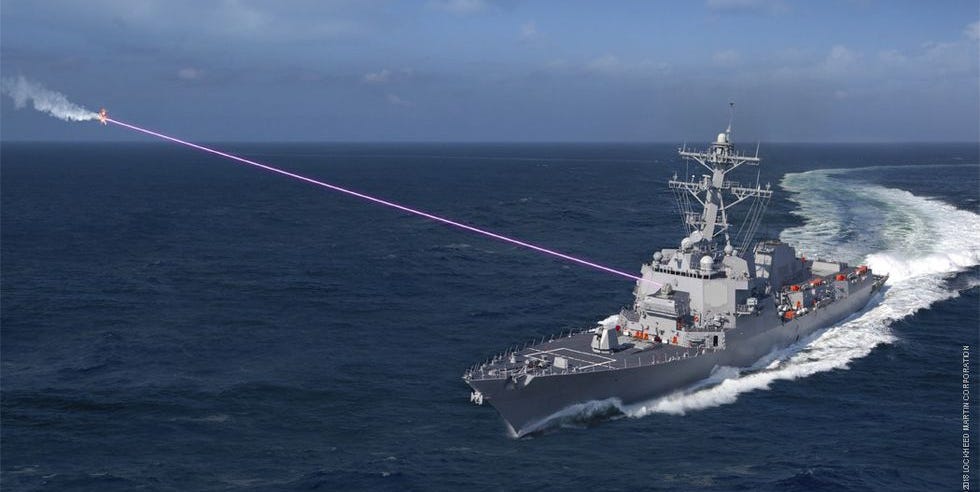
The big headline was simple and sharp: the Navy planned to put the HELIOS laser weapon on a destroyer by 2021. Specifically, the service aimed to install the system on the Arleigh Burke-class guided-missile destroyer USS Preble, a Flight IIA ship that would serve as a test bed for something much bigger than a flashy deck-mounted gadget. HELIOS was meant to be a serious step toward integrating directed-energy weapons into the fleet’s combat architecture.
That mattered because HELIOS was not just another experimental military laser rolled onto a dock for photos. The program was designed to fit into the Navy’s broader Surface Navy Laser Weapon System effort and, even more importantly, to work with the Aegis combat system. That integration piece is where the story gets interesting. A laser is cool. A laser that can think, track, sense, and fight as part of a destroyer’s existing weapons ecosystem is cooler by several classified degrees.
What Is HELIOS, Exactly?
HELIOS is a high-energy laser weapon built by Lockheed Martin for the U.S. Navy. The system combines three jobs into one package: offensive laser capability, optical dazzling, and surveillance support. In plain English, that means it is designed not only to damage or disable certain threats, but also to confuse or blind enemy sensors and contribute better tracking and targeting data.
This was one of the reasons the Navy was so interested. Traditional shipboard defense often relies on missiles, guns, and layered combat systems that are effective but expensive and sometimes overkill against low-cost threats. Nobody wants to spend a premium missile to swat what is basically an angry flying lawnmower with delusions of grandeur. HELIOS promised a more efficient response against drones, small boats, and asymmetric threats that have become increasingly important in modern naval warfare.
The system is generally described as a 60-kilowatt-class laser, though the Navy and Lockheed have also discussed a scalable architecture with growth potential. That matters because laser weapons are all about physics, power, and patience. The more power available, the broader the set of targets the system may eventually handle. Early on, HELIOS was aimed at smaller, softer, and more manageable targets rather than the cinematic fantasy of instantly vaporizing cruise missiles into patriotic mist.
Why Put HELIOS on a Destroyer?
The Navy did not choose a destroyer just because destroyers look good in artist renderings. The Arleigh Burke-class destroyer is one of the most important workhorses in the U.S. fleet. These ships already carry the Aegis combat system, advanced radars, missiles, and a broad range of defensive and offensive capabilities. If a laser weapon could be integrated on a Burke-class ship, it would prove that directed energy had a believable path into mainstream fleet operations.
That is why the planned installation aboard USS Preble drew so much attention. The Navy saw HELIOS as a chance to move beyond one-off experiments and toward an actual operational capability. Earlier laser efforts, such as the Navy’s Laser Weapon System demonstrator aboard USS Ponce, proved that shipboard lasers could work. HELIOS was supposed to take the next step: not just proving a laser could fire at sea, but proving it could become part of how a modern destroyer fights.
In other words, the mission was not “put a laser on a ship and see what happens.” The mission was “put a laser into the ship’s combat system and learn how the future fleet might use it.” Those are two very different levels of ambition. One is a demo. The other is doctrine trying on its future uniform.
The 2021 Timeline: Ambitious, Strategic, and Very Navy
When naval officials discussed HELIOS in 2019, they made it clear that 2021 was the target year for installation on a West Coast Flight IIA destroyer. The timing reflected urgency. The Navy was facing a world full of increasingly cheap unmanned systems, fast-moving surface threats, and a cost curve that made missile-heavy defense look painful over the long run.
Lockheed Martin had already received a contract worth about $150 million to develop and deliver two HELIOS systems, with options that could raise the total value much higher. One system was intended for land-based testing, and the other was slated for shipboard installation. The idea was to move quickly: develop, validate, test, integrate, and field the capability in a relatively short window.
That fast timeline also revealed the Navy’s mindset. Officials described the effort as a crawl-walk-run approach. The goal was not to snap fingers and create a laser revolution overnight. It was to get a real system onto a real destroyer, connect it to the combat system, begin learning how sailors would use it, and then grow from there. Even in a service famous for giant steel confidence, the Navy understood that a directed-energy weapon needs testing, integration, doctrine, and plenty of engineering humility.
What Made HELIOS Different from Earlier Naval Lasers?
The phrase that separated HELIOS from many earlier concepts was “integrated weapon system.” That word matters. A laser mounted on a deck is interesting. A laser integrated into the fire-control and sensing ecosystem of an Aegis destroyer is something else entirely.
HELIOS was designed to work as more than a beam projector. It could also contribute to the sensor picture and support more precise targeting. That dual role gave the Navy a compelling argument for investment. In theory, HELIOS could enhance both hard-kill and soft-kill options. Hard-kill means physically damaging a target. Soft-kill means degrading or disrupting sensors, seekers, optics, or enemy awareness. Against some threats, dazzling or blinding a system may be enough. Against others, a laser strike may be the better tool.
This flexibility was one reason HELIOS fit so neatly into the Navy’s evolving view of layered defense. A destroyer does not want to rely on one kind of answer for every problem. It wants a menu. Missiles, guns, electronic warfare, decoys, and directed energy each serve different roles. HELIOS promised another option, and in modern combat, options are the difference between confidence and very expensive regret.
The Tactical Logic Behind the Program
The Navy’s interest in laser weapons is rooted in a brutally practical question: how do you defend high-value ships against cheap, numerous, and fast-emerging threats without burning through your inventory of costly interceptors? That question has only grown more relevant in recent years.
Small drones are a perfect example. They can be used for surveillance, nuisance attacks, targeting support, or swarm tactics. A commander does not want to waste sophisticated missiles every time an unmanned aircraft pops up near the formation. A laser offers the appeal of a low cost per shot, deep “magazine” limited more by power generation than by physical ammunition, and engagement at the speed of light.
Fast attack craft also remain a concern, especially in contested littoral regions. HELIOS was discussed as a useful tool against those kinds of surface threats. While a 60-kilowatt-class system is not a magic wand, it could be valuable in certain engagement envelopes where precision, speed, and cost matter.
That does not mean lasers replace everything. They do not. Weather, range, dwell time, line-of-sight limits, atmospheric distortion, power management, and target characteristics all affect performance. HELIOS was never pitched as the one weapon to rule them all. It was pitched as a new layer in the Navy’s defensive stack. That is a much more realistic, and frankly more impressive, military story.
The Engineering Challenge: Integration Is the Real Battle
Putting a laser on a destroyer is not just a matter of finding an empty corner and bolting on futuristic hardware next to the coffee pot. The hard part is integrating the system into the ship’s sensors, command logic, power systems, cooling requirements, and tactical workflows. Navy leaders openly said that integration with Aegis was the major challenge.
That challenge sits at the heart of the HELIOS story. A warship is a tightly managed combat ecosystem. Every new system competes for space, weight, power, cooling, software attention, maintenance time, and sailor training. A directed-energy weapon adds even more complexity because the beam, optics, control systems, and target engagement logic must all work in concert under real-world sea conditions.
Salt air is not exactly kind to sophisticated hardware. Ship motion complicates precision pointing. Atmospheric conditions can degrade beam quality. And because the Navy is not in the habit of fielding gear that merely looks exciting on PowerPoint, the weapon has to perform as part of an operational platform, not a science fair. That is why HELIOS became such an important program. It forced the Navy to solve the boring-but-essential problems that turn “cool idea” into “fleet capability.”
Did the Navy Meet the 2021 Goal?
This is where the historical headline needs a little cleanup. The Navy absolutely did plan to put the HELIOS laser weapon on a destroyer by 2021, and Lockheed Martin publicly announced in January 2021 that it had delivered the HELIOS system to the U.S. Navy for ship testing and integration. That was a major milestone.
But as later reporting and budget documents showed, the path from delivery to ship integration and operational testing stretched beyond the original public target. By 2022, reporting indicated the system had completed testing at Wallops Island, Virginia, and was being installed on USS Preble in San Diego. Later Navy budget documents and Pentagon reporting showed the system supported on DDG 88 and tested at sea in subsequent years.
So the cleanest way to say it is this: 2021 was the Navy’s announced fielding target and a real delivery milestone, but full shipboard integration and later testing unfolded on a longer timeline. That is not unusual in advanced weapons development. It is also why serious defense writing should distinguish between a public plan, a delivery event, an installation milestone, and demonstrated operational performance. In acquisition, those are cousins, not twins.
Why the HELIOS Story Still Matters
HELIOS matters because it captures a larger transition in naval warfare. The Navy is not merely experimenting with strange new gadgets for the joy of alarming rival admirals. It is trying to build a more sustainable, layered, and adaptable defensive architecture for the future fleet.
The destroyer-based HELIOS effort helped answer several important questions. Can a high-energy laser be integrated into an operational surface combatant? Can it contribute to surveillance and fire control? Can it provide meaningful options against drones and surface threats? Can it become part of a cost-effective response to the flood of lower-end threats that are shaping modern combat?
The answer appears to be: cautiously, incrementally, and with plenty of engineering work, yes. HELIOS is not the final form of naval directed energy. It is more like the Navy opening the first serious chapter of that book. Future systems may become more powerful, more reliable, and more capable against tougher threats, including cruise missiles. But HELIOS gave the service a bridge between demonstration and deployment.
And that is what makes the headline more than a fun military curiosity. When the Navy said it planned to put the HELIOS laser weapon on a destroyer by 2021, it was really announcing something bigger: the era of shipboard lasers was no longer a someday story. It had entered the fleet planning process, the budget process, and the operational conversation. That is when futuristic technology becomes real. Not when it appears in a movie trailer, but when it starts fighting for rack space, wiring diagrams, and line items in a budget book.
Experience and Perspective: What Following the HELIOS Program Feels Like
Following the HELIOS program over the years feels a lot like watching the Navy try to teach tomorrow’s warfare how to fit inside today’s ship. At first glance, the concept sounds thrillingly simple: point laser, press button, neutralize threat, cue dramatic soundtrack. But the real experience of watching this program develop is much more interesting because it reveals how military innovation actually happens. It is slower than hype, smarter than headlines, and full of moments where engineering quietly wins the argument.
For defense readers, analysts, sailors, and military technology fans, HELIOS represents that rare intersection where ambition meets practical necessity. You can almost feel the appeal from the Navy’s side. Every year, threats such as drones become cheaper, more common, and more tactically useful. Meanwhile, the missiles used to defeat them remain expensive, finite, and logistically heavy. So when a program like HELIOS appears, it does not feel like a gimmick. It feels like the Navy staring at a calculator, a radar screen, and a future operating environment all at once and deciding that the old math needs help.
There is also something compelling about the setting. A destroyer is not a laboratory trailer parked in the desert. It is an operational warship with a combat system, a crew, maintenance demands, deployment schedules, and very little patience for hardware that refuses to cooperate. That makes HELIOS more than a weapons story. It becomes a story about trust. Can sailors trust it? Can commanders plan around it? Can maintainers keep it running at sea? Can a ship absorb its requirements without turning into an engineering hostage? Those questions make the program feel real in a way that glossy concept art never does.
Watching the timeline stretch beyond the original 2021 goal also adds a dose of realism. In some ways, that makes the story better, not worse. It shows that the Navy was serious enough to keep pushing the system through testing, integration, and at-sea evaluation instead of declaring victory at the first photo opportunity. Advanced weapons rarely move in a straight line. They crawl through software issues, power demands, test events, installation windows, and tactical rewrites. HELIOS has that texture. It feels like a real military capability being born, not a theatrical prop trying to trend online.
And perhaps that is the most memorable part of the HELIOS experience: it changes the conversation. Once a laser weapon moves from “someday” to “USS Preble,” the future stops feeling abstract. It becomes steel, wiring, cooling, training, doctrine, and watchstanding. That is when innovation gets serious. That is when naval warfare starts to look a little different. Not because a laser instantly replaces every missile, but because one destroyer carrying one integrated directed-energy weapon can signal where the fleet is headed next.
Conclusion
The story behind the headline “The Navy Plans to Put HELIOS Laser Weapon on Destroyer by 2021” is about more than one schedule target. It is about the Navy’s effort to move directed energy from experiment to fleet relevance. HELIOS brought together high-energy laser capability, optical dazzling, surveillance support, and Aegis integration in a way earlier shipboard laser efforts had not fully achieved. The original 2021 goal marked the moment the Navy publicly committed to making lasers part of its destroyer future. Even though integration and testing continued beyond that date, the strategic significance of the program remained the same: HELIOS was a serious step toward cheaper, faster, and more flexible naval defense.