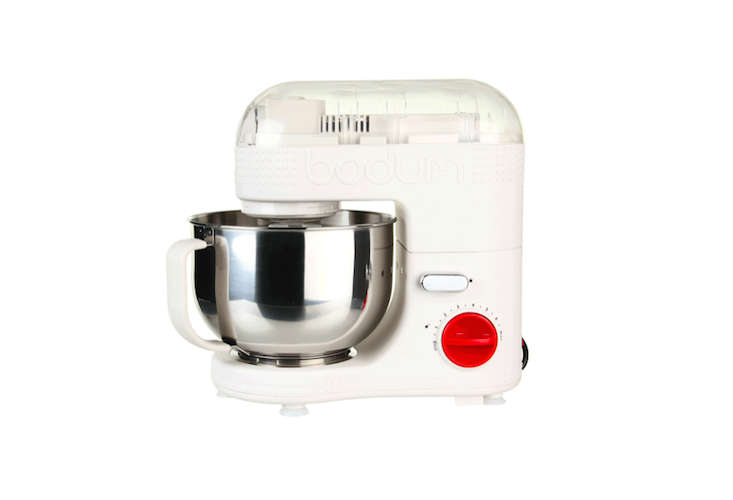
The Bistro Electric Stand Mixer is the sort of kitchen appliance that refuses to dress like office equipment. With its rounded body, bold color options, stainless steel bowl, and unmistakably modern silhouette, it looks ready to mix cake batter while starring in its own design magazine spread.
Better known as the BODUM BISTRO Stand Mixer, model 11381, this tilt-head machine combines a 700-watt motor, a 4.7-liter bowl, seven selectable speed levels, and three essential mixing tools. It can whip cream, cream butter, mix cookie dough, and knead bread without asking your forearms to participate in the project.
Its specifications remain attractive, especially for shoppers considering an older unit, clearance model, or secondhand find. However, power ratings and good looks do not tell the complete story. Bowl coverage, operating limits, noise, accessory availability, and replacement-part support matter just as much as wattage.
What Is the Bistro Electric Stand Mixer?
The Bistro Electric Stand Mixer is a countertop planetary-style mixer designed for everyday home baking. Its bowl remains stationary while the selected attachment moves through the mixture, allowing the machine to combine ingredients more evenly than a basic rotating beater working in one fixed spot.
The mixer uses a tilt-head design. A release lever raises the mixing arm so the user can install the bowl, attach a beater, or remove finished dough. Once the arm is lowered and locked, the machine is ready to operate. A safety feature prevents the motor from starting while the arm is raised, which is particularly useful when curious fingers are nearby.
BODUM equipped the model with a separate power switch and speed control. This two-step arrangement is slightly less effortless than a single lever, but it reduces the possibility of the mixer unexpectedly roaring to life when it is plugged in.
Bistro Electric Stand Mixer Specifications
| Motor | 700 watts |
|---|---|
| Bowl capacity | 4.7 liters, or approximately 5 quarts |
| Speed control | Seven selectable mixing levels, including maximum speed |
| Included tools | Flat beater, dough hook, and wire whisk |
| Additional component | Splash guard with an ingredient opening |
| Design | Tilt-head mixer with a locking bowl |
| U.S. electrical rating | 120 volts, 60 hertz |
| Power-cord length | Approximately 39 inches |
| Original warranty | Two years, subject to the original warranty conditions |
A 4.7-liter bowl places this machine in the popular five-quart stand mixer category. That is enough room for a standard layer cake, a family-size batch of cookies, mashed potatoes for dinner, whipped cream, or a moderate quantity of yeast dough. It offers useful capacity without requiring the dedicated parking space demanded by a commercial mixer.
Included Attachments and Their Best Uses
Flat Beater
The flat beater is the everyday attachment. It is intended for cake batter, cookies, frosting, pastry, sweet dough, fillings, and mashed potatoes. Use it when the goal is to blend, cream, or beat ingredients rather than stretch gluten or incorporate large amounts of air.
For cookies, begin slowly while adding flour. Otherwise, the kitchen may receive a festive dusting that nobody ordered. Increase the speed only after the dry ingredients have been partly absorbed.
Dough Hook
The dough hook handles yeast dough, bread dough, and pizza dough. It replaces much of the repetitive hand-kneading required to develop gluten, although the machine still needs supervision. Dough consistency, batch size, and hydration can dramatically change the load placed on the motor.
The instruction manual sets an important limit: when processing stiff bread or pizza dough, users should not exceed 1 kilogram of flour, and the mixing period should last no longer than five minutes. This is not a commercial spiral mixer that wants to knead bagel dough until sunrise.
Wire Whisk
The wire whisk is designed for eggs, cream, meringue, mousse, soufflés, cheesecake mixtures, and light batters. Higher settings introduce air rapidly, so watch the bowl rather than relying exclusively on a timer. Cream can travel from soft clouds to accidental butter surprisingly quickly.
Splash Guard
The included splash guard attaches beneath the mixing arm and has an opening for adding ingredients. It is especially helpful when incorporating flour, confectioners’ sugar, or liquids. A well-designed guard is not glamorous, but neither is wiping cake batter from the toaster.
How Well Does the Bistro Stand Mixer Perform?
Everyday Mixing
For cakes, frostings, whipped cream, and ordinary cookie dough, the Bistro provides the core performance expected from a home stand mixer. Its speed range offers enough control to begin gently, combine ingredients at medium speed, and whip at higher settings.
One repeatedly reported limitation is the distance between the flat beater and the sides of the bowl. Ingredients may remain around the perimeter, especially during small batches or when creaming butter and sugar. Stopping once or twice to scrape the bowl is therefore a practical part of the workflow rather than an admission of defeat.
Bread and Pizza Dough
The 700-watt rating sounds muscular, but wattage alone does not measure kneading ability. Motor efficiency, gearing, dough-hook shape, batch size, and thermal management all influence real performance. The Bistro can handle moderate bread and pizza recipes, provided the user respects its flour and operating-time limits.
Suction cups beneath the base help keep the mixer stable during demanding jobs. Published testing found that the machine remained in place even while working with stiff dough. That is a meaningful advantage because an unsupervised mixer attempting to migrate toward the counter edge is less “hands-free convenience” and more “very slow kitchen emergency.”
Whipping and Aeration
The whisk can produce whipped cream, meringue, and aerated egg mixtures efficiently. However, as with many full-size mixers, extremely small quantities may not reach the whisk effectively. A single egg white may be happier in a small bowl with a hand mixer.
Noise
The Bistro is not known for silent operation. Reviews have described it as louder and higher-pitched than some competing machines. The sound is usually tolerable for short recipes, but it may matter in an open-plan home, a small apartment, or a household where someone believes a Sunday morning should not begin with a countertop jet engine.
Important Operating Limits
The Bistro Electric Stand Mixer should not be treated as an unlimited-duty appliance. According to its manual, the machine should be switched off after five minutes of continuous operation and allowed to rest for ten minutes to help prevent motor overheating.
This limitation is most important when kneading dense dough. Cake batter or whipped cream usually requires less time and places a lighter load on the motor, but the published instruction remains the safest general rule.
Always begin at the lowest setting before increasing speed. Slow starts keep flour inside the bowl, reduce sudden strain on the motor, and make it easier to judge how a mixture is developing. Dense dough should generally remain at a lower or medium-low setting rather than being attacked at maximum speed.
Design and Countertop Appeal
Design is one of the Bistro mixer’s strongest selling points. Instead of imitating the industrial appearance of traditional mixers, BODUM gave it a soft, rounded housing with bright finishes and contrasting materials. It looks approachable, contemporary, and slightly playful.
The rubberized exterior also provides a more tactile finish than glossy plastic. However, decorative surfaces require gentle cleaning. Abrasive powders and aggressive scrubbers may damage the coating, so a damp cloth is the sensible choice.
Before purchasing, measure the space between the countertop and upper cabinets. A tilt-head mixer needs additional vertical clearance when opened. It may fit neatly during storage yet bump into a cabinet every time the user attempts to remove the bowl.
Cleaning and Maintenance
The bowl, mixing attachments, and splash guard may be washed by hand or placed in a dishwasher according to the original instructions. Removing thick dough or frosting with a rubber scraper before washing makes cleanup faster and prevents the dishwasher from becoming an experimental bakery.
The motor housing must never be immersed. Unplug the appliance, make sure the attachments have stopped rotating, and wipe the exterior with a damp cloth. Avoid scouring powder and do not allow water to enter the controls or motor area.
Clean the suction cups and countertop periodically. Flour, grease, and crumbs can weaken their grip. A clean, dry surface gives the base its best chance of remaining stationary during kneading.
Owners of older mixers should also inspect the power cord, plug, bowl-locking system, head latch, and attachments before use. Cracked coatings, unusual odors, grinding sounds, or intermittent power deserve professional attention rather than hopeful optimism.
Advantages of the Bistro Electric Stand Mixer
- Useful five-quart-class capacity: The bowl suits most ordinary home-baking recipes.
- Strong core package: A beater, whisk, dough hook, and splash guard are included.
- Stable base: Suction cups help limit movement while mixing dense ingredients.
- Distinctive appearance: The rounded, colorful design stands apart from traditional metal-bodied mixers.
- Good speed selection: Multiple settings support gentle combining, beating, kneading, and whipping.
- Safety interlock: The motor does not operate with the mixing arm raised.
- Convenient cleanup: The removable bowl and main mixing components are dishwasher-safe according to the manual.
Potential Drawbacks
- Frequent bowl scraping: The flat beater may leave ingredients around the sides or bottom.
- Noticeable noise: It can sound louder and sharper than several modern competitors.
- Short continuous-duty limit: The manual calls for a cooling break after five minutes of operation.
- Restricted stiff-dough batches: Bread and pizza recipes should not exceed the stated flour limit.
- Limited current support: Accessories and replacement components may be difficult to locate for an older model.
- Uncertain warranty coverage: The original two-year warranty is unlikely to help with most used machines.
- No broad attachment ecosystem: Buyers should not expect the extensive pasta, grinding, and food-preparation options available for some competing brands.
Who Should Consider Buying It?
The Bistro Electric Stand Mixer is best suited to a home baker who makes cakes, cookies, frosting, whipped desserts, mashed potatoes, and occasional bread. It is especially appealing to someone who values countertop design and does not mind stopping to scrape the bowl.
It can also be an interesting secondhand purchase when the machine is complete, clean, correctly rated for U.S. voltage, and offered at a sensible price. Its unusual appearance may appeal to collectors of colorful or modern kitchen appliances.
Frequent bread bakers should be more cautious. Anyone making multiple loaves every week, low-hydration bagel dough, or large pizza batches may be better served by a heavy-duty bowl-lift or spiral mixer designed for longer kneading sessions.
What to Check Before Buying a Used Bistro Mixer
- Confirm that the label shows the correct voltage and frequency for the intended location.
- Make sure the bowl, flat beater, dough hook, whisk, and splash guard are included.
- Test every speed and listen for knocking, slipping, or grinding noises.
- Confirm that the mixing arm locks securely in both raised and lowered positions.
- Check whether the bowl locks firmly into the base.
- Inspect the power cord for cuts, stiff sections, scorching, or exposed wiring.
- Look for cracking, peeling, or sticky deterioration on rubberized surfaces.
- Verify that the safety interlock prevents operation while the head is raised.
- Consider the availability of replacement parts before paying a collector-level price.
Practical Experiences With the Bistro Electric Stand Mixer
Based on its controls, published evaluations, and long-term owner observations, the Bistro offers an experience that begins with visual charm and quickly becomes pleasantly practical. Place it on a clean countertop, press down lightly so the suction cups engage, and the machine feels more firmly planted than its rounded upper body suggests.
A typical cookie session demonstrates both its strengths and its main inconvenience. The flat beater handles softened butter and sugar confidently at a medium setting. Eggs disappear into the mixture without drama, and the splash guard allows flour to be added gradually. Starting slowly is essential. Turning the dial too aggressively can transform a carefully measured cup of flour into weather.
After a minute or two, a ring of butter or dry ingredients may remain along the bowl. Stopping the motor and scraping with a silicone spatula solves the problem, but owners accustomed to a flex-edge beater may find the interruption old-fashioned. Once scraped, the mixer finishes the dough evenly and without requiring hand mixing.
Cake batter follows a similar pattern. The Bistro is comfortable with ordinary layer-cake quantities, but room-temperature ingredients matter. Cold butter tends to cling to the bowl and exaggerate the clearance issue. Properly softened butter creams more evenly, reduces strain, and produces a smoother batter.
Whipped cream is where the mixer feels especially convenient. The whisk handles a moderate quantity quickly, leaving the cook free to prepare fruit or clean the counter. It is wise to remain nearby because the transition from soft peaks to stiff peaks can happen rapidly. The mixer is hands-free, not responsibility-free.
Pizza dough reveals the machine’s more serious personality. The suction cups help keep the base stationary, and the dough hook gathers a moderate batch without requiring manual kneading. The mixer may sound louder under this load, but a steady mechanical hum is different from knocking, grinding, or slipping. Users should stop immediately if the machine begins moving violently or produces an unusual smell.
The five-minute operating limit shapes the bread-making routine. Rather than running the mixer continuously, it is sensible to combine the dough, knead briefly, and then assess gluten development. Resting the dough can improve extensibility while giving the motor its required cooling period. This approach is gentler on both the appliance and the dough.
Cleanup is uncomplicated. The bowl and attachments can go into the dishwasher, although immediate rinsing prevents dough from turning into edible cement. The housing needs only a damp cloth. Flour may collect around seams and beneath the transparent sections, so a soft brush is helpful for dry debris.
Living with the Bistro ultimately involves a trade-off. It delivers attractive design, stable operation, useful capacity, and dependable performance for mainstream baking. In return, it asks for occasional bowl scraping, respect for its duty cycle, and tolerance for a noticeable soundtrack. For the right home baker, those are manageable quirks rather than fatal flaws.
Final Verdict
The Bistro Electric Stand Mixer remains an appealing example of an appliance that treats appearance and function as equally important. Its 700-watt motor, 4.7-liter bowl, seven speed levels, splash guard, and three core attachments cover the needs of most casual and intermediate home bakers.
Its limits are equally clear. The beater does not always sweep the bowl closely, the motor requires cooling breaks, noise is noticeable, and long-term access to parts may be uncertain. These issues matter more today because many available units are likely to be used, imported, or old stock.
Purchased in good condition at an appropriate price, the Bistro can still be a charming and capable baking companion. It will mix cakes, whip cream, prepare frosting, and knead modest dough batches while looking considerably more cheerful than the average countertop machine. Just keep a spatula nearby. The Bistro likes teamwork.
Research note: Technical specifications, operating limits, attachment guidance, cleaning instructions, and safety details were cross-checked against the original product manual. Performance analysis was compared with published appliance testing, professional reviews, stand mixer evaluations, and owner experiences.