Clash Royale looks simple at first: drop a Knight, watch him bonk something, cheer when a tower explodes. Then, ten seconds later, a Hog Rider is yelling at your Princess Tower, a Skeleton Army is having a family reunion in your lane, and your elixir bar is emptier than your snack drawer after one ranked session.
That is the magic of Clash Royale. It is fast, funny, competitive, and surprisingly deep. This real-time multiplayer card strategy game blends deck building, tower defense, quick decision-making, and a tiny bit of emotional damage when your opponent says “Good game” before the match is actually over.
This guide explains how to play Clash Royale in 15 practical steps. Whether you are brand-new, returning after a long break, or tired of losing to the same Goblin Barrel trick, you will learn how battles work, how to build a balanced deck, how to manage elixir, when to attack, when to defend, and how to climb the Arena without turning every match into a panic parade.
1. Understand the Main Goal of Clash Royale
Every Clash Royale battle is built around one big goal: destroy more enemy Crown Towers than your opponent destroys of yours. A standard match gives each player three towers: two Princess Towers in front and one King Tower in the middle. Destroying a Princess Tower earns one Crown. Destroying the King Tower usually ends the match immediately with a three-Crown victory.
If neither player destroys the King Tower, the player with more Crowns wins. If the score is tied after regular time, the match goes into overtime. In many modes, the lowest-health tower becomes the deciding target if time runs out. Translation: every bit of tower damage matters. That lonely Fireball chip from earlier? It may become the difference between glory and staring silently at your screen.
2. Learn What Cards Do
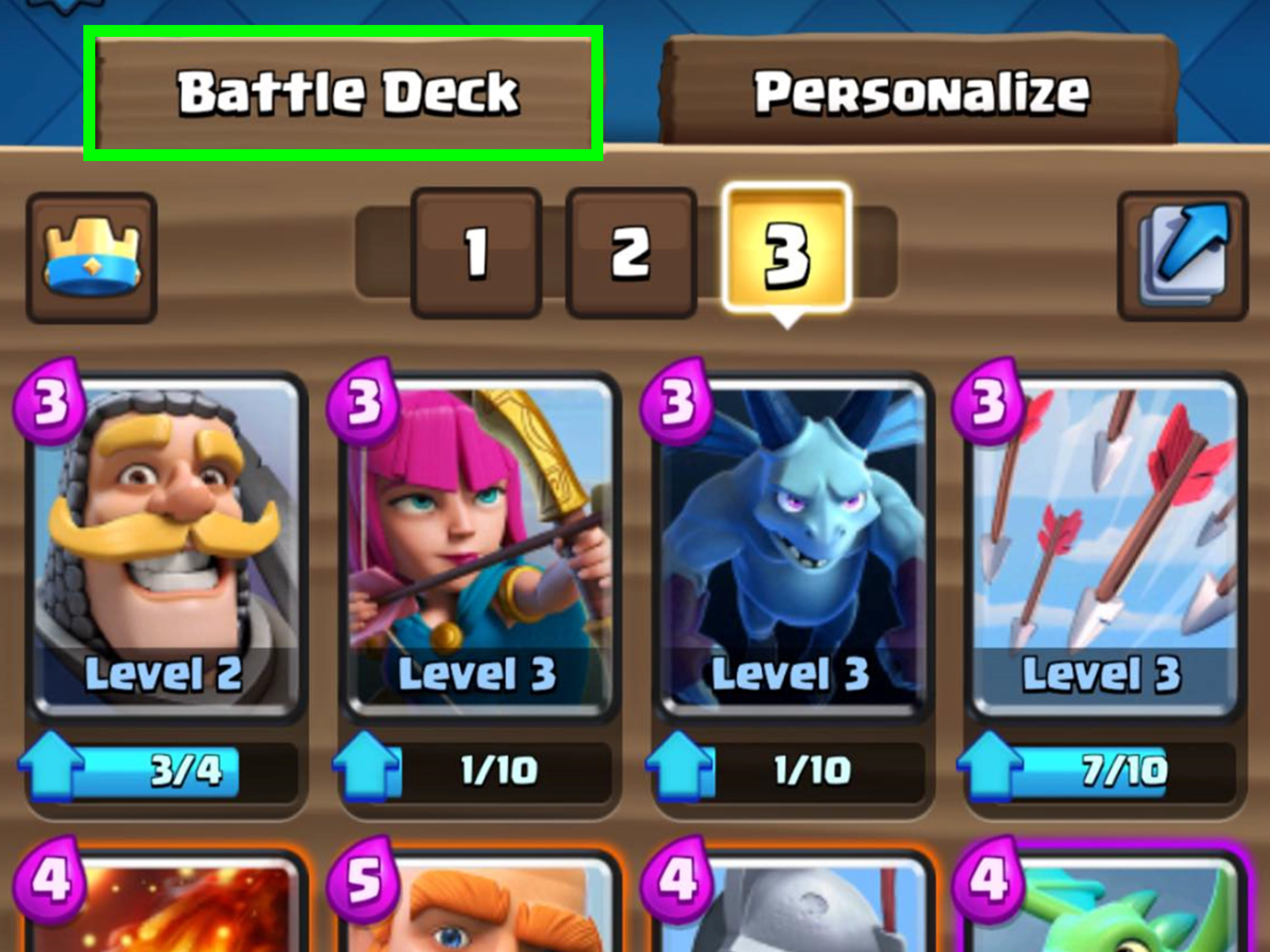
Cards are the heart of Clash Royale. Your battle deck contains eight cards, and each card has a specific role. Most cards fall into three main groups: troops, spells, and buildings.
Troops
Troops are units you place on the battlefield. Some attack towers, some attack enemy troops, some fly, some splash damage, and some behave like they drank three energy drinks before entering the Arena.
Spells
Spells create instant effects. They can damage troops, reset attacks, finish towers, knock enemies back, freeze units, or clear swarms. A well-timed spell can make you look like a genius. A poorly timed spell can make you look like you sneezed on the screen.
Buildings
Buildings are defensive structures placed on your side of the Arena. They can distract win conditions like Hog Rider, Balloon, Giant, or Ram Rider. They are especially useful for controlling the center and buying time.
3. Understand Elixir Before You Spend It Like a Millionaire
Elixir is the purple resource that fills during battle. Every card costs elixir, and stronger cards usually cost more. The trick is not to use the most expensive card whenever you can. The trick is to spend elixir efficiently.
For example, if your opponent plays a 5-elixir card and you counter it with a 3-elixir card, you gain a positive elixir trade. That means you defended for less than they spent. Over time, these small advantages let you build stronger pushes, defend more calmly, and stop feeling like your opponent has a secret elixir subscription.
A beginner mistake is dropping cards the second the elixir bar fills. Do not do that automatically. Sometimes the best play is waiting. In Clash Royale, patience is not boring. Patience is a weapon wearing a tiny crown.
4. Build a Balanced Battle Deck
A good Clash Royale deck is not just eight cards you like. It is a small team with jobs. If every card in your deck is expensive, you will defend like a sleepy turtle. If every card is cheap but weak, you may cycle quickly but struggle to finish towers.
A balanced beginner deck usually includes:
- One main win condition, such as Hog Rider, Giant, Balloon, Royal Giant, Goblin Barrel, or Miner.
- One or two small spells, such as Zap, Log, Arrows, or Snowball.
- One medium or big spell, such as Fireball, Poison, Lightning, or Rocket.
- Air defense, such as Musketeer, Archers, Minions, Mega Minion, or a building that targets air.
- A tank killer, such as Mini P.E.K.K.A, Inferno Tower, Inferno Dragon, or Hunter.
- Cheap cycle cards, such as Skeletons, Ice Spirit, Goblins, or Bats.
Your deck should have a clear plan. “I hope something works” is not a plan. It is a weather forecast.
5. Choose One Win Condition
A win condition is the card most responsible for damaging the enemy tower. New players often add too many win conditions because they all look exciting. Giant, Hog Rider, Balloon, Goblin Barrel, Royal Hogs, and Wall Breakers in one deck may sound powerful, but it usually becomes a traffic jam with swords.
Start with one main win condition and build around it. If you play Hog Rider, support it with cheap cards and spells. If you play Giant, use support troops behind it. If you play Goblin Barrel, learn how to bait out small spells like Log or Arrows before sending the Barrel.
One focused plan beats five confused plans almost every time.
6. Practice Defense First
New players love attacking. Experienced players love defending well, then attacking with the surviving troops. Defense is where you gain elixir advantages, stop enemy pushes, and create counterpushes.
Suppose your opponent sends a Giant with a Musketeer behind it. Instead of panicking and throwing half your deck onto the field, place a building to pull the Giant, then use a troop to handle the Musketeer. If your defending troop survives, you can support it and turn defense into offense.
Good defense feels calm. Bad defense feels like trying to catch bees with a sandwich bag.
7. Learn Card Placement
Placement is one of the most important Clash Royale skills. Where you place a card can change everything. A building placed in the center can pull enemy troops away from your tower. A splash troop placed too close can get destroyed by a spell. A tank placed in the back gives you time to build a large push.
For beginners, remember these simple placement ideas:
- Place defensive buildings in the middle to pull enemy win conditions.
- Place ranged troops far enough back so they survive longer.
- Do not stack all support troops in one spot if your opponent has Fireball, Poison, or Rocket.
- Use the opposite lane when your opponent commits too much elixir in one lane.
Great placement makes average cards powerful. Bad placement makes powerful cards look like they forgot their job interview.
8. Count Elixir in a Simple Way
You do not need a calculator, a spreadsheet, or a wizard hat to count elixir. Start small. Notice when your opponent spends a lot. If they play Golem in the back, that is a huge investment. You may have a chance to attack the opposite lane before their push becomes scary.
If they spend a Fireball on your tower for chip damage, they may not have it ready for your support troops. If they use Arrows on your Goblins, your Bats or Minion Horde may be safer for a few moments.
Elixir counting is really about awareness. Ask yourself: “Did my opponent just spend more than I did?” If yes, you may have a window to attack. If no, defend and reset.
9. Do Not Overcommit on Attack
Overcommitting means spending too much elixir on offense and leaving yourself unable to defend. It is one of the most common beginner mistakes. You send Hog Rider, then add Goblins, then add Fireball, then add another troop, and suddenly your opponent counters everything and sends a Giant down the other lane while your elixir bar is gasping for help.
A smart attack is usually controlled. Send your win condition with one support card or spell. Watch how your opponent responds. If they defend with too much elixir, punish later. If they defend cheaply, adjust your next push.
In Clash Royale, you do not need to win the match in the first push. You need to make better decisions across the whole battle.
10. Use Spells With Purpose
Spells are not decorations. They should solve problems. Use Arrows to clear swarms. Use Zap or Snowball to reset certain attacks and remove small troops. Use Fireball to damage medium-health support units and chip towers. Use Poison to control an area over time.
Avoid throwing spells at towers just because you are bored. Early in the match, tower-only spell damage is often less valuable than saving the spell for defense or support. Later, when the tower is low, spell cycling can become a valid way to finish the game.
The best spell players are patient. They wait until one spell hits multiple targets. Fireballing a Musketeer, a Wizard, and a tower at once feels like finding money in a jacket pocket.
11. Know When to Activate Your King Tower
King Tower activation means making the enemy accidentally damage your King Tower, causing it to wake up and help defend. This can happen against cards like Tornado combinations, certain spell placements, or troops pulled into the center.
For beginners, do not obsess over advanced King Tower activations right away. Learn the basics first. But understand why activation matters: once the King Tower is active, you have an extra defensive tower shooting at enemy units. That can make future defenses much easier.
Think of your King Tower as the sleepy parent in a cartoon. Once it wakes up, everyone behaves a little differently.
12. Upgrade Cards Wisely
Upgrading cards improves their strength, but resources are limited. Do not upgrade every card just because the button is glowing at you like a tiny casino machine. Focus on cards you actually use in your main deck.
Beginner-friendly upgrade priorities include your win condition, key defensive cards, and spells. Spells are especially important because level differences can affect whether they fully remove certain troops. A stronger Fireball or Arrows can change matchups dramatically.
As you unlock more cards, Evolutions, Heroes, and deck slots through progression, keep your upgrades focused. A well-leveled main deck is usually better than twenty half-upgraded experiments.
13. Join a Clan
Joining a Clan gives you access to a community inside the game. You can request cards, donate cards, chat with other players, participate in Clan activities, and learn from people who have already made every beginner mistake possible.
A good Clan helps you grow faster. Ask for deck advice. Watch friendly battles. Practice matchups. Donate cards when you can. Donations help others and often give you rewards too.
Do not be shy about being new. Every strong player once dropped a Fireball on nothing and pretended it was “prediction.”
14. Watch Replays and Learn From Losses
Losing is part of Clash Royale. The important question is: why did you lose? Did you spend too much elixir early? Did you ignore air defense? Did you attack when your opponent had a perfect counter ready? Did you play your swarm into Arrows for the fourth time, emotionally hoping the fifth time would be different?
Replays show your mistakes more clearly than live battles. Watch your losses and look for one thing to improve. Maybe you need better placement. Maybe your deck lacks a building. Maybe you panic when Double Elixir begins.
Improvement in Clash Royale comes from noticing patterns. The game becomes easier when losses stop feeling random and start feeling like lessons with explosions.
15. Play Consistently, Not Emotionally
Clash Royale rewards calm decision-making. If you lose three matches in a row and keep playing while annoyed, you may start making wild choices. This is called tilt, and it is responsible for many tragic Goblin Barrel placements.
Set a simple rule: if you lose several games and feel frustrated, take a break. Play a casual mode, watch a replay, test a deck in friendly battles, or simply close the game for a while. Your trophies will not run away. They will sit there, judging quietly, but they will not run away.
The best players are not perfect. They are consistent. They defend carefully, spend elixir wisely, understand their deck, and stay calm when the Arena turns into chaos.
Best Beginner Tips for Winning More Clash Royale Matches
Master One Deck Before Switching
Deck switching is tempting. You lose to Balloon, so you build an anti-Balloon deck. Then you lose to Hog Rider, so you switch again. Soon you have fifteen decks and no muscle memory. Instead, choose one solid deck and learn its matchups. Familiarity is a major advantage.
Do Not Ignore Air Defense
Air troops can ruin a deck that cannot hit them. Always include answers to flying units. Musketeer, Archers, Minions, Baby Dragon, Electro Wizard, and certain buildings can help. Without air defense, Balloon players will treat your tower like a vacation destination.
Track Your Opponent’s Small Spell
If your deck uses swarms, pay attention to cards like Log, Arrows, Zap, Snowball, and Barbarian Barrel. When your opponent uses their small spell, you may have a short window to play your swarm more safely.
Attack Both Lanes When Needed
If your opponent builds a giant push in one lane, attacking the opposite lane can force them to spend elixir defensively. This reduces the power of their push. Just do not ignore the incoming threat completely, unless you enjoy watching your tower vanish with dramatic flair.
Common Beginner Mistakes to Avoid
First, do not place troops directly at the bridge every time. Bridge pressure is useful, but predictable bridge pressure is easy to counter. Second, do not let your tower take unnecessary damage because you are saving elixir for a “perfect” push. Third, do not use all your counters at once. If your opponent has Skeleton Army and you waste Arrows too early, you may regret it quickly.
Another mistake is copying a pro deck without understanding why it works. Advanced decks often require precise timing, matchup knowledge, and card interactions. A beginner-friendly deck that you understand is better than a championship deck you play like a confused raccoon.
Extra Experience: What Playing Clash Royale Teaches You Over Time
The funniest thing about learning Clash Royale is that your first lessons usually come from getting absolutely humbled. You enter the Arena feeling confident because your deck has a Giant, a Mini P.E.K.K.A, and a dream. Then your opponent defends everything with cheap cards, sends one Hog Rider, and somehow your tower has filed for retirement.
After a while, you realize Clash Royale is not just about having strong cards. It is about timing. A Mini P.E.K.K.A can destroy a Giant, but only if placed correctly. Arrows can save your tower from a Goblin Barrel, but only if you do not waste them three seconds earlier on two lonely Spear Goblins. A Fireball can win the match, but only if you know when tower damage matters more than troop damage.
One experience many players share is the “favorite card phase.” Maybe you love Prince because he charges like he is late for work. Maybe you love Witch because skeletons are free labor. Maybe you love Mega Knight because dropping him on a crowd feels like slamming a refrigerator onto a birthday party. Favorite cards are fun, but the game teaches you that every card needs support. Prince needs help against swarms. Witch needs protection from spells. Mega Knight needs a real plan after the dramatic entrance.
Another important experience is learning not to panic. In early matches, a big enemy push feels terrifying. Giant in front, Wizard behind, Baby Dragon floating overhead, and your brain starts playing emergency music. But with practice, you learn to break the push into pieces. Pull the tank. Remove the support. Use your tower damage. Counterpush with survivors. What once looked impossible becomes manageable.
You also learn that small advantages matter. One positive elixir trade may not win instantly, but five good trades can control the whole match. A single surviving Musketeer can become the start of a counterattack. A few hundred chip damage from a Miner or spell can decide overtime. Clash Royale rewards players who respect tiny details.
Deck building becomes more personal over time. Some players enjoy fast-cycle decks because they like constant pressure and quick reactions. Others prefer beatdown decks because they enjoy building one massive push and asking the opponent, politely, “Can you stop this marching disaster?” Control players prefer defense, counterattacks, and careful spell value. Bait players enjoy forcing opponents to waste counters. There is no single perfect style. The best style is the one you understand well enough to play under pressure.
The biggest experience, though, is learning emotional control. Clash Royale is designed for short matches, which means wins feel exciting and losses arrive quickly. You may lose to a deck you dislike. You may misplace a card by one tile. You may watch your opponent’s tower survive with a tiny amount of health while your own tower collapses. It happens. The player who improves is the one who takes a breath, checks the replay, and learns one useful thing instead of blaming the moon, the Wi-Fi, and every Goblin in the kingdom.
In the end, Clash Royale becomes more enjoyable when you treat every battle as practice. Try new ideas, but do not switch plans every five minutes. Upgrade wisely, but do not assume levels replace skill. Join a Clan, ask questions, and watch better players. Most importantly, keep the game fun. If you can laugh after a failed Rocket misses everything except your pride, you are already on the right path.
Conclusion
Learning how to play Clash Royale is about more than dropping cards and hoping for fireworks. It is about understanding towers, elixir, card roles, deck balance, defense, timing, placement, and emotional control. The Arena rewards players who think ahead, spend wisely, and learn from every match.
Start simple. Pick one win condition. Build a balanced deck. Defend first. Watch your elixir. Use spells with purpose. Join a Clan. Study your replays. Most of all, stay calm when the battlefield gets messy, because messy is where Clash Royale becomes fun.
With these 15 steps, you are ready to enter the Arena with a smarter plan, a stronger deck, and hopefully fewer moments where your tower disappears while you are still deciding what to play. See you in the Arenaand may your Fireballs hit more than just emotional regret.
Note: This article is written for web publication and is based on current Clash Royale gameplay fundamentals, official game information, and established beginner strategy practices.