Some designs are loud. They shout for attention, pose dramatically, and practically beg to be photographed from their “good side.” Then there are the truly brilliant ones: the kind that slip into everyday life so smoothly that your brain quietly says, “Well, obviously that’s how it should work.” A sidewalk that transforms into a public bench belongs in that second category. It is clever, useful, social, and refreshingly unpretentious. In other words, it is the design equivalent of a person who brings snacks, remembers everyone’s name, and never makes a big deal about it.
That is why genius design ideas spread so fast online. People are not only reacting to something cool-looking. They are reacting to relief. A bench exactly where tired legs need one. A sign you can actually read without squinting like a detective in a crime drama. A package that opens on the first try instead of sending you into a scissors-based emotional spiral. The best human-centered design does not make life feel futuristic. It makes life feel less annoying.
This is also why smart public design, inclusive design, and everyday product design matter so much. Great design is not decoration with better PR. It is problem-solving with manners. It notices how real people move, wait, carry bags, push strollers, use wheelchairs, navigate crowded sidewalks, read in bad lighting, and make decisions when they are tired, rushed, or distracted. That is where the magic lives: not in complexity, but in empathy.
Why These Genius Designs Feel So Satisfying
The most unforgettable design ideas usually share a few traits. First, they solve a real problem. Second, they solve it simply. Third, they improve the experience for more than one kind of person. A curb ramp helps a wheelchair user, sure, but it also helps a parent with a stroller, a traveler dragging luggage, a delivery worker with a cart, and anyone whose knees are currently filing a complaint. That is the quiet superpower of universal design: when a solution starts with accessibility, it often ends up helping almost everybody.
Public spaces especially reveal the difference between good intentions and good execution. A city can install benches, planters, signs, ramps, bollards, and bus shelters all day long, but if those elements are confusing, uncomfortable, or badly placed, the result is visual clutter with a side of frustration. The best urban design works like choreography. It creates flow without feeling controlling. It makes people feel welcome without turning every corner into a lecture on “community engagement.”
So, in honor of the designers who looked at ordinary objects and thought, “This could be better,” here are 50 genius design ideas that absolutely deserved applause, coffee, and probably a raise.
50 Genius Designs That Make Everyday Life Smarter
Public Space and Street Design Wins
- A sidewalk edge that becomes a bench. It saves space, invites people to linger, and turns circulation space into social space without adding clutter.
- Curb extensions with seating. They shorten pedestrian crossings and create room for benches, trees, and safer corners all at once.
- Benches with companion spaces for wheelchair users. Instead of separating people, they let everyone sit together like normal human beings.
- Seats placed in both sun and shade. Tiny decision, huge comfort payoff. Not every person wants to roast politely in August.
- Bus shelters angled toward oncoming vehicles. A small geometric tweak that saves a lot of neck craning and awkward leaning.
- Tactile paving at crossings and platform edges. It adds essential information underfoot and improves navigation without saying a word.
- Crosswalk buttons with sound and vibration. Multisensory cues are smart because cities are noisy, busy, and not built for ideal conditions.
- Parklets that replace a few parking spaces. Trading metal boxes for actual people is a pretty strong upgrade.
- Bike racks designed as public art. Functional objects become landmarks instead of visual afterthoughts.
- Bollards that double as perches. Security and seating do not have to act like they have never met.
- Drinking fountains with bottle fillers and multiple heights. One station, several needs, zero unnecessary drama.
- Wayfinding lines embedded in pavement. When the ground helps guide you, the whole street becomes easier to read.
- Mini plazas at widened corners. They create breathing room where sidewalks are busiest and give neighborhoods a place to pause.
Accessibility and Inclusive Design Wins
- Ramps paired with stairs on the same main route. Good design does not send one group through the front door and another around the back.
- High-contrast signs with icons and plain language. Because not everyone is navigating in their first language, best lighting, or calmest mood.
- Lever door handles instead of tricky knobs. A masterpiece of low-effort usability that your hands appreciate when they are full.
- Doors with generous push plates. Sometimes your elbow is the real VIP user.
- Restroom occupancy indicators that are instantly clear. No interpretive dance required to figure out whether it is available.
- Elevator buttons that are large, legible, and logically arranged. The opposite of mystery-meat interface design.
- Kiosks with tactile controls and audio guidance. Self-service is only smart when actual humans can use it independently.
- Benches with backs and armrests. They look simple, but they make standing up and sitting down far easier for many people.
- Seating in different heights and styles. Bodies vary. Good design knows this and does not pretend one size fits all.
- Clear, obstacle-free pedestrian paths. If the route feels like an obstacle course, the design has already lost.
- QR codes paired with printed instructions. Digital convenience is great until someone has no signal, low battery, or zero patience.
- Color coding paired with text and symbols. Red-green-only logic is not the universal language some designers think it is.
- Lighting that guides instead of glares. Safety improves when people can actually see where they are going.
Transit, Movement, and Navigation Wins
- Train platform warning strips. A clear cue exactly where people need it most.
- Curb ramps aligned with the crosswalk direction. A small detail that makes movement feel natural instead of needlessly awkward.
- Transit signs showing both map and real-world orientation. “You are here” works better when your brain does not need to rotate the universe first.
- Ticket machines that accept both tap and tactile input. Backup options are not clutter; they are respect.
- Stroller-and-luggage-friendly station entrances. The smoothest journeys are the ones that do not punish you for bringing things.
- Waiting areas near crossings. Standing in a safe, visible place is a design feature, not a lucky accident.
- Public charging built into seating zones. Modern civic life runs on batteries and wishful thinking, so this helps.
- Lean rails at busy stops. Not everyone wants a full seat, but many people appreciate a quick, comfortable rest.
- Storm drains placed outside the main walking path. Smart drainage should work for rainwater, not ambush heels and wheels.
- Shelters with transparent panels. Better visibility improves safety and helps people see what is coming.
Home and Kitchen Design Wins
- Medicine labels with larger, higher-contrast print. Reading dosage should not feel like a final exam in microscopic typography.
- Easy-open packaging tabs. A triumph for dignity, fingertips, and anyone who has ever fought plastic and lost.
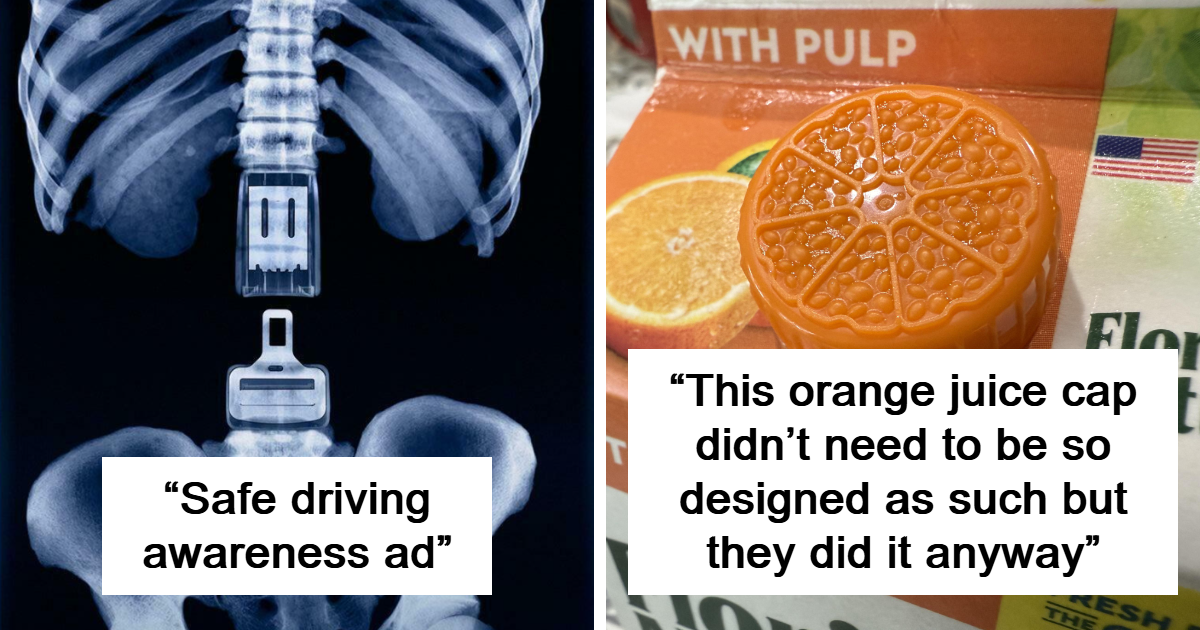
- Bottle caps shaped like the product inside. A tiny wink of visual storytelling that also improves usability.
- Measuring cups with angled markings. You can read them from above, which saves time and spares your back a dramatic bend.
- Cutting boards with non-slip bases and juice grooves. Less mess, more stability, and no runaway tomatoes.
- Trash cans with wide, hands-free lids. The humble hero of every moment when your hands are full and your timing is terrible.
- Shower controls placed out of the water stream. No one should have to begin the day by getting blasted in the face with surprise cold water.
- Pans with cool-touch handles and pour-friendly rims. Proof that cooking tools can be thoughtful instead of mildly threatening.
- Textured reusable bottles for better grip. Because smooth, slippery perfection is overrated when your hands are wet.
- Storage bins with label windows. Future you would like a word, and that word is “thank you.”
Retail, Work, and Everyday Product Wins
- Shopping carts with hooks for bags, cups, or phones. They acknowledge reality: people shop while juggling life.
- Nesting baskets that are actually easy to separate. It sounds basic until you have played tug-of-war with one.
- Desks that adjust from sitting to standing. Flexibility is not trendy; it is humane.
- Public bins with shaped openings for sorting waste. Recycling works better when the container teaches the user what goes where.
What All 50 Brilliant Designs Have in Common
These examples look wildly different, but they are built on the same design logic. First, they reduce friction. That means fewer confusing steps, less unnecessary effort, and less chance of user error. Second, they communicate clearly. Users should not need a tutorial, a forum thread, and a spiritual awakening to understand a bench, sign, faucet, or entry route. Third, they respect different bodies and situations. Good design plans for variety instead of pretending the “average user” exists as a real person wandering around with perfect eyesight, full mobility, limitless patience, and empty hands.
They also create emotional benefits, which is where many genius designs truly shine. A readable sign reduces stress. A shaded bench offers dignity. A well-placed ramp says, “You belong here.” A public seat on a busy sidewalk turns anonymous movement into a chance for connection. Suddenly a street is not just somewhere to pass through. It becomes a place where people can wait, talk, observe, rest, and participate.
That is the bigger lesson behind all these smart design ideas: the best solutions are rarely about showing off. They are about making daily life smoother, safer, fairer, and more comfortable. They do not scream, “Look how innovative I am.” They whisper, “I thought about you.” And honestly, that is much classier.
Experience Section: What It Feels Like to Encounter Genius Design in Real Life
There is a special kind of joy that comes from bumping into brilliant design when you are not expecting it. It does not feel like admiration at first. It feels like relief. You are carrying groceries, your phone is slipping, the weather is rude, and then you notice a bench built into the sidewalk edge exactly where you need to stop for a minute. You do not think, “Ah yes, a successful integration of form and function within the public realm.” You think, “Whoever made this, I hope their coffee order is always correct.”
That reaction is part of what makes people so passionate about clever design. We spend a shocking amount of life navigating tiny inconveniences: doors that are awkward to open, labels that are impossible to read, signs that point nowhere helpful, packaging that behaves like it was engineered by a petty villain. Because those frustrations are so common, a smart solution lands with surprising emotional force. It feels like being seen.
Think about the parent pushing a stroller who does not have to hunt for a curb cut. Think about the older adult who can sit down because a plaza designer remembered that beautiful public spaces still need actual places to rest. Think about the commuter who spots a transit sign that is clear at a glance, or the traveler dragging a suitcase over a smooth route instead of a cracked, chaotic sidewalk. These are not luxury moments. They are quality-of-life moments. And they add up fast.
Great design also changes how a place feels socially. A street with nowhere to sit tells you to keep moving. A street with welcoming seating, shade, clear paths, and readable signage tells you that lingering is allowed. That distinction matters more than many cities realize. People talk more, notice more, and feel safer in places that acknowledge basic human needs. A public bench is never just a public bench. It can be a waiting room, a meeting point, a lunch spot, a place to tie a shoe, calm a child, or simply watch the world go by for five blessed minutes.
Even indoors, good design creates that same quiet ease. Kitchen tools that do not strain your wrist. Packaging that opens cleanly. A handle that works even when your hands are full. These are tiny acts of mercy disguised as product features. They do not need a dramatic ad campaign to prove their worth. They prove it every day, one friction-free interaction at a time.
And maybe that is why these designs go viral. People are hungry for evidence that the world can still be improved through thoughtfulness. Not every innovation needs to be flashy, app-powered, or announced with suspicious enthusiasm by someone wearing a headset microphone. Sometimes the most genius design is a corner, a handle, a label, a bench, or a path that simply works better than the one before it.
When designers pay close attention to how people actually live, the results feel almost magical. Not because they are complicated, but because they are kind. That is the real standard genius designs meet. They do not just solve problems. They make ordinary life less tiring. They save time, reduce stress, welcome more people, and occasionally make strangers on the internet say, “Whoever designed this absolutely deserved a raise.” Honestly, fair.
Final Thoughts
The genius of a sidewalk that turns into a public bench is not only that it looks cool. It is that it understands what good design should do: maximize usefulness, save space, support comfort, and invite connection. The same principle powers dozens of other brilliant design ideas, from curb ramps and clearer signage to better packaging and more thoughtful seating. The best design solutions do not ask people to work harder. They work harder for people.
So the next time you notice a smart little detail in a street, store, station, office, or kitchen, pause for a second and appreciate it. Somewhere, a designer looked at a common frustration and decided not to accept it as normal. That choice is how great design begins. And when it is done well, it deserves more than likes. It deserves credit.