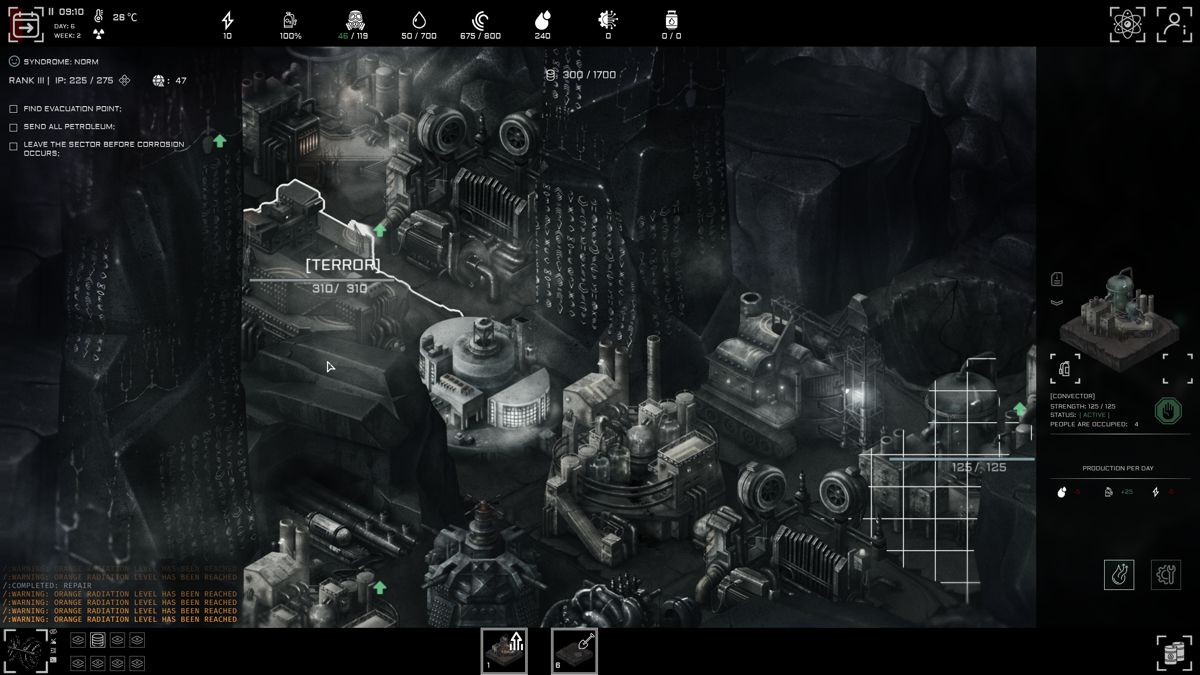






Prepare yourself for a journey full of surprises and meaning, as novel and unique discoveries await you ahead.

Best Strategy Games: A Guide to RTS, Tactics & City Builders

Whether you are looking to outmaneuver opponents in high-stakes combat or spend an afternoon meticulously planning the perfect metropolis, strategy games offer a uniquely rewarding intellectual challenge. At their core, these titles are about more than just fast reflexes; they are about decision-making, long-term planning, and adapting to ever-changing variables. The world of strategy games is vast, ranging from the high-octane pressure of RTS games that demand split-second multitasking to the cerebral, slow-burn satisfaction of grand strategy epics. If you are trying to find your next digital obsession, understanding the nuances between sub-genres is key to matching a game to your personal rhythm.

In this guide, we will break down the essential pillars of the genre, including how to approach complex tactics games and the rewarding logistics of a modern city builder. Whether you are a newcomer looking for your first entry point or a seasoned veteran refining your tactical approach, you will find the insights needed to conquer the virtual battlefield.

1. Comprehensive Guide to Strategy Games and Their Core Subgenres

The landscape of strategy games is vast, offering everything from high-octane military skirmishes to peaceful, meditative city planning. At its core, this genre is about testing your decision-making, resource management, and foresight. Whether you are orchestrating a massive army or balancing a municipal budget, the satisfaction comes from seeing your long-term plans bear fruit through calculated execution.

1.1 Categorizing the Strategy Landscape for Every Gamer

1.1.1 Real-Time Strategy Essentials: Managing Speed and Multitasking

RTS games represent the adrenaline-fueled side of the genre. Here, the clock never stops, and success depends on your ability to multitask effectively. You must simultaneously manage your economy, tech research, and military positioning in real-time. Players who enjoy fast-paced environments and thrive under pressure often find the most reward in mastering the micro-management of individual units while maintaining a macro-level view of the battlefield.

1.1.2 Turn-Based Tactics: The Art of Precision and Calculated Positioning

Unlike real-time titles, tactics games offer a thoughtful, deliberate pace. These titles focus on small-scale engagements where every movement and action point matters. Success in this sub-genre is less about how fast you can click and more about how well you can analyze the terrain, cover, and enemy positioning. If you enjoy the satisfaction of a perfectly executed plan, these games provide the depth and control you need to outmaneuver your opponent through sheer logic.

1.1.3 City Builders and Logistics Management: Scaling Infrastructure Sustainably

For those who prefer construction over combat, the city builder category offers a complex challenge in logistics and efficiency. These games task you with growing a population from a humble settlement to a sprawling metropolis. The core strategy revolves around balancing infrastructure, utility demands, and citizen happiness. If you want a break from the intensity of combat, consider exploring our best puzzle games to sharpen your critical thinking skills while you wait for your latest city project to complete.

1.1.4 4X and Grand Strategy: Mastering Diplomacy, Tech Trees, and Global Domination

4X games—standing for explore, expand, exploit, and exterminate—are the pinnacle of long-term planning. These titles require you to manage entire empires over hundreds of years. Grand strategy takes this even further, often focusing on historical accuracy and complex political alliances. You will spend as much time navigating diplomatic treaties and researching vast tech trees as you do engaging in tactical warfare.

1.2 Selecting the Perfect Title Based on Personal Playstyle

1.2.1 Real-Time Intensity Versus Turn-Based Deliberation

Your preference for game pacing is the most significant factor in choosing the right title. If you enjoy the flow of adrenaline and reactive decision-making, gravitate toward real-time strategy. Conversely, if you prefer to weigh every possible outcome before making a move, turn-based systems provide a safer space to experiment with complex strategies without the looming threat of a sudden enemy rush.

1.2.2 Balancing Combat-Focused Conquest With Peaceful Development

Not every strategy game requires you to conquer the world. Some titles prioritize economic stability, trade, and diplomacy over military might. When selecting a game, look at the victory conditions; if you dislike constant military management, seek out games that allow for victory through cultural influence, scientific achievement, or diplomatic dominance.

1.2.3 Optimizing Your Platform Choice: PC Precision Versus Console Accessibility

While PCs remain the gold standard for strategy due to the precision of a mouse and keyboard, console versions have come a long way. Many modern games now feature intuitive UI adaptations for controllers. However, for games that require heavy hotkey usage or complex management screens, PC is still the preferred platform for a seamless experience.

1.3 Emerging Trends in Hybrid Strategy Games

1.3.1 How Modern Titles Blend Survival, Management, and Combat

The genre is currently seeing a surge in hybrid titles that borrow mechanics from survival and management games. Developers are increasingly creating experiences where managing a food supply or maintaining equipment is just as critical as your combat prowess. This creates a much more grounded, realistic experience where the consequences of your failures are felt immediately in your resource stores.

1.3.2 Managing Competing Resource Demands in Multi-Layered Gameplay

Modern game design often forces players to juggle multiple, competing resource pools simultaneously. You might need to balance energy production against research funding or military recruitment against citizen welfare. This multi-layered approach keeps the gameplay engaging, as you can no longer rely on a single dominant strategy to win every scenario; you must adapt to the shifting needs of your empire.

2. Mastering Advanced Tactics for Strategy Game Success

Moving from a casual player to a high-level strategist requires a shift in how you process information. Whether you are deep into intense RTS games or navigating complex political landscapes in 4X titles, victory often hinges on your ability to synthesize disparate systems into a cohesive plan of action.

2.1 Foundational Skills for Every Strategic Competitor

Success in any sub-genre begins with mastering your input efficiency and analytical depth. You must learn to view the game not as a collection of individual units, but as an interconnected ecosystem where every click has a downstream effect.

2.1.1 Essential Resource Management and Supply Chain Optimization

Resource management is the heartbeat of any city builder or competitive strategy title. The most common mistake beginners make is hoarding resources rather than reinvesting them. To optimize, focus on throughput. Calculate your income versus your expenditure; if your bank is overflowing, you are likely missing an opportunity to expand your military, upgrade your infrastructure, or research new technologies. Efficient supply chains reduce downtime, ensuring that your production facilities never sit idle.

2.1.2 Mastering the Tech Tree: Balancing R&D Against Military Expansion

The tech tree represents your long-term potential, while your military represents your immediate survival. Striking the right balance is a delicate art. If you over-invest in research, you may find yourself technologically superior but physically defenseless against an early rush. Conversely, focusing solely on military might can lead to an inevitable collapse when your opponent unveils advanced units that hard-counter your archaic army. Always scout your enemy to determine if you have the breathing room to tech up or if you need to pivot to unit production.

2.1.3 Proactive Versus Reactive Decision-Making in Complex Environments

Advanced players act; they do not simply react. Reactive play often leads to a perpetual state of catch-up, where you are constantly responding to your opponent’s maneuvers. Proactive decision-making involves forcing your opponent to respond to you. By controlling the map or dictating the pace of the game, you limit your opponent’s options and create openings to exploit their forced mistakes. Developing a sharp sense of game rhythm is essential to making this transition effectively.

2.2 Advanced Defensive and Offensive Maneuvers

Strategy is as much about positioning as it is about power. Even with a weaker force, you can overcome superior numbers through superior tactical geometry.

2.2.1 Protecting Critical Assets Through Layered Defense

Defense should never be a single wall of units. Instead, employ a “layered defense” strategy. Utilize static defenses to protect high-value production buildings, backed by a mobile reserve force capable of responding to incursions. If an enemy breaks through your perimeter, your mobile units should be positioned to intercept them before they reach your economic core. For those interested in improving their general decision-making across genres, check out these logic and brain training tips to help sharpen your strategic foresight.

2.2.2 Analyzing Game State to Shift from Defense to Aggressive Expansion

The transition from defense to offense is the most critical window in a match. Watch for “power spikes”—moments where your technology, production capacity, or unit positioning grants you a temporary advantage. If you successfully repel an enemy attack, you have gained a window of opportunity. Immediately leverage that momentum to push into neutral territory or launch a counter-offensive before the opponent can reinforce their position.

2.3 Frequently Asked Questions Regarding Strategy Games

2.3.1 Distinguishing Between RTS and 4X Strategy Mechanics

The primary difference lies in the pacing and the scope of control. RTS games emphasize micro-management, rapid clicking, and real-time reflexes, usually set on a single map. 4X titles (eXplore, eXpand, eXploit, eXterminate) focus on long-term grand strategy, diplomacy, and resource management across a vast, often turn-based, environment.

2.3.2 Identifying Beginner-Friendly Entries for Genre Newcomers

If you are new to the genre, look for games with robust tutorials and slower pacing. Titles that emphasize single-player campaigns often act as the best training grounds, as they introduce complex mechanics incrementally rather than all at once.

2.3.3 Controller Viability for High-Complexity Tactical Titles

While mouse and keyboard remain the gold standard for PC strategy, many modern tactics games are specifically designed for console play. Developers have implemented radial menus and snap-to-grid features that make complex maneuvering viable on controllers, though high-speed competitive RTS play still favors the precision of a mouse.

2.3.4 Top Recommendations for Diplomacy-Centric Gameplay

For players who prefer words over war, Grand Strategy titles are the pinnacle of the genre. These games allow you to influence international relations, manage trade agreements, and manipulate global politics without ever having to lead a charge on the battlefield.

2.3.5 Best Combat-Free Management Games for Stress-Free Building

If you enjoy the logistical puzzle of a city builder without the threat of invasion, seek out “creative” or “peaceful” modes. These settings remove military combat entirely, allowing you to focus purely on city planning, population happiness, and aesthetic design.

Whether you are drawn to the high-stakes pressure of RTS games, the cerebral satisfaction of tactics games, or the meticulous joy of perfecting a sprawling city builder, the genre offers an unparalleled playground for your imagination. Strategy games challenge us to think three steps ahead, forcing a balance between long-term vision and immediate tactical execution. By mastering resource management, understanding the nuances of tech trees, and refining your decision-making under fire, you can elevate your playstyle from a casual enthusiast to a seasoned commander.

Ultimately, the beauty of the strategy landscape lies in its diversity. There is a title out there for every temperament, whether you crave intense competitive combat or the quiet, orderly expansion of a virtual civilization. If you are looking to expand your gaming horizons further, consider exploring our best puzzle games guide to test your logic and problem-solving skills in new ways. Dive into these worlds, learn from your defeats, and most importantly, enjoy the process of building your own legacy one strategic choice at a time.

Leave a Reply

Your email address will not be published. Required fields are marked *