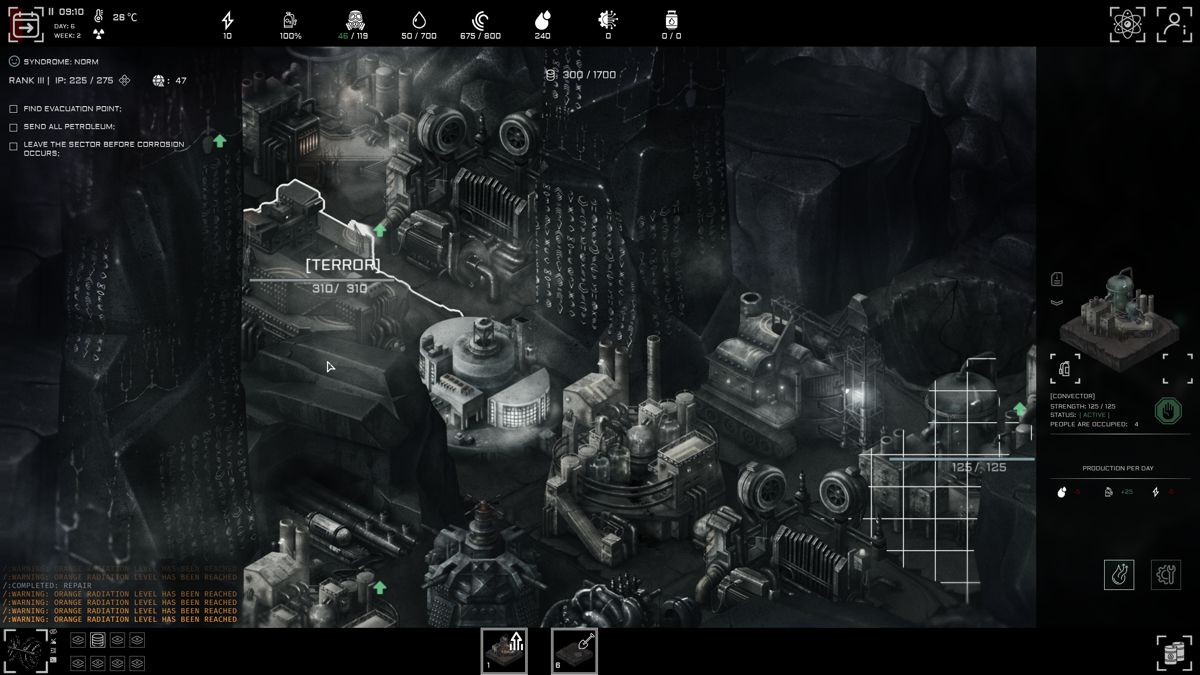






Prepare yourself for a journey full of surprises and meaning, as novel and unique discoveries await you ahead.

Brain Games: Benefits, Logic Puzzles, and Strategy Tips

There is a unique satisfaction that comes from staring at a seemingly impossible riddle and finally watching all the pieces click into place. Whether you are filling out your morning commute Sudoku sheet or tackling intricate brain games on your phone, mental challenges have become a staple of modern daily life. Far beyond mere entertainment, these exercises tap into our fundamental desire to learn, adapt, and overcome obstacles.

In recent years, the culture surrounding puzzle games has evolved from simple pastime distraction into a recognized method for keeping our minds sharp. Engaging in targeted activities—ranging from classic deductive reasoning to complex logic games that test your pattern recognition—offers a phenomenal way to give your gray matter a thorough workout. As you navigate everything from minimalist number grids to dynamic physics based traps that require precise spatial awareness, you actively build resilience against mental fatigue.

This guide dives deep into the science behind cognitive stimulation, explores popular puzzle categories, and shares advanced strategies to elevate your problem-solving skills. Whether you are looking to boost your daily focus or build a sustainable mental fitness routine, understanding how to approach these challenges will help you get the most out of every puzzle you solve.

1. Understanding the Science and Cognitive Benefits of Brain Games

1.1 The Neurobiology of Mental Stimulation

1.1.1 How Targeted Challenges Activate the Prefrontal Cortex

When you sit down to solve a complex puzzle, your brain undergoes a remarkable shift in metabolic activity. Targeted mental challenges demand immediate participation from the prefrontal cortex, the command center responsible for executive functions like decision-making, impulse control, and abstract reasoning. Unlike passive screen time, active problem-solving forces neurons to fire in synchronized patterns, driving blood flow and oxygen to the regions of the brain that manage high-level calculations and strategic foresight.

1.1.2 Explaining Neuroplasticity and the Strengthening of Neural Pathways

The human brain is remarkably adaptable, a property known as neuroplasticity. Engaging regularly with structured cognitive activities encourages the brain to forge new synaptic connections while pruning away underutilized pathways. Much like physical exercise builds muscle fiber, repeated mental exertion reinforces the cellular bridges between neurons. This physiological adaptation makes future information processing faster and more efficient, turning difficult cognitive tasks into second nature over time.

1.2 The Measurable Advantages of Consistent Cognitive Training

1.2.1 Enhancing Working Memory and Information Retention

Working memory acts as your brain’s temporary scratchpad, holding onto bits of data just long enough for you to manipulate them. Consistent cognitive training—whether through numbers, words, or visual patterns—stretches the capacity of this mental workspace. As you practice remembering sequences, rules, and clues, you naturally improve your ability to retain and recall real-world information during daily tasks.

1.2.2 Improving Problem-Solving Speed and Analytical Critical Thinking

Speed and accuracy often go hand in hand when navigating complex situations. By training your mind to spot patterns and evaluate constraints rapidly, you train your nervous system to reduce latency in decision-making. This translates to sharper analytical critical thinking, allowing you to parse chaotic information and arrive at rational solutions with far greater confidence.

1.2.3 Supporting Long-term Mental Agility and Cognitive Reserve

Building a robust cognitive reserve is one of the most effective ways to safeguard long-term mental agility. Engaging with challenging stimuli throughout life helps the brain develop alternative neural workarounds, ensuring that it remains resilient against the natural cognitive friction that comes with aging. For a deeper dive into how structural brain changes support lifelong learning, exploring the principles of neuroplasticity and cognitive health provides valuable scientific context.

1.3 Distinguishing Between Passive Entertainment and Active Brain Training

1.3.1 Why Cognitive Load Matters for Mental Growth

Not all screen time or leisure activities are created equal when it comes to mental fitness. True cognitive growth requires a deliberate cognitive load—the total amount of mental effort being used in the working memory. If an activity is entirely passive, your brain enters an autopilot state that requires minimal neural recruitment. Meaningful mental stimulation demands friction, struggle, and deliberate concentration.

1.3.2 Identifying Games That Require Deep Logical Reasoning

To reap the rewards of mental workouts, it helps to gravitate toward genres that demand active deduction. Traditional puzzle games, intricate strategy challenges, and physics based traps require players to simulate outcomes mentally before making a physical move. By evaluating rules, testing hypotheses, and correcting errors on the fly, these activities keep the mind fully engaged in deep, analytical processing rather than superficial distraction.

2. Mastering Logic Puzzles and Developing a Sustainable Routine

2.1 A Comprehensive Guide to Popular Logic Puzzles

2.1.1 Sudoku and Number-Based Placement Challenges

Sudoku remains a staple for anyone looking to sharpen spatial-numeric reasoning. By filling a 9×9 grid so that every column, row, and 3×3 subgrid contains digits one through nine, players rely heavily on constraint satisfaction rather than raw math. This format trains the brain to spot recurring patterns quickly.

2.1.2 Grid-Based Deduction and Matrix Logic Puzzles

Matrix logic challenges give players a scenario—such as matching five neighbors with their respective pets and favorite colors—and a list of clues. Using a grid to cross-reference data points teaches deductive reasoning. If Person A does not own a cat, and the cat owner lives next door to the dog owner, the elimination chain begins to take shape.

2.1.3 Word-Based Lateral Thinking and Reasoning Tasks

Word-based puzzles, including cryptograms and semantic deduction riddles, force the brain to step outside rigid linear patterns. They test vocabulary alongside lateral reasoning, making them exceptional tools for expanding cognitive flexibility and verbal fluency.

2.2 Advanced Strategy Tips for Efficient Problem-Solving

2.2.1 Mastering the Process of Elimination and Negative Constraint Mapping

When solving complex logic games, ruling out incorrect answers is often more powerful than guessing the right one. Negative constraint mapping involves explicitly noting what cannot be true, systematically shrinking the possibilities until only the correct path remains.

2.2.2 Techniques for Working Backward From Desired Outcomes

Reverse-engineering a problem allows solvers to view a complex puzzle from a fresh perspective. By starting at the ultimate goal and tracing step-by-step back to the current state, you can bypass misleading dead ends that trap forward-thinking solvers.

2.2.3 Breaking Down Complex Problems Into Manageable Components

Overwhelming puzzles often paralyze cognitive processing. Segmenting a massive grid or a multi-tiered riddle into smaller, isolated sub-problems reduces cognitive load and keeps frustration at bay.

2.3 Building a Practical and Engaging Daily Habit

2.3.1 Why Quality Sessions Outperform Marathon Practice

Consistency trumps intensity when engaging with brain games. Spending fifteen focused minutes daily yields better neural adaptations than attempting a three-hour marathon once a week, keeping mental fatigue low and retention high.

2.3.2 Strategies for Diversifying Your Puzzle Portfolio

To ensure balanced cognitive growth, rotate between different categories of puzzle games. Mixing spatial challenges with verbal logic and numerical grids prevents mental stagnation and exercises various regions of the brain.

2.3.3 Balancing Difficulty Levels to Avoid Cognitive Burnout

While challenging yourself is necessary for growth, tackling overly difficult puzzles constantly leads to burnout. Maintain a healthy mix of easy warm-ups and advanced trials to keep motivation steady.

2.4 Addressing Common Questions About Daily Brain Training

2.4.1 Debunking Myths About Intelligence and Daily Puzzles

A common misconception is that daily logic exercises can fundamentally raise an individual’s IQ score. Instead, these practices build domain-specific proficiency, improve processing speed, and enhance your ability to apply strategies to novel situations.

2.4.2 Comparing Digital Applications With Traditional Paper-Based Resources

Both mobile apps and traditional print media offer unique benefits. While digital platforms provide instant feedback and endless content libraries, pen-and-paper formats encourage slower, more deliberate contemplation.

2.4.3 Establishing Realistic Expectations for Cognitive Decline Prevention

Engaging in structured mental stimulation is an excellent component of a healthy lifestyle that supports long-term brain health and neuroplasticity. However, it should be paired with physical exercise, a balanced diet, and social engagement for optimal wellness.

Engaging with brain games is far more than a simple pastime to pass a rainy afternoon; it is an active investment in your cognitive longevity and mental sharpness. Throughout this guide, we have explored how targeted mental stimulation engages the prefrontal cortex, harnesses the power of neuroplasticity, and transforms how we process complex information. Whether you prefer the methodical pace of number-placement challenges, the intricate web of matrix-based deduction, or navigating tricky physics based traps that test your spatial awareness, every session serves as a meaningful workout for your mind.

Ultimately, the key to successful cognitive training lies in consistency rather than intensity. By carving out a few mindful minutes each day to tackle diverse puzzle games, you cultivate sustainable habits that fend off mental fatigue and support lifelong agility. If you are looking to expand your digital entertainment library beyond classic puzzles, consider checking out these best browser games for your next downtime session. Pick a challenge that excites you today, embrace the process of lifelong learning, and watch how small, daily mental exercises add up to significant cognitive growth.

Leave a Reply

Your email address will not be published. Required fields are marked *