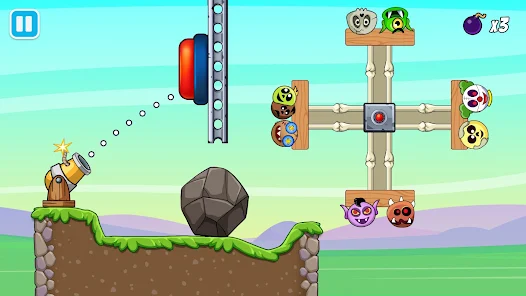
There is a distinct, breathless thrill that comes from watching a digital room collapse in on itself because you miscalculated a single variable. When it comes to modern physics based traps, survival requires much more than quick reflexes; it demands an intuitive grasp of how virtual forces interact in real time. Whether you are navigating treacherous obstacles in immersive puzzle games or testing your spatial reasoning against mechanical hazards, these digital death-traps turn fundamental laws of motion into your greatest adversary.
Mastering these intricate setups transforms frustrating failures into satisfying breakthroughs. To conquer these demanding logic games, players must learn to look past the surface level design and analyze the invisible vectors at play. Throughout this guide, you will learn how to dissect complex mechanical triggers, anticipate momentum shifts, and approach intricate brain games with the analytical mindset of an engineer. By understanding the underlying physics that dictate every falling block, swinging pendulum, and sliding wall, you can turn seemingly impossible hazards into predictable stepping stones toward victory.
1. Engineering Mechanics for Physics Based Traps

1.1 Foundational Forces in Game Design
Designing compelling physics based traps requires a deep understanding of how core forces govern virtual environments. When building interactive puzzle games, developers must simulate real-world physics to make obstacles feel intuitive yet challenging. Players naturally anticipate gravity, weight, and momentum, making these forces the primary tools for creating immersive gameplay.
1.1.1 Calculating Velocity and Momentum for Kinetic Obstacles
Kinetic hazards rely heavily on precise calculations of mass, velocity, and momentum to dictate impact severity. If a swinging pendulum or a rolling boulder moves too slowly, it loses its threat; if it moves too fast, the player feels cheated by unavoidable damage. Balancing these values ensures that players can read the environment, gauge speed, and time their movements accurately.
1.1.2 Balancing Friction and Elasticity in Interactive Objects
Surface interactions define how objects slide, bounce, or roll across a level. Adjusting friction and restitution coefficients prevents physics objects from sliding indefinitely or bouncing with unnatural energy. Getting these values right allows designers to craft intricate obstacles where sliding blocks or bouncing projectiles behave predictably.
1.2 Constructing Intricate Cause and Effect Chains
Engaging logic games thrive on multi-tiered sequences where a single player action triggers a cascade of environmental changes. Building these setups means mapping out clear cause-and-effect relationships that reward analytical thinking.
1.2.1 Mapping Multi-Step Mechanical Triggers
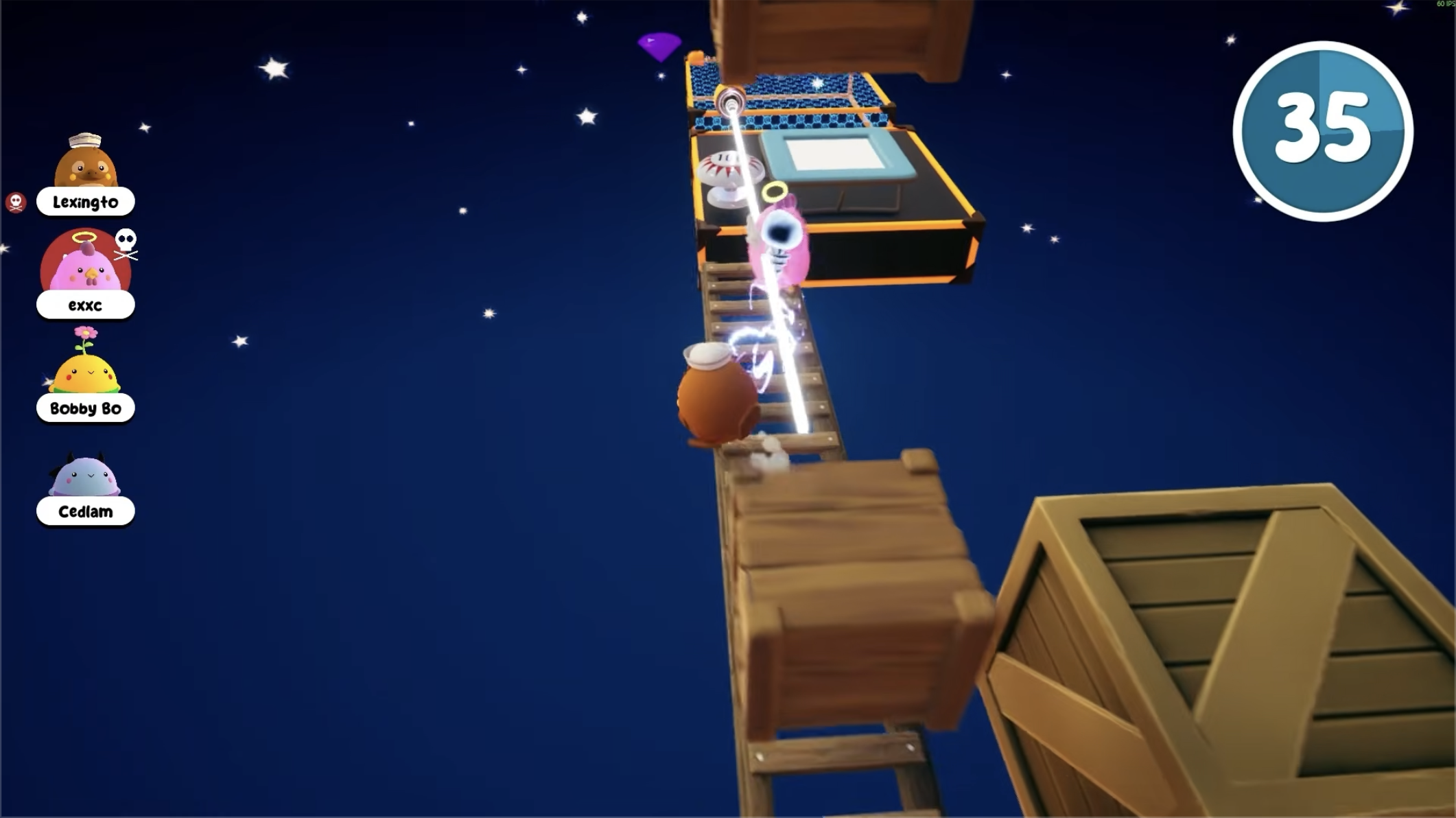
Sequential triggers keep players engaged by demanding forward-thinking strategies. For instance, a player might need to wedge a heavy crate beneath a crumbling pillar, which in turn snaps a tripwire to disarm a dart launcher. By layering these mechanical interactions, designers transform simple rooms into intricate brain games that test spatial awareness.
1.2.2 Integrating Fluid Dynamics and Unstable Environmental Hazards
Fluids and unstable elements add chaotic variables that elevate traditional trap design. Incorporating rising water levels, flowing lava, or shifting sand forces players to adapt their strategies dynamically under time pressure.
1.3 Establishing Internal Consistency for Predictable Logic
Consistency is the invisible glue that holds complex mechanical puzzles together. Without reliable rules, players lose trust in the game environment.
1.3.1 Setting Global Physics Rules for Your Fictional World
Every game world operates under its own physical laws, whether realistic or fantastical. Clearly communicating these global rules early on ensures that players can extrapolate solutions for later, harder stages without resorting to frustrating trial-and-error.
1.3.2 Preventing Logic Collapses When Mechanics Interact Unexpectedly
As interactive systems grow more complex, overlapping mechanics can trigger unintended glitches or unbreakable states. Rigorous playtesting helps identify edge cases where physics engines might miscalculate collisions, keeping the gameplay smooth and logically sound.
2. Advanced Design Strategies and Player Psychology
2.1 Balancing Cognitive Bias and Puzzle Difficulty
When designing puzzle games, understanding how the human brain processes spatial relationships is just as important as writing the underlying code. Players naturally bring everyday heuristics into virtual environments, assuming that gravity, weight, and inertia will mirror the real physical world. Master game designers leverage these baked-in cognitive shortcuts against the user, turning common assumptions into ingenious stumbling blocks.
2.1.1 Reverse-Engineering Player Expectations and Assumptions
To challenge seasoned players of logic games, you must first dissect what they think they know. If a heavy iron sphere sits atop a wooden plank, the player’s intuition screams that the plank will instantly snap. By manipulating material stiffness values and center-of-mass calculations, developers can create scenarios where the plank unexpectedly holds, forcing the player to abandon their initial bias and look closer at the vector forces at play.
2.1.2 Designing Fair Clues Versus Deceptive Red Herrings
Frustration occurs when a death or failure feels arbitrary rather than earned. Incorporating effective brain games mechanics requires a delicate balance between misleading the player and giving them the visual vocabulary needed to succeed. Subtle environmental cues—like hairline fractures in a suspension bridge or a slight hiss of escaping steam—provide honest foreshadowing, separating clever obstacles from frustrating trial-and-error traps.
2.2 Implementing Physics Based Traps Across Platforms
Translating kinetic hazards from a theoretical design document into a responsive interactive medium requires deep consideration of the host platform. Whether building for a desktop monitor or a mobile interface, the core mechanics must feel grounded and consistent.
2.2.1 Adapting Kinetic Scenarios for Tabletop Narratives
Even outside of digital environments, physical mechanics can inspire deep engagement. Tabletop roleplaying campaigns frequently borrow concepts from interactive media to challenge groups with spatial hazards, requiring game masters to translate vectors, falling objects, and swinging pendulums into strict turn-based logic.
2.2.2 Leveraging Game Engines for Real-Time Trajectory Calculations
Modern development tools make it simpler than ever to simulate complex environmental interactions. By tweaking drag coefficients, restitution values, and rigid-body constraints in engines like Unity or Unreal, developers can ensure that projectiles, rolling boulders, and collapsing platforms react organically to every user input, maintaining high fidelity across varied hardware setups.
2.3 Enhancing Replayability Through Subversion
A single-solution puzzle offers a great initial experience, but true longevity comes from dynamic systems that react differently on subsequent playthroughs.
2.3.1 Creating Time-Sensitive Hurdles for High-Stakes Gameplay
Adding ticking clocks or deteriorating environmental integrity fundamentally shifts how players approach kinetic hazards. When seconds matter, careful calculation gives way to frantic execution, testing a player’s ability to adapt their spatial awareness under pressure.
2.3.2 Managing Creative Player Solutions Without Breaking Logic
Creative users will always find unintended ways to bypass obstacles, sometimes using mechanics in ways the developer never anticipated. Rather than locking down every loophole, robust systems embrace emergent gameplay, rewarding outside-the-box thinking as long as the underlying interactions remain physically plausible within the rules of the world.
Mastering physics based traps goes far beyond simply dropping heavy objects or setting up standard triggers. It requires a deep appreciation for the delicate intersection of mathematics, game engines, and player psychology. Whether you are designing immersive logic games or fine-tuning interactive hurdles for puzzle games, the key to success lies in maintaining absolute internal consistency. When gravity, momentum, and friction behave predictably, players feel a genuine sense of accomplishment rather than frustration.
Ultimately, transforming unpredictable kinetic hazards into engaging brain games is an iterative process. By respecting player intelligence, avoiding unfair red herrings, and leveraging real-time trajectory calculations, creators can build memorable experiences that challenge both reflexes and reasoning. Keep experimenting with multi-step mechanical triggers, refine your cause-and-effect loops, and continue pushing the boundaries of interactive design.