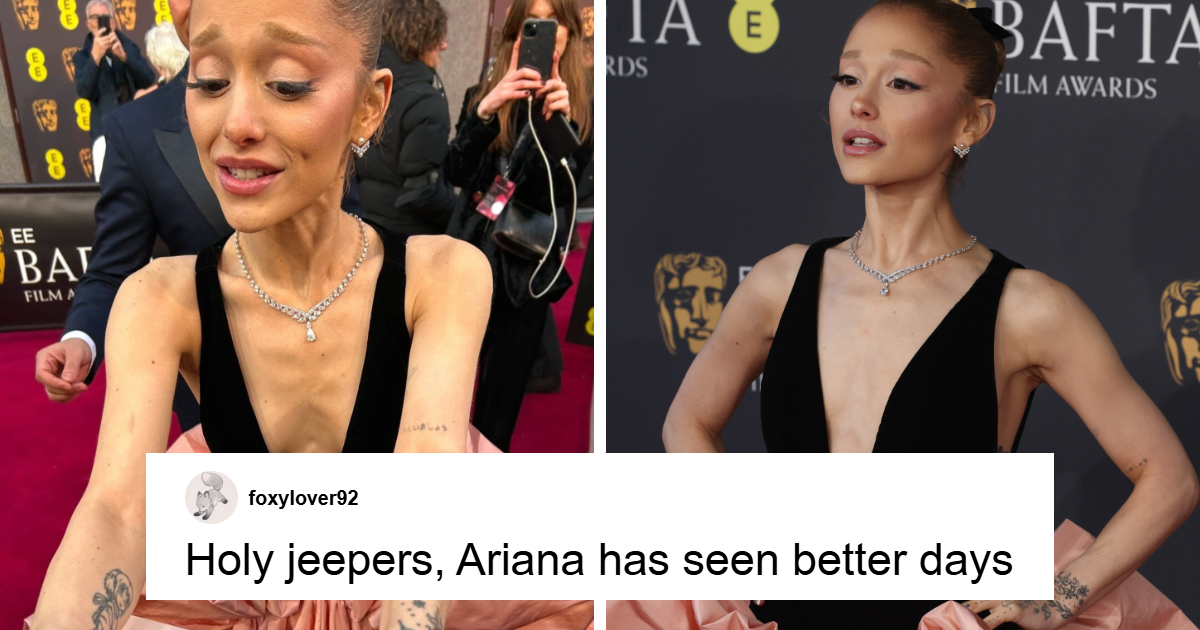
Every few months, the internet rediscovers a dangerous hobby: staring at a celebrity photo and turning it into a group project. This time, Ariana Grande became the latest target after a recent viral image sparked a wave of comments suggesting she looked “too thin” and, in the most internet way possible, that she “needs help.” The photo fueled the usual split-screen reaction: some people posted genuine concern, while others jumped straight into dramatic armchair diagnosis mode. The result was less a conversation about one image and more a reminder of how quickly public figures become screens for everyone else’s anxieties.
What makes the reaction bigger than the picture itself is Ariana Grande’s long-running relationship with public scrutiny. She has already asked people not to comment on bodies, calling that kind of obsession dangerous, and she has described feeling like a “specimen in a Petri dish” since her teen years. In other words, this is not a brand-new storyline for her; it is a recurring one, with each new appearance serving as fresh fuel for the same exhausted debate.
What Sparked The Latest Round Of Concern
The photo at the center of the conversation came from a high-profile public appearance, and the reactions spread fast. In the Bored Panda report that amplified the discussion, commenters described Grande as looking “scarily skinny” and “terribly thin,” while others insisted they were worried about her health. That mix of concern and speculation is exactly what turns a single image into an internet avalanche.
But a photo, even a widely shared one, is a terrible diagnostic tool. Lighting changes, posture changes, camera angles change, and bodies change too. The problem is that online audiences often treat a still image like courtroom evidence. If someone looks different from a prior red carpet photo, the internet immediately starts writing a medical thriller with no script approval from the person involved.
Why “Needs Help” Is Not The Same As “I’m Worried”
There is a big difference between expressing care and turning a person’s body into a public mystery novel. Dr. Patrick Wanis, the behavioral and relationship expert quoted in the Bored Panda feature, said the reaction is often driven by parasocial attachment, where fans feel unusually close to a celebrity they do not actually know. He also noted that people expect women in particular to stay frozen in an impossible version of youth: thin, but not too thin; natural, but not too natural; polished, but never changing.
That is the heart of the issue. Many of the comments are framed as concern, but they are often built on entitlement. The hidden message is not just “I hope she is okay,” but “I am entitled to interpret her body for her.” Those are not the same thing, and the internet keeps acting like they are.
What The Expert Reaction Really Means
The strongest expert takeaway is not that someone should analyze Ariana Grande’s weight from a screenshot. It is that public body surveillance can be harmful on multiple levels. Dr. Wanis warned that constant commentary can worsen body dysmorphia, anxiety, and depression, and that false speculation can also stigmatize people who actually live with eating disorders. That point matters because the internet loves to confuse “very thin” with “in crisis,” even though body size alone cannot tell anyone what is happening medically or emotionally.
That concern is backed up by broader health reporting. Cleveland Clinic explains that eating disorders are mental health conditions that affect a person’s relationship with food, not a look that can be identified from a single photo. Mayo Clinic similarly notes that eating disorders can affect people of all body sizes, and that body image distortions are part of the condition. In other words, the public keeps trying to read health from appearance alone, while medical experts keep reminding us that appearance is only a tiny piece of the story.
Social media makes this worse. Harvard researchers have pointed out that social platforms can negatively affect mental health and well-being, especially for younger users, and the National Eating Disorders Association has noted links between image-heavy platform use and body image concerns. Cleveland Clinic has also warned that today’s photo-editing culture intensifies appearance obsession and can amplify body dysmorphic tendencies. So when a celebrity photo starts trending with concern-farming captions, the platform is not just “discussing” a body; it is feeding a system that already rewards fixation.
Ariana Grande Has Already Addressed Body Comments
Grande has been unusually direct about this topic. In a 2025 Instagram message, she urged people not to comment on others’ bodies and reminded followers that such remarks can be dangerous. In earlier interviews, she also explained that even the version of herself many fans once considered “healthier” was not, in fact, healthy at all. That context matters because it shows the public has been making assumptions about her body for years, often while missing the actual message she is trying to send.
Variety also reported that Grande fought back tears during a Wicked-era interview when asked about beauty standards and criticism of her looks, underscoring how emotionally charged the subject has become for her. This is not a celebrity who has stayed silent while the internet made sport of her appearance. It is a celebrity who has repeatedly asked for a little less obsession and a little more humanity.
Entertainment Weekly later summarized her message with the same basic takeaway: people should be gentler and less comfortable commenting on bodies, because the habit can do real harm. That is probably the most useful correction to the whole viral cycle. Concern can be kind; commentary can be cruel; and the line between the two gets crossed online with depressing speed.
Why The Internet Keeps Doing This
There is a strange reward structure around celebrity appearance discourse. A person posts a “concerned” reaction, gets engagement, and suddenly the algorithm decides that body speculation is a hot topic worthy of broad distribution. Reuters has reported on how image-focused social feeds can expose vulnerable users to more “eating-disorder-adjacent” material, which helps explain why these conversations feel both common and increasingly intense. The more the internet talks about a body as if it were public property, the more the platform learns to serve up more of the same.
The larger cultural problem is that people often think concern excuses intrusion. It does not. A caring response sounds like, “I hope she has support.” An intrusive response sounds like, “She needs help,” followed by a thousand strangers pretending they know what that help should be. Public figures are not obligated to perform proof of wellness for strangers, and fans are not entitled to a medical explanation because they saw a zoomed-in photo on their phone.
People has repeatedly documented how celebrities respond to body-shaming by refusing to let public commentary define them. Ariana Grande has been part of that broader conversation, along with other stars who have pushed back against the idea that their bodies are community feedback forms. The pattern is familiar: the public speculates, the celebrity clarifies, and the internet still wants another round.
The More Responsible Read Of The Viral Pic
The most responsible takeaway is simple. A viral photo can reflect many things: a bad angle, stage lighting, styling choices, fatigue, stress, or yes, a real health concern that nobody online is qualified to identify from pixels alone. The honest response is not to diagnose. It is to stop pretending that a single image offers enough information to make a moral, medical, or emotional judgment.
That does not mean all concern is fake. It means concern should be expressed with humility. The healthiest version of that response sounds less like a viral verdict and more like a boundary: we can care about someone without dissecting their body in public. We can hope a person is okay without claiming expertise. We can notice change without demanding a confession. That may not be the internet’s favorite genre, but it is the one closest to decency.
What Watching This Play Out Feels Like
Anyone who has spent enough time around pop culture knows this cycle by heart. A woman appears in public. Someone decides she looks different. The first reply is concern, the second is conspiracy, the third is mockery, and by the fourth reply the thread has become a referendum on everything from beauty standards to society to whether a sleeve cut was “doing too much.” That is the exhausting part: the image is rarely the story. The story is the crowd around the image.
Over the years, the internet has trained itself to believe that frequent observation equals insight. It does not. A timeline full of side-by-side comparisons creates the illusion of expertise, but the expertise is imaginary. People do not become doctors because they know what Ariana Grande looked like in 2019. They become spectators with strong opinions, which is a much louder thing. The most useful experience this kind of story offers is also the simplest: it teaches how fast empathy can be replaced by performance.
That lesson shows up outside celebrity culture, too. In everyday life, people comment on coworkers’ weight changes, relatives’ diets, and friends’ bodies with a level of confidence they would never use for a heart condition or a broken bone. Yet body talk still gets disguised as politeness or care. “You look so thin” is often said like a compliment, even when it lands like surveillance. “Are you okay?” can be heartfelt or invasive depending on tone, timing, and whether the asker is actually prepared for the answer. The Ariana conversation is really just a bigger, brighter version of a habit many people already have.
There is also a personal cost to the audience. The more time people spend zooming in on other people’s bodies, the more normal it becomes to zoom in on their own. Health experts have long warned that social media can distort self-image, and that image-heavy feeds can shape how users think about their own appearance. A celebrity body panic is never just about the celebrity; it spills into the crowd watching, where comparison quietly starts doing its work.
That is why the best reaction is often the least dramatic one. Notice the photo. Notice the reaction. Refuse to turn either into a diagnosis. Let people keep their private lives private. Let health professionals handle health. Let the internet, for once, be a little less certain that it knows everything from a thumbnail and a trending hashtag.
Final Take
Ariana Grande’s viral photo says less about her than it does about the culture watching her. The speed with which concern becomes commentary, and commentary becomes judgment, tells us almost everything we need to know about online attention in 2026. The expert reaction is not “she needs help” based on a picture. The expert reaction is that the public should be more careful, more skeptical of its own certainty, and far less eager to treat someone’s body like shared entertainment.
If the goal is compassion, then the internet can do better than speculation. It can say less, mean more, and stop pretending that concern gives anyone a license to inspect another person’s body like a receipt.
Note: This article discusses public reporting and general expert commentary. It does not diagnose Ariana Grande or claim knowledge of her private health.