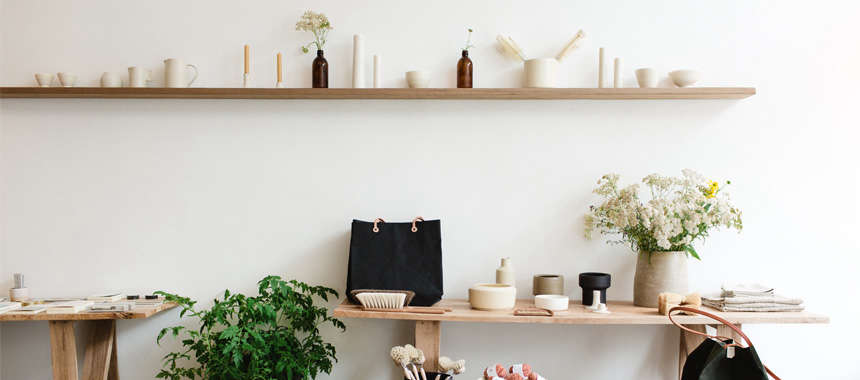
Some stores try to dazzle shoppers with flashing displays, trend forecasts, and enough scented candles to fog a weather satellite. Hold General Store took the opposite approach. The Victoria, British Columbia shop made its case quietly, surrounding visitors with vegetable brushes, linen cloths, enamelware, pottery, fresh greens, and other useful objects presented with the respect normally reserved for gallery pieces.
Founded by Marla Ebell in 2016, Hold General Store was inspired partly by the time she spent working on her grandparents’ organic farm on Vancouver Island. After long days harvesting produce, she carefully wrapped vegetables in paper and string for local markets. That ritual helped her imagine a modern general store where a bunch of kale and a handmade ceramic pitcher could share the same thoughtful stage.
The result was more than a photogenic retail space. Hold offered a persuasive argument for paying closer attention to the tools, textiles, containers, and cleaning brushes that quietly run a household. Its guiding idea was simple: everyday objects deserve to be useful, responsibly made, pleasant to handle, and beautiful enough that nobody feels compelled to hide them under the sink.
A General Store Born in the Vegetable Patch
Hold General Store’s origin story begins not in a design studio but among rows of vegetables. Ebell’s grandparents operated a 23-acre certified organic farm near Nanoose Bay, roughly two hours north of the Victoria shop. She regularly returned to the farm to gather vegetables, herbs, flowers, and potted plants for the store. Seasonal greens were not decorative props ordered for a photo shoot; they were part of the merchandise and part of the family’s working life.
That agricultural connection shaped the shop’s entire philosophy. Ebell believed consumers had become comfortable asking who grew their tomatoes, yet rarely asked who made their dustpan, sewed their kitchen towel, or shaped their drinking cup. Hold extended the logic of farm-to-table shopping into the rest of the home: know the source, appreciate the labor, and choose objects that will earn their shelf space.
Produce Was Treated Like a Gift
Radishes, kale, chard, spinach, flowers, and herbs appeared in bowls, enamel pots, cloth bundles, and paper packages. Ebell wrapped produce with string or washi tape, echoing the careful preparation she had practiced at farm markets. The presentation was charming, but it was not merely decorative. It acknowledged that food represents soil, time, weather, physical labor, and the occasional battle with a very determined cabbage moth.
The approach connected Hold to the traditional role of the general store. Historically, such stores supplied practical necessities while acting as informal community gathering places. Modern independent retailers have revived the idea by combining groceries, household goods, regional craft, and personal service in one human-scale setting. Local Victoria retailers interviewed by YAM Magazine described general stores as places where neighbors meet and where local makers gain a visible platform.
Inside Hold General Store: Quiet, Useful, and Unfussy
The interior translated Ebell’s philosophy into physical form. Whitewashed surfaces, muted gray walls, solid-wood benches, simple tables, concrete blocks, vintage bottles, and abundant greenery created a restrained background. Merchandise was given room to breathe. A brush was not buried in a plastic bin beneath a fluorescent sign yelling "CLEANING EVENT." It hung on the wall where its shape, fibers, handle, and purpose could be understood at a glance.
A cedar drying rack suspended from the ceiling served as one of the shop’s most memorable features. Ebell built it using wood milled with her father, then used it to dry excess herbs from the family farm for teas and infused oils. It was display fixture, practical equipment, family project, and sculptural focal point all at oncethe sort of multitasking most furniture can only dream about.
A Palette That Let Materials Speak
The subdued interior emphasized texture rather than decoration. Linen looked softly rumpled. Wood grain remained visible. Ceramic surfaces carried subtle irregularities. Paper, metal, porcelain, enamel, cotton, and horsehair each contributed their own character. The store demonstrated that a neutral room need not feel sterile when it contains honest materials and objects designed for touch.
This preference for humble utility reflects a broader design tradition. Architectural Digest has connected renewed interest in craftsmanship with Shaker, Bauhaus, and Scandinavian principles, particularly the belief that lasting design comes from reducing an object to what is useful, relevant, and emotionally satisfying. Smithsonian coverage of user-centered and everyday design similarly emphasizes the cultural value of ordinary tools when they solve familiar problems thoughtfully.
The Products: Household Basics With Better Manners
Hold’s inventory was narrow by department-store standards but broad enough to support daily life. Shoppers encountered dish brushes, mushroom brushes, bottle brushes, hairbrushes, nail brushes, copper pot scrubbers, table brushes, dustpans, wash buckets, linen squares, scissors, enamelware, ceramic cups, planters, pitchers, pour-over coffee makers, clothing, sheepskins, twine, knives, and seasonal vegetables.
None of these items was revolutionary. That was the point. Hold did not promise that a horsehair brush would unlock a new identity or transform Tuesday night dishwashing into a wellness retreat. It simply suggested that a frequently used tool should work well, feel good in the hand, and age more gracefully than a neon plastic substitute purchased during a panic run to a big-box store.
Brushes for Nearly Every Domestic Mystery
Brushes were among the store’s signature offerings. German maker Redecker and Swedish brush company Iris Hantverk were represented through tools designed for specific jobs: cleaning dishes, scrubbing vegetables, dusting tables, washing bottles, grooming hair, and removing soil from fingernails. Their natural bristles and wooden handles made each object’s function immediately legible.
The appeal was both visual and practical. A well-made brush can remain in view without making a kitchen resemble a supply closet. More important, reusable cleaning tools can replace some disposable products. The U.S. Environmental Protection Agency recommends considering durability, repairability, reusability, and total product life when making household purchases. Good Housekeeping’s cleaning experts likewise note that reusable cloths, mop pads, and dusters are often preferable to disposable alternatives for many routine tasks.
Ceramics With Evidence of the Maker
Hold also stocked ceramic work from regional and independent artists, including minimalist planters and vases by Victoria ceramicist Gwen Howey, Vancouver-made pour-over pieces, and pitchers, creamers, and candleholders from Portland’s Notary Ceramics. The forms were simple but not anonymous. Slight variations and tactile surfaces revealed that a human beingnot a machine having a particularly productive afternoonhad shaped them.
That visible relationship between maker and object was central to Ebell’s retail approach. She said the general-store format allowed her to tell the complete story from craftsperson to finished product. Hold also collaborated with local artisans on special items, including an indigo-dyed quilt project created in the shop.
Linens, Enamelware, and Things That Improve With Use
Handwoven linen cloths could wrap greens, dry dishes, cover bread, line a basket, or clean a counter. Enamelware prep bowls offered similar flexibility. A sturdy bucket could handle washing, storage, gardening, or an emergency encounter with a leaking pipe. The products were attractive largely because their usefulness was obvious.
Multipurpose objects can also reduce clutter. When one linen square performs several tasks, there is less need for cabinets full of specialized gadgets with short careers. The EPA’s waste-reduction guidance encourages consumers to buy only what they need, choose reusable products, maintain possessions, and repair items rather than replacing them prematurely.
A Store Designed for Slower Shopping
Hold General Store encouraged browsing rather than speed. Sparse displays invited shoppers to look closely, read about makers, notice construction, and imagine how an object would participate in daily routines. There was no need to sprint through twelve aisles while gripping a cart with one bad wheel.
When Hold developed its online store, the challenge was preserving that immersive feeling on a screen. Victoria-based web-design company Pixel Union created a more editorial shopping experience, using large photographs, detailed product pages, a lookbook, and maker stories. The goal was to give online visitors enough context to understand how the products were used and why they had been selected.
This form of retail curation is especially valuable when consumers are overwhelmed by nearly infinite choices. A tightly edited shop does some of the comparison work in advance. The merchant becomes not merely a seller but a guide who can explain materials, origins, construction, and intended use.
The Connection to Slow Decorating
Hold’s approach anticipated what contemporary design writers often call slow decorating: allowing a home to develop gradually through pieces that carry meaning and lasting value. House Beautiful describes the practice as an alternative to rushing out and purchasing an entire coordinated room at once. The aim is not to achieve an instantly finished appearance but to build a personal environment over time.
Dwell has similarly highlighted independent shops that combine thoughtful, functional design with work from small makers. These businesses often offer fewer items than national chains, but their selections reveal a distinct point of view. Hold belonged to that family of shops: part general store, part design gallery, part farm stand, and part gentle reminder that nobody actually needs seventeen nearly identical mugs.
Why the Everyday Deserves Reverence
The word reverence may sound grand for a dish brush, but Hold’s message was not that household tools should be worshiped. It was that they should be noticed. A home is experienced through repeated actions: pouring coffee, washing produce, sweeping crumbs, folding cloth, clipping herbs, filling a vase, and setting a table. Objects involved in these rituals affect how those routines feel.
A beautiful tool will not eliminate chores. The copper scrubber still expects participation. Yet an object that fits the hand, performs reliably, and develops character through use can make a task feel less disposable. It also encourages care. People are more likely to clean, mend, store, and retain possessions they value.
This mindset aligns with environmental guidance without turning the home into a lecture hall. Durable products can save money across their full life span, while reusable alternatives can reduce material consumption and waste. The EPA advises shoppers to consider whether an item is genuinely necessary, whether it can replace a disposable product, and whether it is built to last.
Supporting Makers, Farms, and Independent Retail
Hold General Store connected several small-scale economies under one roof. A shopper buying a planter might support a local ceramicist. A bunch of kale supported a family farm. A handmade textile preserved specialized knowledge. A collaborative quilt connected the retailer with a regional artist. The transaction carried a visible chain of relationships.
Independent stores also contribute to the identity of a neighborhood. The U.S. Small Business Administration describes local businesses as important sources of employment, community vitality, and distinctive Main Street character. Its profiles of artisan marketplaces show how shared retail spaces can help craftspeople move beyond occasional fairs and reach customers through permanent storefronts.
Of course, shopping locally does not automatically make every product sustainable, affordable, or essential. Thoughtful consumption still requires questions. Where was the item made? What materials were used? Can it be repaired? Will it perform a real function? Is the buyer choosing it because it is useful, or because a beautifully styled shelf temporarily hypnotized them? Hold’s greatest strength was that its merchandise generally survived those questions.
What Hold General Store Can Teach Today’s Shopper
Buy for the Routine You Actually Have
A hand-thrown fermentation crock may be exquisite, but it is not useful if your primary culinary achievement is opening a cereal box. Start with the tasks you repeat. Upgrade the brush used every day before buying a decorative object that will spend its life gathering dust and quietly judging you.
Look for Honest Materials
Wood, linen, metal, enamel, ceramic, glass, and natural fibers often reveal how an object was made and how it may age. Material alone does not guarantee quality, but it gives shoppers useful clues. Check joints, handles, edges, weight, finish, replacement parts, and washing instructions.
Choose Multipurpose Tools
Hold’s linen squares, buckets, bowls, knives, and brushes were appealing because their uses were not excessively narrow. Flexible tools reduce the need for single-purpose clutter and are easier to justify in small kitchens and apartments.
Accept Patina and Repair
An object need not remain flawless to remain valuable. Linen softens. Copper darkens. Wood records touch. Ceramic may acquire a carefully repaired chip. These changes can become evidence of use rather than reasons for replacement.
Let the Home Develop Slowly
A meaningful home is rarely assembled during one heroic shopping weekend. Add objects when a genuine need appears. Learn which routines deserve better tools. Wait for pieces that feel personal. Your shelves may look unfinished for a while, but they will be spared the indignity of matching décor purchased solely because it came in a set of twelve.
A 500-Word Shopper’s Experience Inspired by Hold General Store
Imagine entering a shop where the first thing you notice is not a sale sign but a bundle of freshly harvested greens. The leaves are still irregular and lively, arranged beside a ceramic pitcher and a stack of folded linen. Nothing screams for attention. The store seems confident that you will eventually notice everything on your own.
You begin near a wall of brushes. At first, they look almost comically specific. There is a brush for dishes, one for bottles, another for mushrooms, and one small enough to sweep crumbs from a table. Then the logic becomes clear. Each tool is shaped around a task. The mushroom brush is soft because mushrooms bruise. The bottle brush is narrow because bottles, despite decades of technological progress, remain annoyingly bottle-shaped.
You pick up a wooden-handled dish brush. It has enough weight to feel substantial without being clumsy. The bristles are replaceable or durable, and the handle can hang from a hook rather than collapse damply beside the sink. You picture using it after breakfast. That mental image matters. The object has already moved beyond decoration and entered your routine.
At the next table, ceramic tumblers sit in small stacks. Their surfaces are quiet and slightly irregular. One rim is not mathematically identical to the next, which makes the pieces feel related rather than cloned. Nearby, a pour-over cone, pitcher, and creamer show how a simple morning ritual can be supported by a few carefully chosen objects instead of an army of appliances blinking from the counter.
The linens invite the same kind of attention. A square of woven cloth could become a dish towel, bread wrap, produce bundle, table covering, or napkin. You unfold it, check the stitching, and imagine how it might soften after washing. Rather than asking whether it matches the kitchen, you ask whether it would become useful there.
Fresh herbs hang from the cedar drying rack overhead. They make the room smell faintly agricultural, interrupting the polished language of retail with evidence of soil and weather. The rack also tells a story: wood milled with a parent, herbs gathered from a family farm, excess produce preserved rather than discarded. It is difficult to separate the display from the relationships that produced it.
You resist buying five things simply because they have been arranged beautifully. Instead, you choose one tool that answers an existing need. Perhaps it is the table brush, the enamel bowl, or the linen cloth. The purchase feels slower than clicking an online recommendation, but it also feels more certain.
Back home, the item begins its real test. It must survive wet hands, hurried breakfasts, overfilled sinks, and the occasional household member who uses the wrong tool for an inexplicable purpose. Over time, the handle darkens slightly or the linen develops a softer texture. The object becomes familiar.
That is the lasting experience suggested by Hold General Store. The store was not ultimately about owning a perfectly styled collection of rustic accessories. It was about choosing a smaller number of useful things, learning their stories, and allowing ordinary routines to give them meaning. The reverence came afterward, built one cup of coffee, one swept table, and one bunch of washed kale at a time.
Conclusion: Beauty That Reports for Duty
Hold General Store offered a refreshing alternative to disposable retail culture. By placing vegetables, handmade ceramics, natural-fiber brushes, linen textiles, enamelware, and simple clothing in the same calm environment, Marla Ebell showed that utility and beauty do not need separate departments.
The shop’s most memorable lesson is easy to carry home: pay attention to what you use. Choose materials that feel honest, support makers when possible, favor reusable and durable goods, and let possessions acquire stories through work. A well-designed household is not necessarily one filled with expensive objects. It is one in which the ordinary objects have been chosen carefully enough to become companions.
And should anyone question your emotional attachment to a mushroom brush, simply explain that it represents a mature commitment to material culture. Then brush the mushrooms. Dinner is waiting.