
Human beings are remarkably hardwired to spot order in chaos, a fundamental survival mechanism that now drives modern learning, critical thinking, and problem-solving. At the core of this ability is cognitive pattern recognition, the mental process of identifying trends, regularities, and underlying rules in complex datasets or environments. Whether an individual is decoding a complex language system, analyzing financial trends, or refining abstract reasoning, the brain relies heavily on its capacity to categorize incoming stimuli and anticipate what comes next.
Rather than relying on tedious rote memorization, contemporary educators and cognitive scientists are looking toward interactive formats like Educational Games to accelerate how these mental frameworks are built. Through structured challenges and adaptive mechanics, learners actively engage their working memory and visual-spatial reasoning. In the following sections, we will explore the neuroscience behind pattern detection, examine how gamified logic puzzles speed up information processing, and look at practical ways to translate these virtual skills into real-world academic and professional achievements.
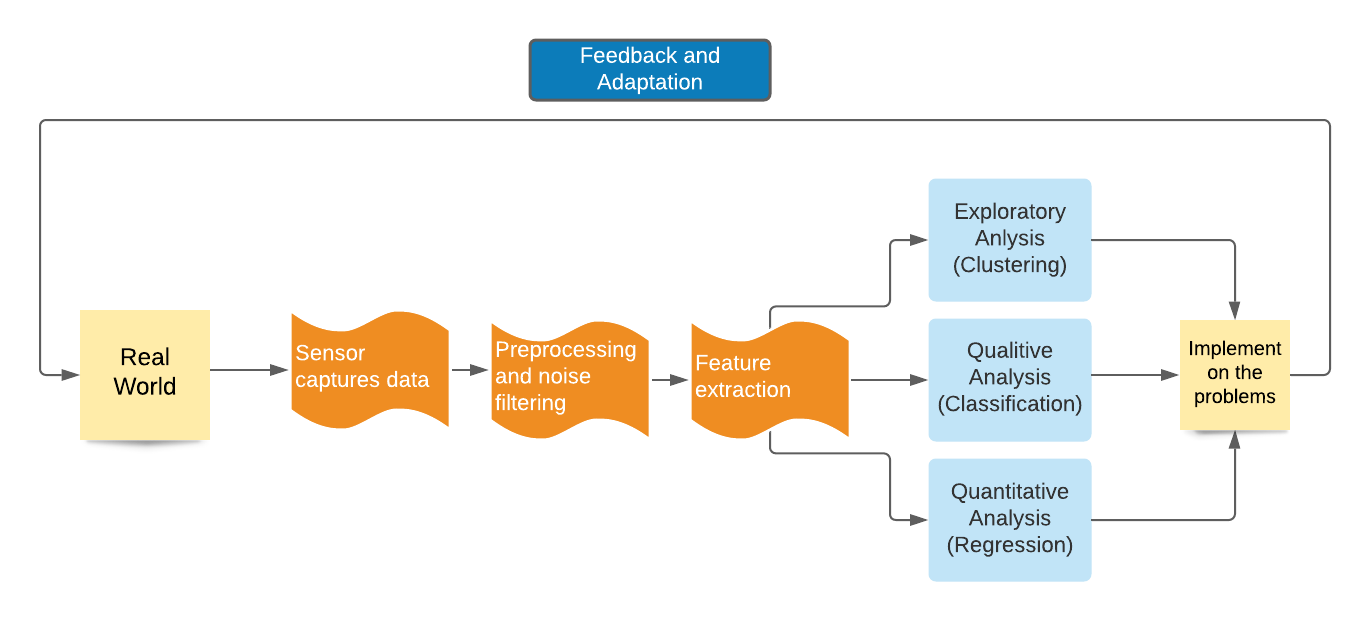
1. The Neuroscience and Psychological Framework of Cognitive Pattern Recognition
1.1 The Biological Basis of Pattern Detection
1.1.1 How the Brain Encodes Recurring Sequences via Neuroplasticity
At its core, cognitive pattern recognition relies on the brain’s remarkable ability to reorganize itself by forming new neural connections, a process known as neuroplasticity. When individuals interact with educational games, repetitive exposure to structural layouts, visual cues, and logical loops stimulates targeted neural pathways. Over time, these repeated electrical impulses strengthen the synapses connecting various neurons, transforming a deliberate, step-by-step calculation into an automatic, hardwired response. This biological hardening of pathways allows the human mind to anticipate upcoming sequence elements before they fully materialize.
1.1.2 The Role of the Hippocampus and Prefrontal Cortex in Information Categorization
Effectively decoding complex stimuli requires a sophisticated interplay between the hippocampus and the prefrontal cortex. The hippocampus acts as a temporary holding zone and spatial mapper, indexing incoming environmental cues and comparing them against historical memories. Meanwhile, the prefrontal cortex evaluates these comparisons, executing high-level executive functions like sorting, prioritizing, and labeling the data. This dual-action system allows learners to shift from merely observing isolated inputs to actively categorizing abstract information into functional, actionable insights.
1.2 Building Mental Models and Cognitive Templates
1.2.1 How Cognitive Templates Accelerate Information Retrieval
As learners repeatedly encounter similar logical hurdles, the brain constructs internal blueprints called cognitive templates. These mental frameworks store abstract solutions rather than raw data points, drastically reducing cognitive load. When faced with gamified logic puzzles, a veteran player does not need to reinvent the wheel for every obstacle. Instead, they quickly match the current scenario to an existing template, facilitating rapid information retrieval and instantaneous decision-making under tight time constraints.
1.2.2 The Intersection of Working Memory and Visual Discrimination
Working memory serves as the mental scratchpad where incoming visual details are temporarily manipulated. High-level visual discrimination empowers individuals to spot subtle discrepancies or recurring motifs hidden within complex graphics. When working memory and visual discrimination operate in tandem, learners can isolate relevant cues, discard distracting background noise, and rapidly synthesize a coherent understanding of their visual environment.
1.3 Cognitive Pattern Recognition in Modern Learning Environments
1.3.1 Moving Beyond Rote Memorization Toward Structural Understanding
Traditional education often relies heavily on rote memorization, encouraging students to store facts without grasping underlying frameworks. In contrast, modern digital learning tools foster structural understanding by forcing students to decode systemic rules and underlying mechanics. By mastering mathematics skill drills wrapped in interactive formats, students begin to see equations not as isolated problems to memorize, but as flexible patterns that govern broader mathematical relationships.
1.3.2 The Impact of Rapid Information Processing on Skill Acquisition
In today’s fast-paced digital landscape, the speed at which the human brain processes information dictates overall learning efficiency. Rapid information processing allows learners to ingest large volumes of visual and auditory feedback, filter out irrelevant inputs, and adapt their strategies on the fly. This dynamic feedback loop dramatically shortens the time required to acquire complex new competencies, transforming casual learners into adaptable, analytical thinkers.
2. Leveraging Gamification to Master Cognitive Pattern Recognition
2.1 Psychological Mechanics of Game-Based Learning
2.1.1 Feedback Loops and Their Impact on Trial-and-Error Efficiency
Game environments excel at accelerating human learning through immediate, unambiguous feedback loops. When players interact with educational games, every action triggers an instant visual or auditory response. This rapid confirmation allows the brain to evaluate the success or failure of a specific hypothesis almost instantly, drastically cutting down the time it takes to adjust mental models.
2.1.2 Dopamine Regulation and Sustained Cognitive Engagement
The mechanics of play inherently stimulate dopamine pathways, reinforcing exploratory behavior and curiosity. By breaking large cognitive challenges into manageable milestones, games trigger steady neurotransmitter release that sustains attention. This sustained engagement transforms rigorous mental work—such as solving complex gamified logic puzzles—into an intrinsically rewarding pursuit, reducing mental fatigue.
2.2 Developing Core Competencies Through Interactive Gameplay
2.2.1 Analytical Thinking and the Decomposition of Complex Problems
Interactive titles often require players to break down sprawling systems into smaller, manageable components to find solutions. This systemic breakdown trains the brain to isolate variables, test assumptions independently, and reconstruct a holistic strategy. Over time, this mechanical habit translates into robust analytical workflows used in both academic research and professional troubleshooting.
2.2.2 Visual-Spatial Reasoning and Predictive Modeling
Many virtual environments challenge users to anticipate spatial movements, track trajectory vectors, and visualize changes before they happen. By continuously projecting future states based on current visual cues, players sharpen their predictive modeling capabilities. This active visual processing directly supports spatial reasoning tasks found across numerous technical and scientific disciplines.
2.2.3 Foundational Computational Thinking for Digital Literacy
Modern interactive media naturally introduce computational concepts like conditional logic, sequencing, and algorithmic iteration. As players troubleshoot rules and optimize their gameplay routines, they build an intuitive grasp of how automated systems process instructions, laying down a strong groundwork for broader digital literacy.
2.3 Strategic Implementation for Academic and Professional Development
2.3.1 Selecting Appropriate Game Genres for Specific Cognitive Goals
Achieving tangible cognitive gains requires matching the right interactive medium to the desired learning objective. Strategy titles, simulations, and rapid-fire challenges target distinct mental faculties, much like targeted mathematics skill drills hone specific quantitative competencies. Educators and professionals must audit game mechanics to ensure alignment with their targeted developmental outcomes.
2.3.2 Measuring Skill Transfer from Virtual Environments to Real-World Tasks
The ultimate test of any digital learning tool is whether its benefits cross the barrier from screen to reality. Tracking metrics such as decision-making speed, error reduction, and spatial awareness in non-game settings helps validate whether virtual training effectively builds transferable cognitive muscle.
2.3.3 Balancing Entertainment Value with Measurable Educational Outcomes
An effective learning tool must carefully balance engagement with instructional rigor. If a game leans too heavily into entertainment, the core learning objectives become obscured; if it feels too much like traditional instruction, engagement plummets. Maintaining this equilibrium ensures learners remain motivated while steadily acquiring complex cognitive skills.
Mastering cognitive pattern recognition is far more than a fun way to beat a high score or solve a tricky puzzle. By tapping into the brain’s natural neuroplasticity through interactive media like educational games, learners of all ages can fundamentally reshape how they process, categorize, and retrieve information. Whether you are working through complex gamified logic puzzles or refining quantitative skills via targeted mathematics skill drills, active gameplay transforms abstract concepts into tangible mental models.
Ultimately, the true value of game-based learning lies in its ability to bridge the gap between virtual achievement and real-world competence. As cognitive templates become second nature, the mental friction required to tackle unfamiliar problems decreases significantly. To continue expanding your analytical toolset and discovering new ways to optimize your learning strategy, explore our guide on typing speed exercises to improve accuracy and cognitive skills and start integrating these powerful techniques into your daily routine today.