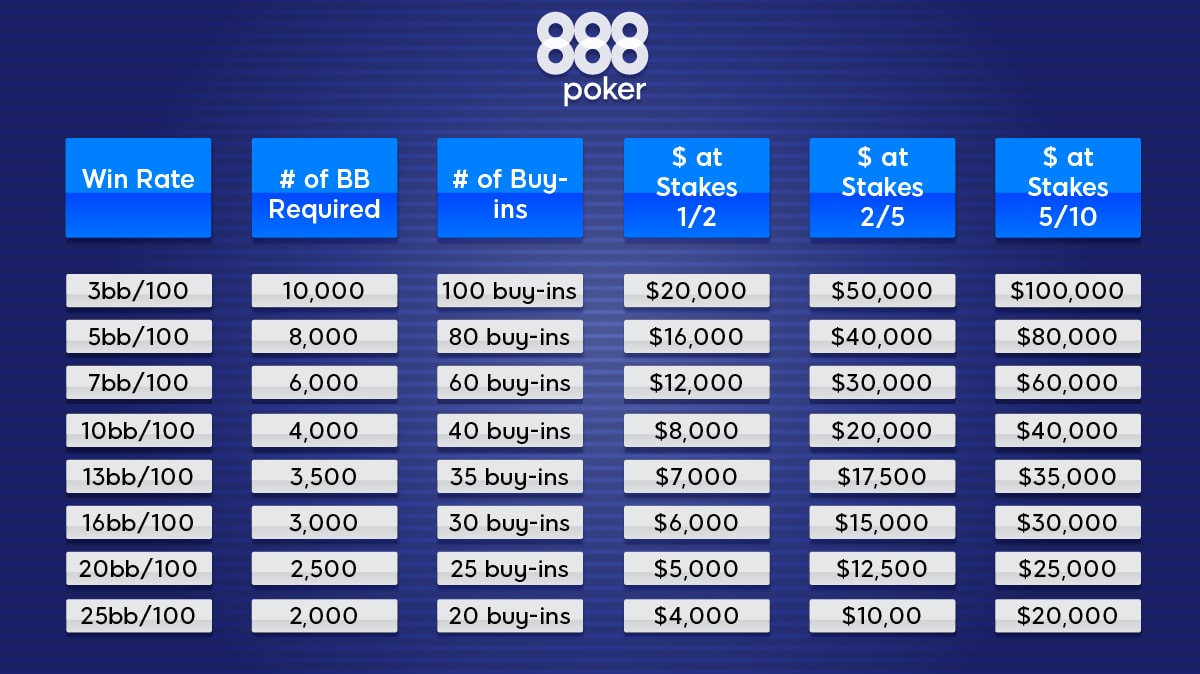
Whether you are placing casual wagers on a weekend football slate or analyzing table distributions at a local venue, mastering effective bankroll management strategies is the single most important habit separating long-term enthusiasts from frustrated casuals. Too often, players focus exclusively on picking winners while completely ignoring the underlying math of their capital. Without a structured framework, even a string of brilliant predictions can unravel overnight due to variance, emotional decision-making, and poor stake sizing.
This guide dives deep into the financial mechanics of smart betting. You will learn how to calculate risk tolerance, implement proven wagering systems, and analyze the mathematical realities behind every bet you place. By treating your capital with the same discipline applied in professional pursuits, you can safeguard your funds, weather inevitable losing streaks, and ensure that entertainment remains both sustainable and controlled.
1. Mastering Core Bankroll Management Strategies and Financial Discipline

Mastering effective bankroll management strategies is the single most important milestone for any bettor looking to achieve long-term sustainability. Without rigorous financial discipline, even the most astute handicapper or skilled table player will eventually fall victim to statistical variance.
1.1 Defining Your Betting Bankroll and Capital Allocation
Your journey must begin by strictly separating your leisure funds from your everyday living expenses. Establishing a dedicated bankroll ensures that a string of unfortunate outcomes never compromises your financial well-being, allowing you to make rational choices rather than emotional ones driven by panic.
1.1.1 Establishing a Dedicated Gambling Fund Separate from Personal Expenses
Never gamble with grocery money, rent, or emergency savings. Create a ring-fenced bank account or a specific cash stash that represents strictly disposable income. When this specific fund is depleted, your wagering activities must halt completely until you intentionally decide to re-fund it from surplus savings.
1.1.2 Assessing Risk Tolerance and Financial Stability Before Depositing
Take an honest look at your personal financial standing before placing your first wager. Your risk tolerance dictates your entire strategy; someone with a high-risk appetite and secure income might handle steeper short-term swings differently than a conservative player seeking steady, low-volatility entertainment.
1.2 Fundamental Rules for Betting Longevity
Surviving the inevitable downswings requires adhering to time-tested rules designed to protect your capital. These core principles act as guardrails against catastrophic losses.
1.2.1 The 1 to 5 Percent Rule for Sustainable Wager Sizing
A golden rule among seasoned professionals is risking only 1% to 5% of your total bankroll on a single wager. Sticking to the lower end of this spectrum shields you from severe variance, ensuring your account can absorb losing streaks without facing total ruin.
1.2.2 The Importance of Unit Consistency Across Different Betting Markets
Treating every wager with equal discipline means keeping your unit size stable across different sports and markets. Shifting your unit size impulsively based on a perceived “lock” destroys the mathematical foundation of your tracking and exposes you to unnecessary volatility.
1.2.3 Avoiding Common Pitfalls Like Chasing Losses and Tilt-Induced Wagering
Emotional control is just as vital as math. Chasing losses after a frustrating session usually leads to reckless, oversized bets that wipe out remaining funds. Step away immediately when frustration sets in to protect your capital from tilt-induced decision-making.
1.3 Essential Mathematical Frameworks for Wager Sizing
To optimize growth and mitigate risk, you must understand the underlying mathematics of how wagers are sized relative to your available capital.
1.3.1 Evaluating Fixed Unit Betting for Beginners and Predictability
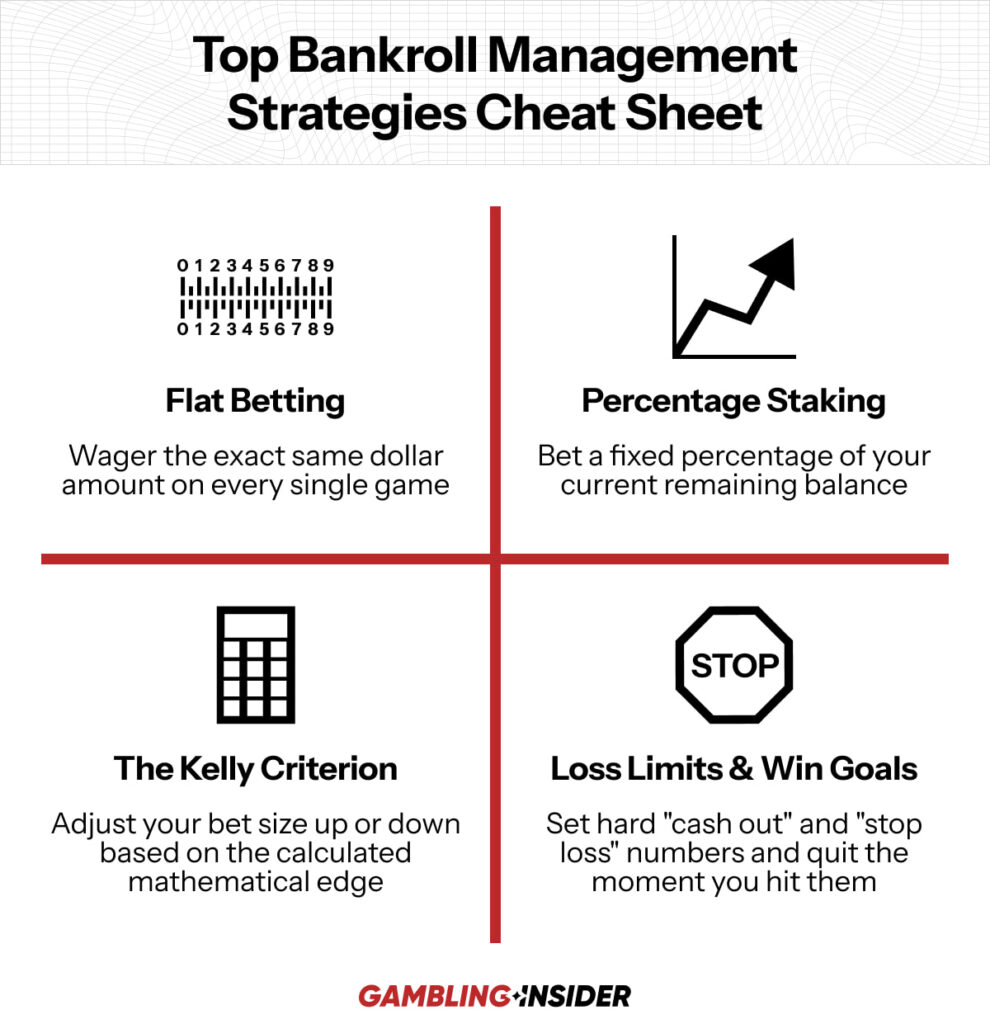
Fixed unit betting involves wagering the exact same dollar amount on every single play, regardless of whether your bankroll goes up or down. This straightforward method offers incredible predictability and makes tracking performance simple for newcomers.
1.3.2 Analyzing Percentage of Bankroll Betting for Dynamic Growth
Percentage betting scales your wager size dynamically. As your bankroll grows, your unit value increases; as it shrinks, your bet size automatically scales down. This self-correcting approach makes going completely bust mathematically difficult.
1.3.3 Understanding the Kelly Criterion for Advanced Mathematical Advantage
The Kelly Criterion is an advanced formula used to calculate the optimal bet size based on your edge and the available odds probability calculation. While it maximizes long-term growth, it requires precise estimation and can lead to sharp short-term drawdowns if your perceived edge is inaccurate.
1.3.4 Risks and Realities of Progressive Systems Like Martingale
Negative progression systems, such as doubling your bet after every loss, are popular but mathematically flawed. They ignore table limits and bankroll ceilings, ultimately leading to catastrophic financial failure when a long losing streak inevitably occurs.
2. Advanced Operational Tactics for Maintaining and Auditing Bankroll Management Strategies

2.1 Practical Tools for Precise Bankroll Tracking
2.1.1 Leveraging Spreadsheets and Dedicated Apps for Real-Time Monitoring
Transitioning from casual wagering to a systematic approach requires meticulous record-keeping. Relying on memory or sportsbook account dashboards rarely paints an accurate picture of your financial health. Utilizing customizable spreadsheets or dedicated tracking applications allows you to log every stake, payout, and market type instantly. This real-time monitoring transforms raw data into actionable insights, helping you spot leaks in your staking approach before they impact your overall capital.
2.1.2 Tracking Key Performance Indicators Including ROI and Closing Line Value
To evaluate whether your bankroll management strategies are truly effective, you must track professional-grade metrics. Return on Investment (ROI) reveals your long-term profitability relative to the total capital risked. Meanwhile, monitoring Closing Line Value (CLV) helps measure your ability to beat the market before kickoff. Consistently beating the closing line indicates a sharp edge, validating that your mathematical approach is sound regardless of short-term variance.
2.1.3 Establishing Stop-Loss Triggers and Win Limits to Maintain Discipline
Emotional control often separates successful bettors from those who bleed their accounts dry. Implementing rigid stop-loss triggers halts your session the moment you hit a pre-defined daily or weekly drawdown limit. Similarly, locking in profits via strict win limits prevents the common trap of giving your winnings back to the house. These automated circuit breakers protect your capital and ensure that tilt never dictates your next move.
2.2 Strategic Adaptations for Complex Betting Environments
2.2.1 Adjusting Bankroll Allocation for High-Variance Parlays Versus Straight Bets
Different wagering formats demand vastly different game volatility analysis to prevent rapid depletion of your funds. High-variance markets like parlays or multi-leg accumulators carry a steep downward swing potential, meaning your unit size for these bets should be a fraction of your standard straight-bet stake. Recognizing how risk scales across different wager types ensures your bankroll can weather inevitable cold streaks.
2.2.2 Navigating Seasonal Betting Fluctuations and League-Specific Volatility
Sporting calendars are rarely uniform, and betting volume should ebb and flow alongside seasonal shifts. Transitioning from high-liquidity leagues to niche sports introduces unique pricing discrepancies and unpredictable swings. Adapting your capital allocation to account for league-specific volatility prevents over-leveraging during unfamiliar athletic windows, keeping your long-term bankroll stable.
2.2.3 Managing Bonus Funds and Free Bets Without Corrupting Your Data
Promotional offers and sportsbook bonuses are useful tools, but they can easily distort your tracking data if mishandled. Treating bonus funds as entirely separate entities from your core bankroll ensures your performance metrics remain accurate. For a broader look at how methodical planning and system management overlap in competitive environments, exploring principles similar to mastering engine building mechanics can provide a fresh perspective on optimization.
2.2.4 Conducting Periodic Bankroll Audits to Re-evaluate Long-Term Goals
No strategy should remain static indefinitely. Conducting monthly or quarterly audits of your betting ledger allows you to adjust your base unit size up or down based on your actual profit or loss. Re-evaluating your financial standing and risk tolerance during these audits ensures your staking strategy continues to align with your overarching long-term goals.
Mastering effective bankroll management strategies ultimately separates casual bettors from those who approach gaming and wagering with discipline and longevity. By establishing a dedicated gambling fund, adhering to disciplined wager-sizing rules like the one to five percent limit, and accurately accounting for variance and house edges, you protect your capital against the inevitable downswings. Implementing structured frameworks ensures that your hobby remains sustainable and under your control.
Consistency, careful tracking, and objective auditing are your strongest tools for long-term success. Whether you prefer the predictability of fixed unit betting or the dynamic growth of advanced mathematical models, maintaining emotional detachment from wins and losses is vital. Treat your bankroll as a finite business asset, stay adaptable to changing environments, and always prioritize responsible financial habits over chasing quick recovery. With these principles in place, you can enjoy the strategic depth of your favorite wagering activities while safeguarding your overall financial well-being.