Few tabletop experiences can match the electric atmosphere of a living room divided by suspicion, whispered accusations, and absolute disbelief. Whether you are gathering around the table for casual family games or diving into a high-stakes hobby night, **hidden role social deduction** titles transform ordinary evenings into masterclasses in psychology and bluffing. Unlike traditional **Board Games** that rely entirely on visible components and rigid math, these experiences live and die by what players say—and what they desperately try to hide.
If you have ever wanted to test your intuition, catch a liar in the act, or pull off the ultimate deception right under your friends’ noses, stepping into this genre offers an unforgettable thrill. In this guide, you will learn the core mechanics that drive these interactive experiences, discover proven strategies for both innocent players and cunning traitors, and explore the best titles to bring to your next game night.

1. Understanding the Mechanics and Psychology of Hidden Role Social Deduction Games
1.1 Defining the Genre and Its Psychological Allure
1.1.1 The core concept of hidden identities and asymmetric information
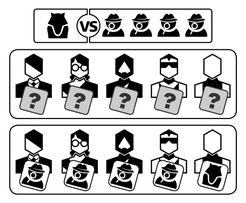
At the heart of any hidden role social deduction experience lies a fundamental split in knowledge. Unlike standard Board Games where everyone operates with an open hand or visible board state, these titles divide players into opposing factions—usually an informed minority of troublemakers and an uninformed majority of innocents. The minority knows who their allies are, while the majority must piece together the truth using incomplete data, accusations, and careful observation of table dynamics.
1.1.2 Why players enjoy the thrill of deception and intuition
The magic of the genre stems from human psychology rather than cardboard components. Players are drawn to the electric tension of pulling off a successful bluff or trusting their gut to catch a liar red-handed. This blend of psychology, paranoia, and performance taps into our natural curiosity about how others think, making every session feel entirely unique.
1.1.3 Contrasting social deduction with traditional strategy board games
When you step away from deterministic Turn based strategy titles, you leave behind static resource management and math-heavy optimization. Instead of calculating mathematical probabilities in isolation, you must calculate human behavior. Your opponents are unpredictable, emotional, and actively trying to manipulate your perception of reality.
1.2 Fundamental Mechanics Every Beginner Should Know
1.2.1 How secret team assignments and roles function
Games usually begin with a blind draw or digital dealing of cards that dictates your allegiance. You might be a loyal villager, a corrupt spy, or a cunning monster. Protecting your secret assignment is your primary directive, as revealing your allegiance too early can completely dismantle your team’s win condition.
1.2.2 Navigating information asymmetry and private knowledge
Asymmetric information means some players possess game-altering insights while others are completely in the dark. Learning how to share clues without giving away your exact identity—or figuring out when someone is bluffing about what they know—forms the cornerstone of tactical survival.
1.2.3 Mastering voting, accusations, and elimination cycles
Most sessions culminate in tense discussion phases where the group debates who to trust and who to purge. Whether you are advocating for an execution or defending yourself from sudden accusations, you need to master the art of persuasive rhetoric to sway the room before the final vote is cast.
1.3 Strategies for Mastering Social Deduction
1.3.1 Building trust and social capital as an innocent player
If you are playing on the innocent side, your biggest challenge is proving your reliability without clear proof. Building social capital early by making helpful, logical observations keeps you safe from suspicion and positions you as a trusted voice when critical decisions arise.
1.3.2 Crafting believable lies as a hidden traitor
Playing the villain requires immense emotional control and a strategic foundation of truth. The best traitors weave tiny, plausible falsehoods into otherwise factual statements, ensuring their defensive claims hold up under scrutiny from sharp-eyed investigators.
1.3.3 Interpreting body language and table dynamics during intense rounds
Reading the room is just as important as reading the rules. Pay attention to subtle shifts in vocal tone, defensive body language, and sudden changes in voting patterns. Spotting these micro-behaviors often spells the difference between a triumphant victory and a devastating defeat.
2. Curating Your First Session of Hidden Role Social Deduction Games

2.1 Recommended Games for Beginners and Small Groups
2.1.1 One Night Ultimate Werewolf for fast-paced sessions
If your gaming group loves speed, high energy, and rapid rounds of accusation, One Night Ultimate Werewolf is a brilliant starting point. Unlike traditional deduction games that stretch on for hours, this title wraps up entire games in about ten minutes. Players receive a secret role—such as a villager, a werewolf, or a mischievous troublemaker—and a mobile app guides the nighttime phase where certain roles secretly shift cards around. When morning breaks, everyone has just a few chaotic minutes to debate, point fingers, and vote. It teaches you how to read table dynamics instantly without the heavy burden of long-term strategic planning.
2.1.2 The Resistance: Avalon for pure logic and no player elimination
Player elimination can ruin a game night for someone who gets knocked out in the first five minutes and has to sit watching for an hour. The Resistance: Avalon solves this by keeping everyone engaged until the final vote. Set in Arthurian legend, loyal servants of King Arthur compete against minions of Mordred through a series of quest missions. The beauty of Avalon lies in its absolute reliance on pure logic, trust-building, and public voting patterns. Because nobody is ever eliminated, every participant gets maximum table time to practice parsing subtle behavioral cues and managing turn based strategy deductions.
2.1.3 Secret Hitler for narrative tension and visual progression
For groups that enjoy dramatic storytelling and political bluffs, Secret Hitler provides an unforgettable experience. Set in a 1930s political landscape, players split into liberals and fascists, with one secret individual acting as Hitler himself. The gameplay revolves around electing a president and chancellor each round, who then enact liberal or fascist policies from a shuffled deck. This physical card progression creates immense narrative tension. You can easily blend these sessions into a broader game night rotation that features classic Board Games, making it a crowd-pleaser for parties.
2.1.4 Blood on the Clocktower for modern storytelling depth
Once your group gets comfortable with the basics of hidden role social deduction, Blood on the Clocktower offers an extraordinary step up in complexity and immersion. Guided by a dedicated Storyteller who acts as a game master, participants remain active even after death, possessing a final ghost vote that keeps them invested in the outcome. The game features an expansive roster of eccentric characters and intricate information loops, making it feel more like an interactive murder mystery theater than a standard tabletop session.
2.2 Essential Table Etiquette and Social Dynamics
2.2.1 Maintaining a friendly atmosphere during heated debates
Social deduction games inherently encourage playful accusation, fake outrage, and passionate arguments. However, keeping the table environment welcoming is crucial for a great game night. Establishing a boundary where in-game deception stays strictly at the table ensures that friendships remain undamaged when the box closes. Remind players that aggressive accusations are part of the shared performance rather than personal attacks.
2.2.2 Managing emotional intensity and avoiding personal conflict
Because these games test personal trust and intuition, emotions can occasionally run high, especially when a trusted friend pulls off a convincing betrayal. It is vital to manage this intensity by taking short breaks between intense matches. Laughing off a clever deception helps de-escalate tension and reminds everyone that winning is secondary to the shared storytelling experience.
2.2.3 Developing a healthy mindset toward winning and losing
In hidden role experiences, the journey of bluffing and deduction matters far more than the final tally. Adopting a mindset where pulling off a clever bluff feels just as rewarding as securing a victory helps players enjoy the hobby without undue stress. Sometimes, losing spectacularly as the caught traitor provides the most memorable laughs of the evening.
2.3 Frequently Asked Questions About the Hobby
2.3.1 Best games for groups of four to five players
While many social deduction games shine brightest with larger crowds, titles like Avalon and Secret Hitler scale down reasonably well or have specialized variants. For smaller game nights, choosing games designed specifically with tight scaling mechanics ensures that the information web remains balanced and engaging without feeling sparse.
2.3.2 How to overcome the awkwardness of lying to friends
Lying to close friends can feel deeply unnatural at first. Beginners often struggle because they fear hurting feelings or revealing their tells immediately. The secret is treating your assigned role purely as a theatrical character. Lean into the persona of the game rather than viewing deception as a personal transgression.
2.3.3 Understanding the nuance between social deduction and hidden traitor games
Social deduction games focus heavily on interpersonal communication, behavioral analysis, and rapid public voting to weed out impostors. In contrast, hidden traitor games—which often incorporate elements like tabletop dice mechanics—typically feature a cooperative board game structure where one or more players secretly work from the inside to sabotage the group’s collective objective over a longer timeframe.
Stepping into the world of hidden role social deduction games offers an entirely unique kind of tabletop experience. Unlike traditional board games that rely heavily on mechanical optimization, resource management, or turn based strategy, these games put human psychology, intuition, and communication front and center. Whether you are learning how to successfully bluff as a secret traitor or piecing together fragmented clues to unmask the villains, every session tells a completely different story shaped entirely by the people sitting around the table.
Mastering this genre takes time, observation, and a willingness to embrace both thrilling victories and hilarious defeats. By starting with approachable titles, maintaining a healthy perspective on table etiquette, and focusing on the social dynamics of your group, you can transform ordinary game nights into unforgettable memories. Gather some friends, shuffle those secret role cards, and discover just how well you really know the people you play with.