Ever pull off a brilliant hit in a fighting game, only to watch your character stubbornly finish their entire recovery animation while your opponent escapes unpunished? If you have ever wondered why your follow-ups feel sluggish or why your inputs refuse to register, the secret lies in mastering combo cancel timing. For many players, bridging the gap between button mashing and clean, deliberate execution feels like an uphill battle. Yet, the difference between a dropped sequence and a devastating tournament-winning loop often comes down to a matter of single-digit frames.
To consistently convert your hits, you need to look past the surface-level motion of the characters and dive into the underlying mechanics of the game. Whether you are trying to optimize your damage output or clean up your execution in the lab, understanding the precise relationship between attacks is essential. To build a solid foundation, exploring detailed concepts like Frame Data Analysis: Mastering Hitboxes and Combo Timings can completely change how you view your favorite character’s movelist. In this guide, you will learn how to read frame data, leverage the input buffer, and train your muscle memory to execute flawless cancels every single time.
1. Understanding Frame Data and the Mechanics of Combo Cancel Timing
1.1 Decoding Fighting Game Frame Data for Precision
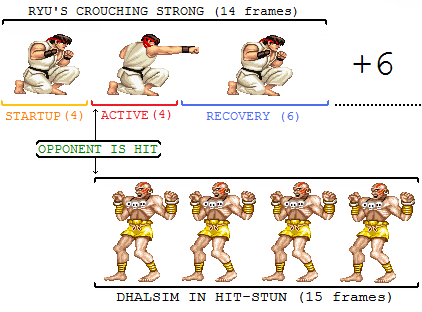
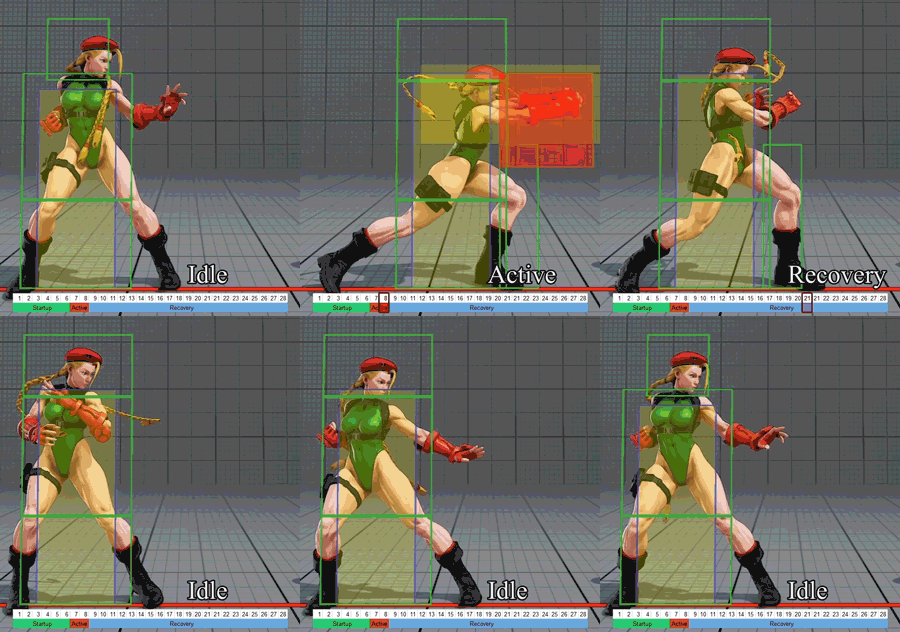
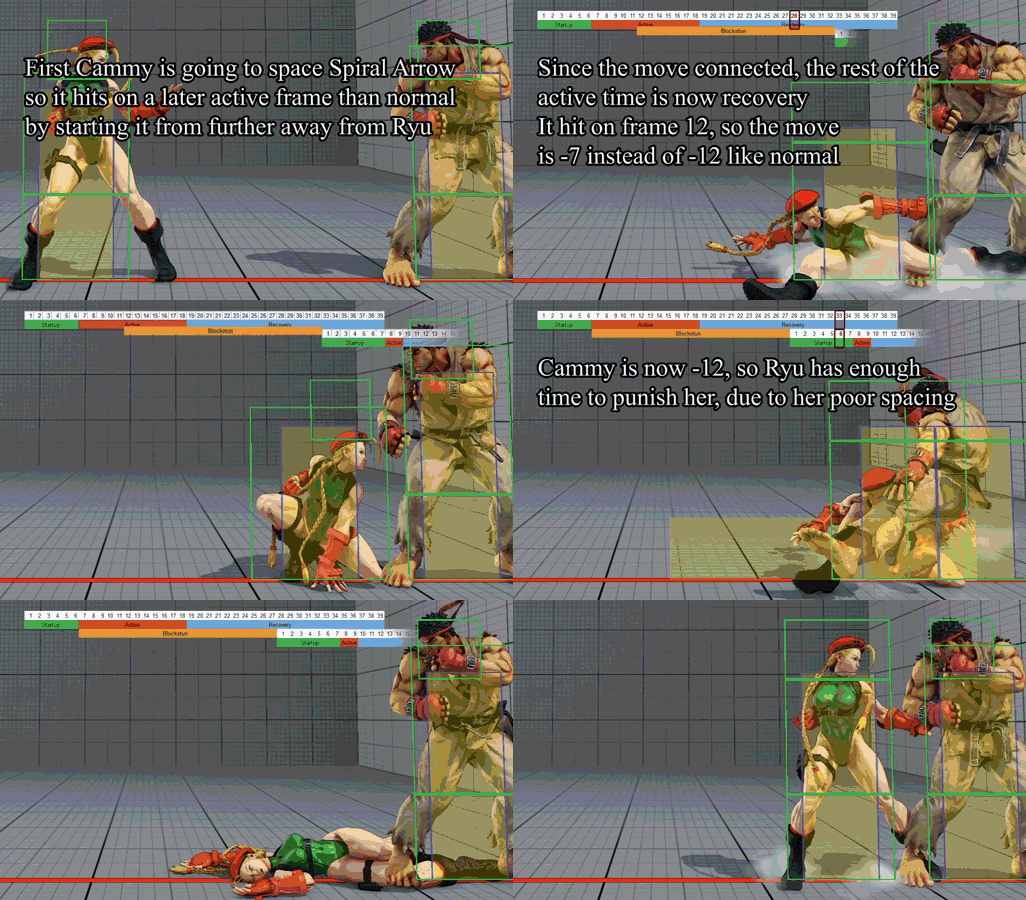
Fighting games operate on a strict temporal grid, anchoring every action to a standard of 60 frames per second. This means that a single frame lasts a mere 16.67 milliseconds. When you execute an attack, the game engine parses your inputs across three distinct phases: startup, active, and recovery frames. Startup frames represent the wind-up before a hitbox appears, active frames determine the exact window where the attack can deal damage, and recovery frames dictate how long your character remains vulnerable before returning to a neutral state.
Understanding these phases requires thorough frame data analysis to comprehend the exact arithmetic behind your character’s arsenal. When an attack connects, the resulting frame advantage dictates your offensive options. On-hit advantage grants you extra time to act while the opponent is trapped in hitstun, whereas on-block advantage tells you whether your attack leaves you safe or punishable once the defender guards against it.
1.2 The Physics of Canceling
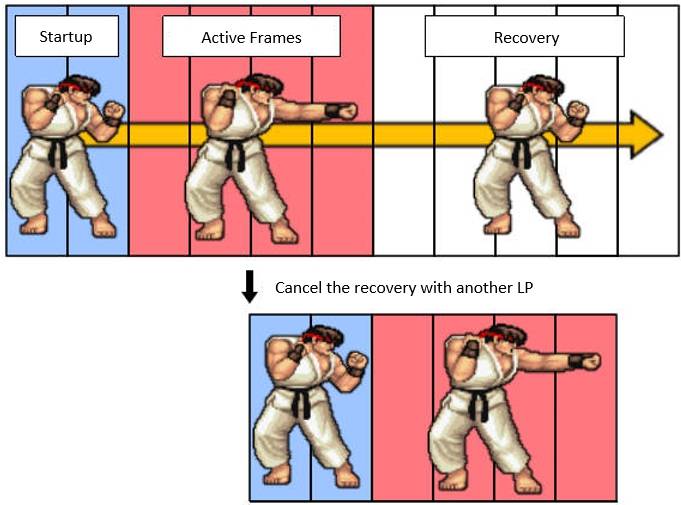
Canceling is an advanced mechanic that fundamentally alters the timeline of an attack. Instead of waiting for the full recovery phase to play out, a successful cancel prematurely truncates those recovery frames, seamlessly transitioning your character straight into the startup frames of a different move. This precise interruption is what allows players to string together devastating offensive pressure that would otherwise be impossible under normal recovery rules.
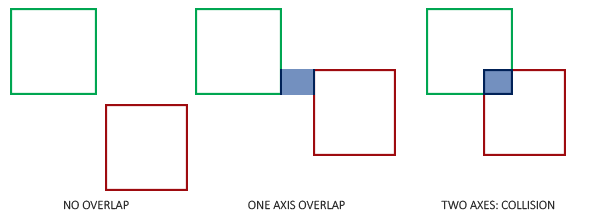
It is important to differentiate between linking normals and canceling into specials. While a link requires you to time a follow-up attack so that it hits the opponent on the exact first frame they exit hitstun, a cancel bypasses the recovery entirely. To execute this reliably, you must know which normal attacks are special-cancelable. For a deeper technical breakdown of how these offensive windows operate, review this hitbox collision explanation to master the spatial dynamics behind every active frame.
1.3 Mastering the Input Window
Hitting the precise frame required for a cancel demands a blend of rhythm and acute sensory awareness. Experienced players rely heavily on distinct visual and audio cues—such as the specific sound of a connected strike or the screen freeze of an impact—to pinpoint the exact cancel frame. Because human reaction time is generally too slow to react to individual 16.67-millisecond windows purely on sight, competitive players depend heavily on advanced input buffer techniques to store inputs slightly ahead of time.
The buffer system registers your special move command during the active or late startup frames of the preceding normal, automatically executing the cancel the moment the game engine permits it. Troubleshooting early inputs that result in swallowed commands usually comes down to pacing. If you input your special move too fast before the cancel window opens, the game engine drops the input entirely, leaving your normal attack un-canceled and vulnerable to enemy punishes.
2. Advanced Execution Strategies for Perfect Combo Cancel Timing
2.1 Tactical Implementation in Training Mode
Transforming raw knowledge of game mechanics into reliable muscle memory requires disciplined work in training mode. To start, configure your interface by enabling the real-time frame data display and input history. This telemetry allows you to see precisely where your timing falters—whether an input was dropped entirely or executed too late in the recovery sequence. Additionally, utilizing an input buffer technique can significantly widen your execution window, making those tight cancels feel far more forgiving.
Practicing hit-confirms is the next crucial step. Instead of blindly committing to a full sequence, train yourself to evaluate whether your initial normal attack hit or was blocked. If it connects, finish the combo; if blocked, abort the special move to remain safe. You can also adjust attack data settings in the training menu to simulate blockstun and optimal punish windows, ensuring your offensive pressure remains airtight against veteran opponents.
2.2 Overcoming Common Execution Barriers
Even with a solid grasp of the underlying numbers, players frequently encounter physical execution blocks. A late cancel almost always results in a dropped combo or an unsafe recovery state that invites a devastating counterattack. Conversely, rushing your inputs can cause commands to get swallowed by the game engine during active animation frames. Understanding engine-specific settings like Negative Edge—which registers an attack when you release a button rather than pressing it—helps clean up messy inputs and prevents unintended special moves from creeping into your strings.
Optimizing your motion inputs through game-specific shortcuts is another vital adjustment. Mastering shortcuts, such as lazy inputs or using diagonal directional gates, drastically reduces the physical travel time required for high-speed combos. This efficiency lets you execute complex cancels consistently under the heavy psychological pressure of an online match.
2.3 Refining Your Practical Training Routine
Transitioning from a static training dummy to a reactive human opponent requires structured repetition. Begin with isolated drills designed to clean up your execution, focusing on a single link or cancel until you can hit it ten times consecutively on both sides of the screen. Once you achieve mechanical consistency, set the training dummy to random block or reversal actions to force genuine reaction-based decision-making.
Finally, track your progress through iterative testing. Record your matches, review your dropped combos, and pinpoint whether execution anxiety or poor timing caused the failure. By treating your training routine as a continuous optimization process, you will build the dependable muscle memory needed to execute precise combo cancel timing in high-stakes tournament environments.
Mastering combo cancel timing transforms your gameplay from a guessing game into a disciplined science of precision. By deeply understanding frame data analysis, utilizing the buffer window effectively, and putting in deliberate practice within training mode, you can eliminate dropped inputs and execute flawless strings consistently. Remember that fighting games reward patience and muscle memory; do not expect your execution to become instant overnight.
Take your training one step at a time, focusing on clean inputs over raw speed. As your understanding of active frames and recovery manipulation deepens, those lightning-fast reaction windows will start to feel second nature. Keep grinding, study your matches, and watch your competitive consistency soar.