Have you ever stared at a complex 3D puzzle, a blueprint, or a tricky test question, feeling your brain temporarily stall as you try to mentally flip the object over? You are definitely not alone. Tackling spatial reasoning challenges can feel like trying to solve a puzzle in the dark, especially when you are pressed for time. Whether you are prepping for a career assessment, studying for a STEM field, or simply trying to sharpen your cognitive pattern recognition skills, building spatial fluency takes deliberate practice.
Fortunately, spatial intelligence is not a fixed trait you are either born with or lack; it is a flexible cognitive skill that you can actively train and improve. In this guide, we will break down five essential tips to help you conquer these visual puzzles. From mastering mental rotation to adopting smarter problem-solving frameworks, you will discover actionable strategies to boost your confidence, enhance your mental agility, and approach any 3D challenge with clarity and precision.
1. Understanding and Identifying Spatial Reasoning Challenges
1.1 The Cognitive Mechanics of Spatial Intelligence
1.1.1 Defining visualization and mental rotation
Spatial intelligence relies heavily on our ability to manipulate shapes and forms entirely within the mind’s eye. Visualization is the process of generating, retaining, and transforming complex visual images, while mental rotation specifically involves turning a 2-dimensional or 3-dimensional object around a fixed axis to view it from a different angle. When people encounter spatial reasoning challenges, their brains must actively simulate these physical movements without any external physical prompt.
1.1.2 How the brain processes spatial orientation and perception
The human brain processes spatial data through a sophisticated network primarily centered in the parietal and frontal lobes. This neural machinery decodes depth, distance, and geometric relationships in real time. Engaging with structured cognitive pattern recognition tasks helps strengthen these neural pathways, allowing individuals to quickly gauge how various geometric components interact within a shared environment.
1.2 Categorizing Common Spatial Reasoning Challenges
1.2.1 Mental rotation and 3D object manipulation
One of the most frequent hurdles involves determining whether two differently angled 3D shapes are identical or mirror images. These exercises test an individual’s capacity to rotate complex structures across multiple axes smoothly, catching subtle asymmetries that separate a correct match from a distractor.
1.2.2 Paper folding, punching, and pattern reconstruction
Paper folding tests require individuals to mentally track how a flat sheet undergoes multiple creases, cuts, or hole punches. Unfolding the shape mentally demands precise spatial tracking, as a single error in coordinate mapping early in the sequence ruins the final pattern reconstruction.
1.2.3 Block counting and complex spatial matrix puzzles
Block counting challenges present piles of three-dimensional cubes where perspective hides underlying supports. Viewers must deduce how many hidden blocks are required to sustain the visible structure, separating guesswork from rigorous structural logic.
1.3 Real-World Relevance and Professional Necessity
1.3.1 Impact on careers in STEM, architecture, and medicine
Advanced spatial skills are foundational across technical disciplines. Architects rely on them to blueprint stable structures, surgeons utilize them to navigate intricate anatomical landscapes during minimally invasive procedures, and engineers depend on them to design functional mechanical assemblies.
1.3.2 Why employers and admissions boards utilize spatial testing
Because spatial aptitude correlates strongly with technical problem-solving efficiency, corporations and educational institutions routinely include spatial assessments in their screening processes. These evaluations highlight an applicant’s innate ability to troubleshoot complex, abstract systems quickly and accurately under pressure.
2. Strategic Methods for Mastering Spatial Reasoning Challenges
2.1 Actionable Techniques for Cognitive Improvement
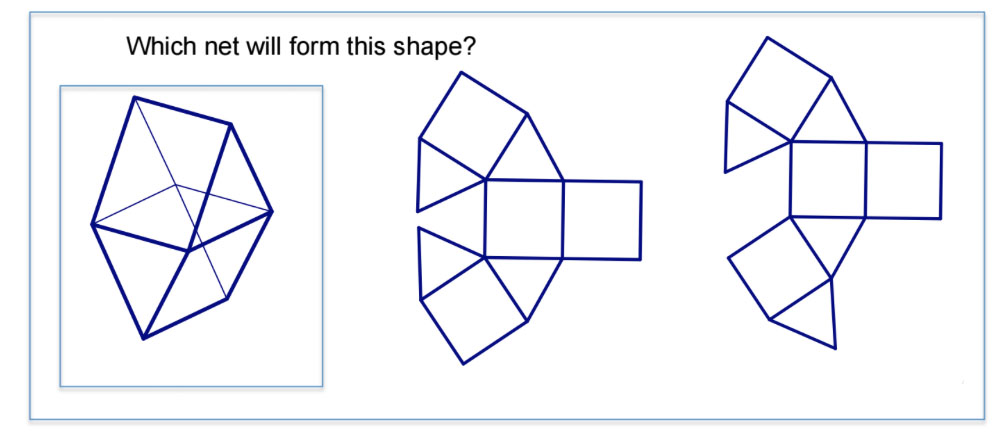
Enhancing your spatial skills requires deliberate and consistent cognitive training. Spatial reasoning challenges test how well you can manipulate objects in your mind, a skill that improves dramatically with targeted practice.
2.1.1 Implementing daily mental manipulation exercises
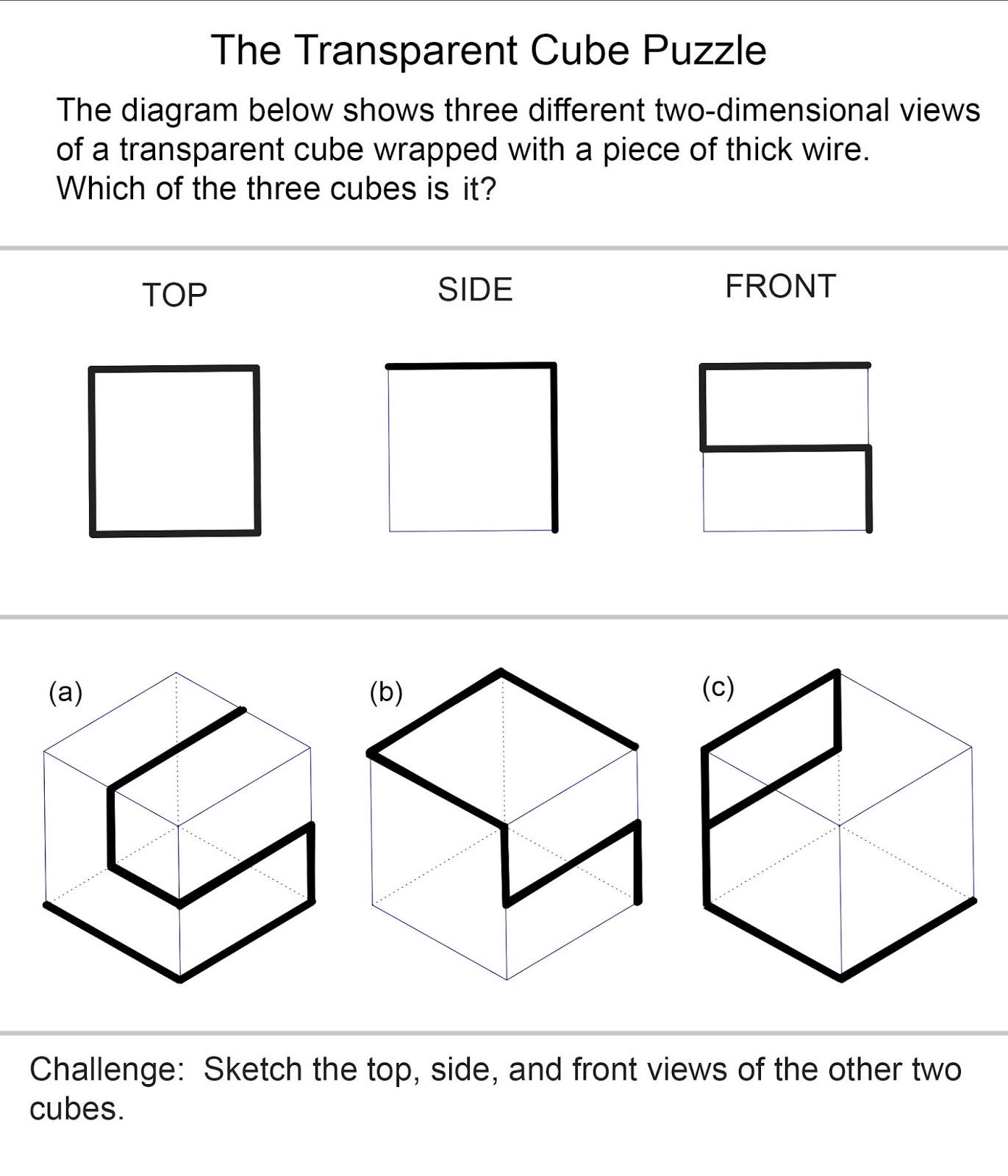
Set aside ten minutes daily to visualize simple three-dimensional objects rotating on multiple axes. Picture a transparent cube turning on its diagonal, tracking where specific vertices move. This foundational habit strengthens the neural pathways responsible for mental rotation.
2.1.2 Utilizing tactile learning through sketching and physical models
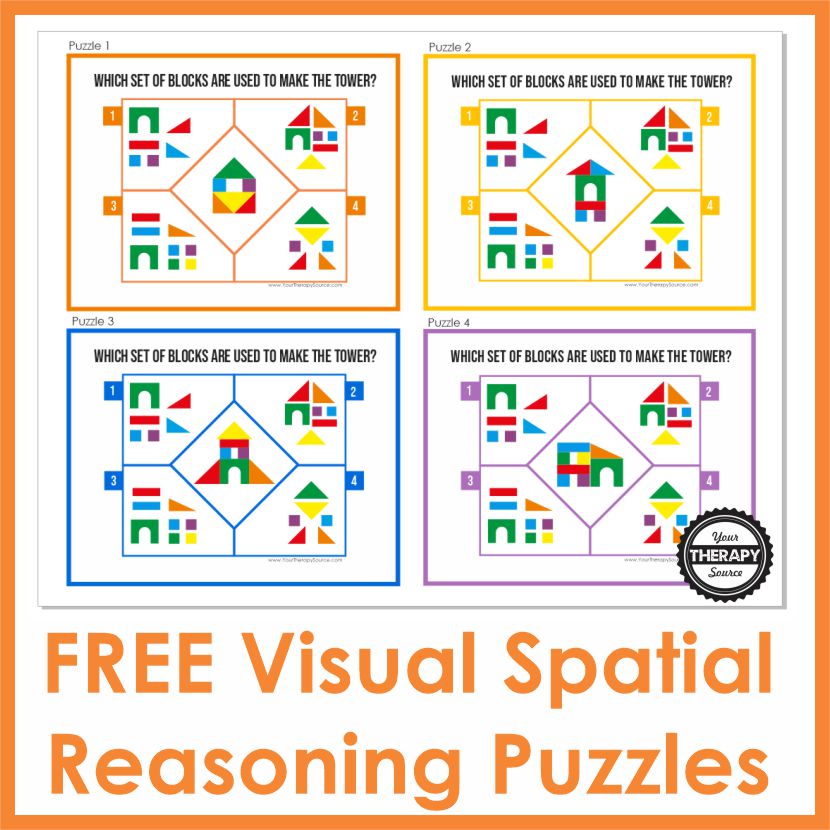
Physical interaction accelerates cognitive growth. Sketching complex figures from different angles or manipulating physical building blocks bridges the gap between abstract thought and concrete visual perception, much like building foundational skills through cognitive pattern recognition exercises.
2.1.3 Deconstructing complex 3D shapes into manageable parts
When faced with intricate geometric puzzles, avoid looking at the object as a single overwhelming unit. Break it down into smaller, familiar components like cylinders, wedges, and rectangular prisms to analyze spatial relationships systematically.
2.1.4 Perspective-shifting and advanced visualization training
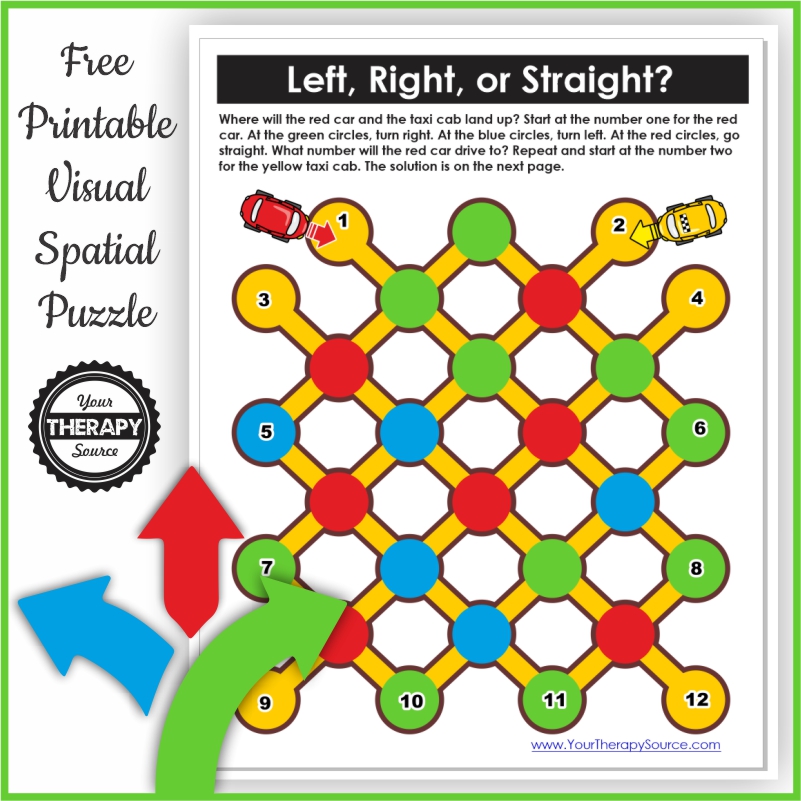
Practice imagining yourself standing inside a complex architectural layout or navigating a non-linear maze navigation exercise entirely in your mind’s eye. Shifting your viewpoint actively prevents mental stagnation during difficult spatial tests.
2.2 Exam-Specific Strategies for High-Pressure Environments
Performing well under time constraints requires more than raw visualization talent; it demands efficient test-taking strategies and smart pacing.
2.2.1 Mastering time management during timed assessments
Allocate a strict time limit per question during practice tests. If a complex puzzle stalls your progress, flag it, move forward, and return to it if time permits to protect your overall score.
2.2.2 Developing techniques for identifying common test patterns
Standardized spatial tests frequently reuse specific transformation patterns, such as mirror inversions or 90-degree clock rotations. Cataloging these recurring motifs helps you recognize correct answers instantly.
2.2.3 Optimizing accuracy through the process of elimination
Instead of trying to visualize the final correct answer from scratch, evaluate the given options and eliminate choices that violate basic rules of symmetry, volume, or orientation.
2.3 Long-Term Cognitive Development and Habit Building
Sustainable cognitive enhancement comes from embedding spatial tasks into your everyday lifestyle rather than relying on short-term cramming.
2.3.1 Curating hobbies that strengthen spatial cognition
Engage in leisure activities that inherently demand strong spatial awareness. Regular sessions solving challenging logic games, assembling scale models, or playing intricate strategy titles reinforce long-term visual processing capabilities.
2.3.2 Integrating spatial challenges into adult and childhood routines
Encourage spatial problem-solving across all age groups through hands-on drafting, origami, or interactive spatial puzzles. Making these exercises a normal part of your routine ensures lifelong cognitive agility.
Mastering spatial reasoning challenges is not an innate talent reserved for a select few; it is a dynamic cognitive skill that grows sharper through deliberate practice, patience, and the right strategies. By breaking down complex three-dimensional objects, practicing mental rotation, and engaging in daily exercises like sequence deduction games, you can fundamentally rewire how your brain perceives and manipulates space.
Whether you are preparing for a high-stakes professional exam, striving to excel in a STEM career, or simply looking to sharpen your overall cognitive agility, consistency remains your most powerful tool. Approach these challenges with curiosity rather than frustration, allowing your mental mapping abilities to expand naturally over time.
Ready to put your cognitive flexibility to the test and continue honing your mental acuity? Explore more exercises and cognitive pattern recognition skills for gamified learning to take your problem-solving capabilities to the next level.